
Ayurvedic Herbs
Sri Lanka Herbs Supplier
We supply herbs and herbal powders from Sri Lanka to food, beverage, nutraceutical and cosmetic buyers worldwide, including Sri Lankan botanicals such as gotukola, polpala and thebu. Whole, cut, tea-bag cut and powdered, in bulk and under your own label, from a BRCGS and FSSC 22000 certified supply chain.
Why Sri Lanka herbs
Sri Lanka has a long botanical tradition, and its Ayurvedic system draws on herbs that grow on the island, such as gotukola, polpala, thebu and amla. We also supply Sri Lankan moringa, tulsi, neem, hibiscus and butterfly pea.
For B2B buyers, a herb is specified by botanical name, plant part and form, not by common name alone, because one common name can cover more than one species. We match each herb to your written specification and supply the documentation that goes with it.
See our guide to sourcing Ayurvedic botanicals from Sri Lanka, and what a Sri Lanka Ayurveda Department licence covers when you qualify a supplier.
The herbs we supply
Sri Lankan herbs, each in the forms buyers order:
Gotukola
Gotukola (Centella asiatica) leaf, a staple Sri Lankan green, milled to a fine green powder.
Lemongrass
Whole dried Ceylon lemongrass (Cymbopogon citratus) with a vivid citrus fragrance, for infusions and blends.
Polpala
Dried polpala (Aerva lanata), a Sri Lankan herb traditionally steeped as a caffeine-free tisane.
Venivel
Powdered venivel (Coscinium fenestratum) stem, a bitter Sri Lankan botanical used in traditional herbal blends.
Welpenela
Milled Sri Lankan welpenela (Cardiospermum halicacabum) leaf, used in herbal porridges and tisane blends.
Thebu
Dried thebu (Costus speciosus) leaves, a Sri Lankan spiral-ginger herb for herbal teas and culinary blends.
Amla
Fine amla (Phyllanthus emblica) powder from ripe Sri Lankan fruit, spray- or freeze-dried to keep its colour and flavour.
Moringa
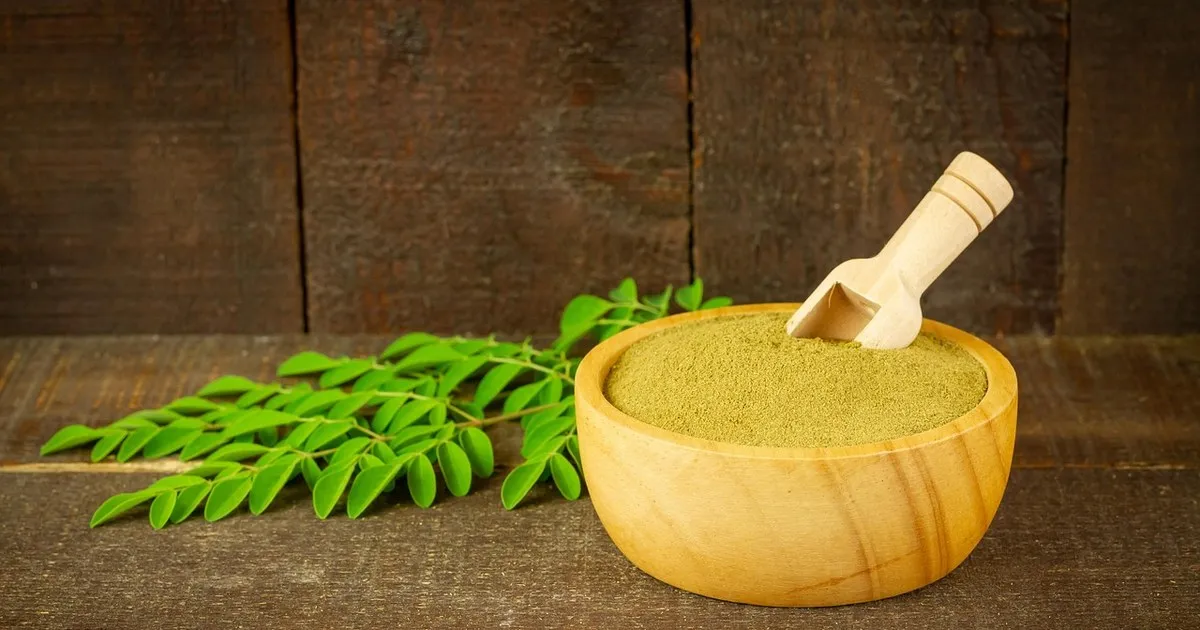
Finely milled Sri Lankan moringa leaf powder, deep green and grassy, for beverage mixes, bars and capsule fill.
Tulsi
Ground Sri Lankan tulsi (holy basil, Ocimum tenuiflorum) leaf with a warm, clove-like aroma, for infusions and mixes.
Neem
Ground Sri Lankan neem (Azadirachta indica) leaf powder for herbal blends and cosmetic formulations.
Butterfly Pea
Whole dried Sri Lankan butterfly-pea blossoms (Clitoria ternatea) that brew a vivid blue, for teas and natural colour.
Hibiscus
Cut and sifted Sri Lankan hibiscus (Hibiscus sabdariffa) calyces with a tangy tartness, for herbal and iced teas.
See the full herbs range, 47 products in all.
Traceability runs from farm to shipment. Our herbs are processed at our Matale facility, and every batch carries species identification and its own Certificate of Analysis, so a buyer can trace a specific lot back to harvest and confirm the plant part and form before committing to an oral, topical or beverage SKU. Buyers qualifying us as a supplier are welcome to ask for the certificate scope statement alongside the certificate number.
Forms and formats
We supply herbs as whole dried leaf, flower, root or stem, cut and sifted grades, tea-bag cut (TBC) for infusion, and fine powders, with extracts where listed. Tell us the herb, the form and your use, whether tea blending, capsule filling, extraction or food and beverage, and we will match it.
Specifications buyers ask for
A defensible botanical spec names the Latin binomial, the plant part (root, leaf, aerial part or whole herb, since composition varies materially by part) and the form, with mesh size or extract ratio defined. The figures below are the parameters typically requested on a herb Certificate of Analysis; the exact result on your COA depends on the specific botanical and lot, and we confirm it against your written specification.
- Botanical identity
- Latin binomial confirmed in writing on the COA; part of plant specified
- Particle size
- Mesh size specified for powders, cut length specified for cut and sifted or TBC grades
- Moisture
- Typical range for dried herb, confirmed per SKU on request
- Microbiology
- Total plate count, yeast and mould, Salmonella and E. coli, available on request per lot
- Heavy metals
- Lead, cadmium, arsenic and mercury panel, available on request per lot
- Pesticide MRLs
- Tested to the destination market's limits, available on request per lot
See the Ayurvedic botanicals sourcing guide for the full RFQ checklist, including EU Novel Food and US NDI status, which buyers should confirm for the specific botanical before launching an oral SKU in either market.
Certifications
Our herb supply chain is certified to BRCGS, FSSC 22000, HACCP, ISO 22000 and GMP. USDA Organic and EU Organic certification applies to selected SKUs, so we confirm the organic status of the specific SKU you are interested in.
The commercials
What a first order looks like
- Minimum order
- From 50 kg per SKU. Capsule runs start at 180 bottles.
- Samples
- 3 to 5 business days, door to door.
- Production
- 2 to 3 weeks from purchase order to dispatch.
- Certification
- BRCGS, FSSC 22000, HACCP, ISO 22000 and GMP. USDA Organic and EU Organic on selected SKUs, confirmed for the SKU you need.
Packaging and export logistics
Retail formats ship in kraft pouches from 50 g to 1 kg. Bulk herbs ship in 25 kg or 50 kg multiwall sacks with an LDPE inner liner, cased or palletised for container loading; case configuration and pallet pattern are confirmed against your destination market.
Our default pricing basis is FOB Colombo, the cleanest basis for comparing landed cost against other origins; CIF and DDP are quoted on request. Every batch ships with species identification and a Certificate of Analysis, plus a certificate of origin and phytosanitary certificate. Sample dispatch, production lead time and freight transit are three separate clocks worth planning against separately rather than as one number.
Private label, capsules and co-manufacturing
You can take any of these herbs under your own brand as loose teas, powders or capsules. We run private-label and co-manufacturing programmes for herbal teas, powder blends and capsule SKUs, from your formulation and pack format to a certified export run.
More on private label and OBM, our herbal capsules, herbal capsule and powder co-manufacturing, and herbal capsules from Sri Lanka.
Where our herbs are used
Buyers use our herbs in herbal tea blending, as capsule and tablet raw material, in extraction, in food and beverage for colour and flavour, and in cosmetic and personal-care formulations.
For specification depth, see the RFQ checklist for botanical extracts, the single-botanical powders spec guide, EU botanical sourcing rules, and the moringa leaf powder, hibiscus cut grades, lemongrass powder and iramusu specs.
How to order
- Send your specification. Contact us with the botanical (Latin binomial if known), plant part, form, pack size, volume and destination market. No spec yet? Tell us the application and we will propose one.
- Confirm and sample. We confirm identity, certification and organic status against your SKU and dispatch samples in 3 to 5 business days.
- Approve and place the PO. Once samples are approved, we confirm pricing (FOB Colombo by default), packaging and Incoterm, and issue a pro-forma invoice.
- Production and dispatch. Production runs 2 to 3 weeks from purchase order to dispatch, with a COA on every batch and full export documentation.
FAQ
Sri Lanka herbs: buyer FAQs
Which herbs do you supply?
Where are your herbs from?
What is your minimum order quantity?
Are your herbs organic certified?
Can you supply herbs under our own brand or as capsules?
What forms do you supply?
What packaging do you supply herbs in?
What Incoterms do you quote?
Sourcing herbs from Sri Lanka?
Tell us the herb, the form and the volume, and we will send a quote and samples.