
Sourcing Lemongrass Powder from Sri Lanka
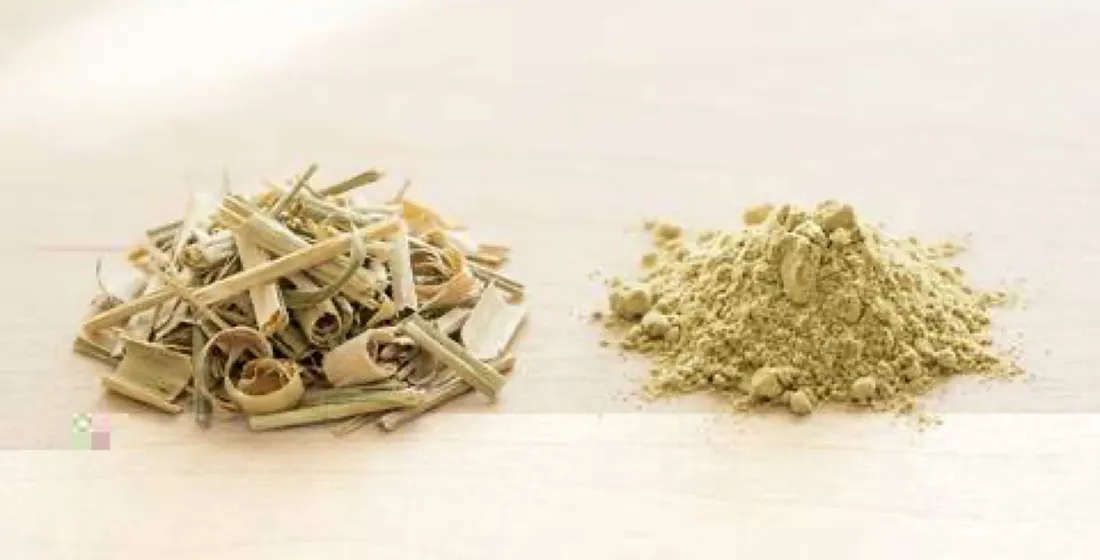
Buyer’s snapshot
- Sri Lankan lemongrass cultivation sits below 25 hectares total (Sri Lanka Department of Export Agriculture, 2024), with two species in commercial play: Cymbopogon citratus (West Indian) and Cymbopogon flexuosus (East Indian or Cochin). The species and chemotype both belong on the RFQ.
- Citral content (geranial plus neral) drives flavor, the antimicrobial story, and the price tier. Typical C. citratus leaf powder runs 65 to 85% citral in the essential-oil fraction; below 60% reads as old stock or off-spec drying.
- For EU-bound tea-blend or nutraceutical SKUs, the chlorpyrifos MRL has sat at 0.01 mg/kg for all dried herbs and feed since 13 November 2020 (European Commission, Reg. (EU) 2020/18). The dehydration-factor math is where the supplier conversation actually lives.
- Silk Route Ventures (SRV) supplies lemongrass cut and powder from the BRCGS and FSSC 22000 V6 audited Silk Foods Ceylon (SFC) facility in Matale at 100 to 200 kg/hr spice-line capacity, 50 kg per-SKU first-order MOQ, samples shipped door-to-door at 3 to 5 business days.
- For tea-blend formulators, beverage R&D, and nutraceutical contract manufacturers writing their next supplier brief, this post is the spec. For bulk-commodity buyers competing below the Sri Lanka cost floor, Vietnamese and Indian C. flexuosus supply is the more honest answer.
In 2026, the global herbal tea market reached an estimated USD 4.2 billion, with category growth driven by a shift toward functional wellness positioning rather than commodity caffeine-free expansion (Future Market Insights, Herbal Tea Market Report, 2026). Lemongrass sits inside that growth: alongside chamomile, hibiscus, peppermint, and ginger, it appears in nearly every meaningful “functional herbal” blend launched in 2024 and 2025, including Numi Organic Tea’s Rejuvenate (hibiscus and lemongrass), launched March 2024 as part of the brand’s Holistic Herbal collection. For the procurement teams sourcing the leaf and powder behind those blends, the spec sheet matters more than the marketing.
Most buyers asking for “lemongrass powder” specify only the powder. The supplier brief is incomplete without a species statement, a citral range, a mesh, a microbial panel, and a destination-market MRL alignment. This piece walks through what each of those parameters actually controls, what a Sri Lankan supplier should produce against, and where Silk Route Ventures fits in the shortlist for tea-blend and nutraceutical buyers.
What lemongrass powder buyers actually need from a sourcing spec
Lemongrass leaf powder sourced for food and nutraceutical use is screened on six parameters: species and chemotype, citral content as a fraction of essential oil, particle size (mesh), moisture, microbial load, and pesticide MRL alignment to the destination market. A defensible Certificate of Analysis covers all six per batch. Most procurement disputes trace back to one of those six being missing or unspecified.
The reason a six-parameter spec matters: lemongrass is one of the most commonly substituted dried herbs in low-margin tea and beverage supply chains, with East Indian C. flexuosus leaf often arriving against orders that asked for West Indian C. citratus. The two species sit close on flavor, but the chemotype profile, the citral fraction, and the regulatory dossier differ enough to put a label claim at risk. A spec sheet that names species, names citral range, and names microbial limits gives the supplier no place to hide.
Spec snapshot: Lemongrass powder (food and nutraceutical grade) Species: Cymbopogon citratus (West Indian) or Cymbopogon flexuosus (East Indian). Specify on the RFQ. Origin: Sri Lanka (Matale and Central Province growing belt) for C. citratus small-volume programmes. Citral: typically 65 to 85% of the essential-oil fraction by GC-MS. Particle size: 60 to 80 mesh for blending; 40 mesh for tea-bag cut; 100 mesh for capsule fill. Moisture: under 10%. Microbial: total plate count under 100,000 cfu/g; yeast and mould under 10,000 cfu/g; Salmonella negative in 25 g; E. coli under 100 cfu/g. SRV MOQ: 50 kg per SKU first order; lead 2 to 3 weeks PO to dispatch.
How citral content drives flavor, antimicrobial claims, and price tiers
Citral, a mixture of geranial (40 to 62%) and neral (25 to 38%) isomers, is the dominant volatile in lemongrass essential oil and the marker compound on nearly every nutraceutical brand’s RFQ (MDPI Compounds, “Phytochemical Composition and Pharmacological Potential of Lemongrass,” 2022). For powder applications, citral content is reported as a fraction of the essential-oil yield, which itself runs 0.5 to 1.5% of the dried leaf by weight.
[UNIQUE INSIGHT] This is where the dried-powder economics shift from a commodity conversation to a spec-led one. A C. citratus powder at the high end of the citral band, 85% plus, supports the strongest sensory profile for a tea-blend or beverage premix, and underwrites the cleanest antimicrobial claim in finished formats where lemongrass is functioning as a preservative ingredient as much as a flavor (minimum inhibitory concentration for E. coli reported at 617 μg/mL for lemongrass essential oil in the MDPI 2022 review). A powder at 50 to 60% citral, the kind that arrives from undifferentiated bulk wholesalers, supports neither claim well, and the price discount the buyer thought they captured turns into a formulation rework upstream.
The screen worth running early: ask the supplier for a recent batch GC-MS report covering geranial, neral, β-myrcene, geraniol, and limonene as percentages of the essential-oil fraction, not just the percentage of dried leaf. A supplier who can produce this routinely is operating with the quality-management infrastructure a tea-blend or nutraceutical brand needs downstream.
What’s the difference between Cymbopogon citratus and Cymbopogon flexuosus?
The two commercial lemongrass species belong on every B2B sourcing RFQ because their chemotype and supply geography diverge. C. citratus dominates Sri Lankan small-scale cultivation; C. flexuosus dominates Indian and South-East Asian bulk supply. C. citratus typically carries a higher citral fraction and a cleaner sensory profile for tea and beverage applications; C. flexuosus runs a slightly more lemon-camphor note with higher geraniol that pleases essential-oil distillers and some nutraceutical formulators.
| Attribute | C. citratus (West Indian) | C. flexuosus (East Indian / Cochin) |
|---|---|---|
| Primary origins | Sri Lanka, Brazil, Caribbean | India, Nepal, parts of South-East Asia |
| Typical citral (% of EO) | 70 to 85% | 65 to 80% |
| Sensory profile | Cleaner lemon, lower terpene complexity | Lemon plus subtle camphor note |
| Preferred application | Tea blends, functional beverages, nutraceutical powder | Essential-oil distillation, some capsule formulations |
| Volume availability | Small-scale, Sri Lankan plantings under 25 ha (DEA, 2024) | Bulk-tonnage availability from India |
Source: Sri Lanka Department of Export Agriculture; MDPI Compounds 2022.
For the tea-blend or nutraceutical brand whose label leans on the “lemongrass” common name without a Latin binomial, either species clears the legal requirement. For the brand whose dossier carries a clinical or functional claim built on citral, naming the species and the citral fraction is the gating discipline.
Building a defensible RFQ for dried lemongrass leaf and powder
[FIRST-HAND EXPERIENCE] In Q1 2026, the Silk Route Ventures procurement desk fielded a clear pattern. Three tea-blend founders, in three weeks, sent the same generic RFQ: “lemongrass powder, organic, 500 kg, lowest landed cost.” Each one was building toward a functional-wellness positioning. None of the three RFQs named the species, named a citral range, or named a microbial panel. Each one would have produced a different supplier shortlist if the RFQ had carried five more lines.
Buyer’s checklist: a defensible lemongrass-powder RFQ
- Botanical species (C. citratus or C. flexuosus) named explicitly.
- Citral range as a percentage of essential-oil fraction, with GC-MS reporting.
- Mesh size matched to the application (60 to 80 for blending, 40 for tea-cut, 100 for capsule fill).
- Moisture ceiling under 10%.
- Microbial limits aligned to destination market (TPC, yeast and mould, Salmonella, E. coli).
- Pesticide MRL panel aligned to destination market with dehydration-factor math applied.
- Heavy metals panel with FDA-aligned or EU-aligned action levels.
- Organic transaction certificate (USDA Organic or EU Organic) if the SKU carries an organic claim.
- COA on every batch with the spec parameters tested.
- Sample dispatched against the spec before any PO.
The reason this checklist works: it commits the supplier to a quality-system infrastructure that low-margin bulk wholesalers do not run. A supplier who can produce against ten parameters per batch is operating in a different cost band than one who cannot, and the price differential the buyer expected to capture by going to the cheapest source frequently turns into a rework cost on the buyer’s QA side that exceeds the initial saving.
How EU MRL and FSMA Rule 204 shape the supplier shortlist
For EU-bound dried-herb shipments, the chlorpyrifos MRL has sat at 0.01 mg/kg in all food and feed since 13 November 2020 (European Commission, Reg. (EU) 2020/18, chlorpyrifos and chlorpyrifos-methyl), and the substance is no longer approved for use in the EU as of April 2020. For dried herbs specifically, Article 20 of Reg. (EC) 396/2005 allows a dehydration factor to convert the fresh-product MRL into the applicable dried-product limit, with the European Spice Association maintaining the harmonised factor table.
This is the place a Sri Lankan supplier conversation either advances or stalls. The 0.01 mg/kg fresh-product ceiling becomes a different number once the dehydration factor is applied, and the supplier should be able to walk the math: identify the factor for lemongrass specifically (typically 4 to 6 for green-leaf botanicals under European Spice Association conventions), apply it to the fresh-product limit, and produce a per-batch pesticide-residue report that demonstrates compliance.
For US-bound dried-herb buyers, the FDA FSMA Rule 204 traceability requirement, applicable to most botanical-ingredient categories including dried leafy herbs, requires Key Data Elements at every Critical Tracking Event in the supply chain. A Sri Lankan supplier producing against this requirement maintains farm-to-dispatch traceability records. The Silk Foods Ceylon BRCGS and FSSC 22000 V6 audit scope at Matale carries the QMS infrastructure for both regulatory frameworks.
A sample-to-PO walk for a tea-blend or nutraceutical brand
For the tea-blend formulator or nutraceutical brand evaluating Sri Lankan lemongrass for the first time, the procurement timeline reads predictably. Sample request to dispatch runs 3 to 5 business days by international courier (DHL, FedEx, UPS), then internal sensory and lab review at the buyer’s site. If the sample meets the brief, formulation iteration and spec lock typically run 1 to 3 weeks, after which a first PO of 50 kg per SKU lands in the production schedule at 2 to 3 weeks PO to dispatch. Sea freight to the EU runs 3 to 4 weeks; to the US, 4 to 5 weeks.
[ORIGINAL DATA] SFC’s spice-line capacity at Matale runs 100 to 200 kg/hr, with cut and powder formats produced on the same equipment as the cinnamon, black pepper, ginger, and turmeric lines under one FSSC 22000 V6 audit. For a tea-blend buyer running a multi-SKU launch with lemongrass alongside three or four other Ceylon botanicals, the consolidation math sits in the supplier’s favor. One audit, one set of customs documents, one shipment, one transaction certificate stack.
The decision that separates SRV from bulk Indian C. flexuosus supply: SRV is built for the buyer who is sourcing on origin, species, and certification, not on the lowest-shelf invoice price. For brands competing below the Sri Lanka cost floor, Indian or Vietnamese bulk supply is the more honest answer than stretched-priced “Ceylon” lemongrass from a thin supply base.
Frequently asked questions
What’s the minimum order quantity for lemongrass cut and powder?
The Silk Foods Ceylon facility runs a 50 kg per-SKU first-order MOQ for bulk spice and herb raw material, with volume-tier pricing breaks at 500 kg, 1,000 kg, and 2,500 kg per SKU. Samples ship door-to-door by international courier at 3 to 5 business days. Multi-SKU launches multiply the floor: six SKUs at 50 kg each = 300 kg total RM commitment.
Does Silk Route Ventures offer private-label tea-blend co-manufacturing using its lemongrass supply?
Yes. Silk Foods Ceylon runs private-label tea-blend manufacturing under FSSC 22000 V6 in pyramid, round-paper, string-and-tag, and filter-paper formats. The team blends in-house using lemongrass and other Ceylon botanicals from the same audit scope. Minimum runs and lead times depend on bag format; contact the SRV team for a tea-blend capability briefing.
What citral content should I specify for a functional-beverage application versus a tea blend?
For tea-blend applications, a citral range of 70 to 85% of the essential-oil fraction supports the sensory profile most buyers screen on. For functional-beverage applications carrying an antimicrobial or preservative claim, specifying 80% citral minimum with GC-MS reporting on geranial and neral isomers separately gives the formulation team the assay precision the claim requires (MDPI 2022 review on lemongrass essential-oil antimicrobial activity).
How does the SRV team handle EU MRL compliance for dried herbs?
Silk Foods Ceylon’s QMS under BRCGS and FSSC 22000 V6 includes pesticide residue testing against the destination-market panel. For EU-bound dried lemongrass, the European Spice Association dehydration factor is applied to the fresh-product MRL to set the applicable dried-product limit, and per-batch COA reports cover the chlorpyrifos, ethylene oxide, and pesticide-cocktail panels the EFSA 2024 EU pesticide report flagged as the most common non-compliance categories (EFSA, 2024).
How Silk Route Ventures can help
Silk Route Ventures (SRV) supplies bulk lemongrass cut and powder, alongside the broader Ceylon herb portfolio (ashwagandha, moringa, gotukola, triphala, hibiscus, sarsaparilla, beli, welpenela, kothalahimbutu), to tea-blend formulators, beverage R&D teams, and nutraceutical brands globally. The Silk Foods Ceylon (SFC) facility holds BRCGS and FSSC 22000 V6 covering spice-line production, with USDA Organic and EU Organic available per SKU. First-order MOQ is 50 kg per SKU; samples ship by international courier at 3 to 5 business days; PO-to-dispatch lead time is 2 to 3 weeks. For brands ready to consolidate Ceylon herb supply under one supplier, or to launch a private-label tea-blend SKU under their own brand, the team also runs end-to-end tea-blend co-manufacturing from the same audit scope. Contact us at https://www.esilkroute.com.lk/contact to send an inquiry, request a sample, or scope a tea-blend formulation brief.
Sources
-
European Commission, “Chlorpyrifos & Chlorpyrifos-methyl,” Reg. (EU) 2020/18 (MRL lowered to 0.01 mg/kg, effective 13 November 2020). Retrieved 2026-05-13. https://food.ec.europa.eu/plants/pesticides/approval-active-substances-safeners-and-synergists/renewal-approval/chlorpyrifos-chlorpyrifos-methyl_en
-
EFSA, “The 2023 European Union report on pesticide residues in food,” EFSA Journal 2024;22(4):8753. Retrieved 2026-05-13. https://efsa.onlinelibrary.wiley.com/doi/10.2903/j.efsa.2024.8753
-
Sri Lanka Department of Export Agriculture, “Lemon Grass” sector overview, 2024. Retrieved 2026-05-13. https://dea.gov.lk/lemon-grass/
-
MDPI Compounds, “Phytochemical Composition and Pharmacological Potential of Lemongrass (Cymbopogon),” 2022. Retrieved 2026-05-13. https://www.mdpi.com/2673-9623/2/4/16
-
Future Market Insights, “Herbal Tea Market Report 2026”. Retrieved 2026-05-13. https://www.futuremarketinsights.com/reports/herbal-tea-market
Further reading
-
European Commission, EU Pesticides Database. https://ec.europa.eu/food/plant/pesticides/eu-pesticides-database
-
CBI Centre for the Promotion of Imports, “Requirements for herbs and spices on the European market.” https://www.cbi.eu/
Written by the Silk Route Ventures Trade Team. Silk Route Ventures (E-Silk Route Ventures (Pvt) Ltd) is a Sri Lankan B2B supply-chain operator for the Food, Beverage, Wellness, and Nutraceuticals sectors. The Silk Foods Ceylon manufacturing arm holds BRCGS and FSSC 22000 V6 certifications. Questions or to request a sample: contact us at https://www.esilkroute.com.lk/contact or email info@esilkroute.com.lk.