
Herbal Supplement Capsules From Sri Lanka
Herbal supplement capsules from Sri Lanka: a wellness-brand buyer’s guide to spec, MOQ, and low-MOQ first runs
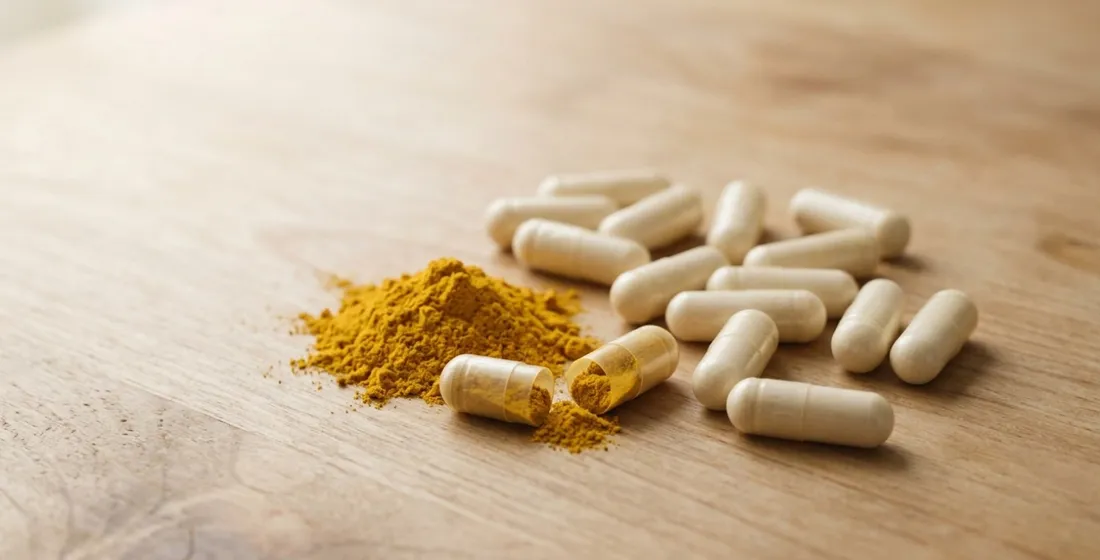
Plain two-piece vegetarian (HPMC) supplement capsules beside a mound of golden botanical powder, with one capsule opened to show the powder fill, on an unmarked wooden surface.
Buyer's snapshot The global dietary supplements market reached an estimated USD 209.52 billion in 2025, and capsules and softgels held the largest delivery-format share, around 38% (Grand View Research, Dietary Supplements Market report, 2025). For an early-stage wellness brand, the gating constraint is rarely formulation. It is minimum order quantity. A capsule line that quotes 50,000 bottles locks out a brand testing its first SKU. Silk Foods Ceylon encapsulates with the capsule MOQ confirmed on your quote, on a line with capacity of 100,000 capsules per shift and 200,000 per day, under FSSC 22000 V6 scope covering encapsulation. Capsule manufacturing for the US, EU, and Australia follows three different rulebooks. The spec you write should match the destination market, not the supplier's default. For wellness and nutraceutical brands building a first or second botanical SKU, this guide is the spec checklist. For bulk commodity buyers chasing the lowest per-capsule price, a high-volume tablet press is the more honest answer. |
Most contract manufacturers that quote herbal capsules want a five-figure bottle commitment before the first run. That math works for an established brand reordering a proven SKU. It does not work for a wellness founder validating a single ashwagandha or turmeric line against early retail interest. The result is a familiar trap: a brand pays for excess inventory it cannot move, or it skips the certified route entirely and buys white-label stock with no traceability. This guide walks through the spec a wellness brand should write, the certifications that gate a capsule program by market, and why the minimum order quantity is the number that decides whether a launch is even possible.
What goes into a herbal supplement capsule spec?
A defensible herbal capsule spec covers seven parameters: capsule shell type, fill weight, the botanical assay or marker, particle size, the microbial and heavy-metal panel, bottle and closure format, and label compliance for the destination market. Skipping any one of these moves the risk downstream to the brand. A capsule that meets fill weight but fails a heavy-metal action level on a US shipment is a recall waiting to happen.
Shell type is the first decision, and it increasingly drives consumer choice. The HPMC (hydroxypropyl methylcellulose) capsule market was valued at roughly USD 609.9 million in 2025, with growth led by demand for vegetarian and gelatin-free formats (Hydroxypropyl Methylcellulose Capsules Research Report, 2025). For a wellness brand selling into vegan, halal, or clean-label retail, a plant-derived HPMC shell is usually the right default over animal-gelatin. The fill side is where the botanical work happens. Particle size affects fill uniformity and dissolution; a powder milled too coarse bridges in the capsule and throws off dose consistency.
Spec snapshot: herbal supplement capsule Shell: HPMC (vegetarian) or gelatin, size 00, 0, or 1 Fill: single botanical or blend, target fill weight stated in mg with tolerance Assay: marker compound where the claim depends on it (for example withanolides for ashwagandha, curcuminoids for turmeric) Particle size: specified mesh for fill uniformity Microbial and contaminants: total plate count, yeast and mould, pathogens, plus heavy-metals panel to the destination action levels Bottle: HDPE or glass, induction-sealed, with desiccant where moisture-sensitive |
Write the assay parameter only where the label claim depends on it. A brand making a structure-function claim on withanolide content needs the assay in the spec; a brand selling a whole-root powder for traditional use may not. The point is to specify what the claim requires and stop there.
Why a low capsule MOQ matters for early-stage wellness brands
Minimum order quantity is the single number that determines whether an early-stage wellness brand can launch a certified capsule SKU at all. Silk Foods Ceylon (SFC) confirms the capsule MOQ on your quote, against a line capacity of 100,000 capsules per shift and 200,000 per day. For a brand testing one botanical line, a small first run is enough to stock a launch and read real demand before committing to volume.
The reason the threshold matters is unit economics in reverse. A high-volume line amortizes its changeover cost across tens of thousands of bottles, so it has no reason to quote small. A low-MOQ line accepts a higher per-unit cost on the first run in exchange for the brand’s next three reorders. The brand pays a modest premium per bottle on run one and keeps its working capital intact. That trade is almost always correct for a brand still proving a SKU.
| First-order volume | Typical fit | What the brand is really buying |
| Up to 500 bottles (MOQ confirmed on your quote) | First SKU validation, single botanical | Market read without inventory risk |
| 500 to 2,000 bottles | Proven SKU, second reorder, added line | Lower per-unit cost, retail-ready stock |
| 2,000 bottles and up | Established brand, national retail | Volume-tier pricing, scheduled reorders |
Source: Silk Route Ventures facility data, 2026.
In Q1 2026, the Silk Route Ventures (SRV) procurement desk saw the same pattern repeat across several early-stage wellness inquiries: brands that had been quoted 25,000-bottle minimums elsewhere, sitting on a validated formula they could not afford to produce. The formula was never the blocker. The MOQ was. A first run of 300 to 500 bottles let those brands list, sell through, and reorder against actual data instead of a forecast. The math is less about cost per capsule and more about not freezing cash in a guess.
Which certifications gate a herbal capsule program
For herbal capsules, the gating certification is FSSC 22000 V6, which at the Silk Foods Ceylon facility covers encapsulation directly: herbal powder filled into capsules sits inside the certified processing scope. The Matale facility also carries BRCGS for its broader processing lines, with USDA Organic and EU Organic on selected SKUs, confirmed per SKU, and is registered with Sri Lanka’s Department of Ayurveda, the registration that specifically permits manufacture and export of Ayurvedic herbal products.
That last registration is the one buyers most often miss. A facility can hold every food-safety certification and still lack the Department of Ayurveda registration that gates herbal capsule manufacture and export from Sri Lanka. For a wellness brand sourcing Ayurvedic botanicals, it is a baseline question to ask before the first sample request. The food-safety stack answers “is this made safely”; the Ayurveda registration answers “is this manufacturer allowed to make this product at origin.”
Certification snapshot: Silk Foods Ceylon, Matale BRCGS (broader processing scope) FSSC 22000 V6 (covers encapsulation: herbal powder filled into capsules) USDA Organic and EU Organic (on selected SKUs, confirmed per SKU) Registered with Sri Lanka's Department of Ayurveda FDA-registered facility |
For a US-bound program, the FDA-registered facility status is an administrative requirement, not a quality mark. The quality assurance comes from FSSC 22000 V6 and, where the brand makes an organic claim, from the matching USDA Organic certification on that specific SKU. A brand carrying both a US and an EU organic claim on the same product needs both certifications, because the two programs are not automatically interchangeable for every SKU.
What botanicals can be encapsulated from Sri Lanka
Sri Lanka’s herbal capsule capability spans the pan-Ayurvedic actives global wellness brands ask for most, alongside island-specific botanicals. The global herbal supplements market grew to roughly USD 82.9 billion in 2024 and is forecast to reach USD 166.2 billion by 2034, a 7.2% compound annual growth rate (Market.us, Global Herbal Supplements Market, 2024). Ashwagandha and turmeric anchor the demand a Sri Lankan capsule line is built to serve.
Ashwagandha is the clearest example of where the demand sits. The global ashwagandha supplements market was estimated at USD 721.5 million in 2024 and is projected to reach USD 1,529.5 million by 2033, an 8.8% compound annual growth rate (Grand View Research, Ashwagandha Supplements Market report, 2024). For a brand building an adaptogen line, ashwagandha is usually the lead SKU, with the root-versus-leaf decision shaping both the withanolide assay and the label claim.
Beyond ashwagandha and turmeric, the Silk Foods Ceylon capsule line handles moringa, triphala, gotukola, garcinia, and a range of single-origin Sri Lankan herbs. The bulk botanical raw material for these SKUs is traceable from raw material intake to shipment through our batch coding, which matters for a brand whose retail positioning depends on a clean supply story. A capsule is only as defensible as the powder inside it, and the powder is only as defensible as its origin documentation.
How regulatory frameworks shape your capsule spec by market
A herbal capsule spec is not portable across markets. The United States, the European Union, and Australia each regulate supplements under a distinct framework, and the spec a brand writes should follow the destination, not the supplier’s house default. Writing one spec and shipping it to three markets is the most common compliance error a first-time brand makes.
In the United States, dietary supplements fall under the FDA’s current good manufacturing practice rule, 21 CFR Part 111, finalized in 2007, which requires identity verification of every dietary ingredient, written quality-control procedures, and finished-product specifications for identity, purity, strength, and composition (US Food and Drug Administration, 21 CFR Part 111). The EU framework is different in kind. Food supplements are governed by Directive 2002/46/EC, which harmonizes rules for vitamins and minerals but leaves botanicals largely to individual member states, so a botanical cleared in one EU country is not automatically cleared in another (European Commission, Food Supplements Directive 2002/46/EC).
| Market | Primary framework | What it changes in the spec |
| United States | FDA 21 CFR Part 111 (dietary supplement cGMP) | Identity testing, defined finished-product specs, US heavy-metal action levels |
| EU and UK | Directive 2002/46/EC, botanicals at member-state level | Confirm the botanical is permitted in the target country; align claims to EU rules |
| Australia | TGA, most supplements as listed medicines | Permitted-ingredient list and listing requirements drive formulation |
Source: US FDA, European Commission, and TGA, 2026.
The practical takeaway for procurement: confirm the destination market before writing the spec, then build the contaminant panel and the permitted-ingredient check around that market’s rules. A capsule destined for Germany and one destined for California can share a formula and still need different documentation.
From sample to first production run: timeline and what to send
The path from first contact to a finished capsule run at Silk Foods Ceylon runs on a predictable schedule: samples are free for evaluation (you cover the courier), and a confirmed production order for a standard SKU moves from purchase order to dispatch in 2 to 3 weeks (4 to 6 weeks for private label, custom specifications and organic orders), with 2 to 4 weeks added upfront when the Silk Route Ventures R&D and NPD team develops a custom blend.
Knowing the timeline lets a brand schedule a launch backward from a retail date rather than chasing the supplier for status. What the brand sends upfront determines how fast the quote comes back. A clear brief beats a long one.
Buyer's checklist: requesting a herbal capsule quote 1. Botanical or blend, with target fill weight in mg 2. Shell preference (HPMC vegetarian or gelatin) and capsule size 3. Destination market (US, EU and UK, or Australia) so the spec matches the rulebook 4. Any required assay or marker compound tied to a label claim 5. Organic claim, if any (USDA Organic, EU Organic, or both) 6. Bottle count for the first run and target reorder cadence 7. Label and artwork status, or a request for private-label finishing |
A brand that brings a finished formula uses the ingredient-supply and private-label route. A brand that brings a concept rather than a formula uses the R&D and NPD route, where the product team scopes the blend, the marker assay, and the scale-up plan in parallel with production planning. Both start the same way: a sample against a written spec, before any purchase order.
Frequently asked questions
What is the minimum order quantity for herbal supplement capsules at Silk Route Ventures?
Silk Foods Ceylon manufactures herbal capsules with the capsule MOQ confirmed on your quote, against a line capacity of 100,000 capsules per shift. A small first run lets an early-stage wellness brand validate a first SKU without committing to five-figure inventory. Bulk botanical raw material carries a separate minimum of 25 kg per SKU for dried herbs (100 kg per SKU for other raw materials).
Does Silk Route Ventures offer private label and custom formulation for capsules?
Yes. Silk Foods Ceylon runs private-label capsule manufacturing under the brand’s own label, and the Silk Route Ventures R&D and NPD team develops custom botanical blends in-house. Formulation work typically adds 2 to 4 weeks before production, which runs 4 to 6 weeks from purchase order to dispatch for private label and custom specifications (2 to 3 weeks for standard SKUs).
Are the capsules certified for US and EU organic claims?
Silk Foods Ceylon holds FSSC 22000 V6 covering encapsulation, with USDA Organic and EU Organic certification on selected SKUs, confirmed per SKU. A brand carrying both a US and an EU organic claim on the same product needs both certifications, since the two programs are not automatically interchangeable for every SKU.
Can a Sri Lankan facility legally manufacture Ayurvedic herbal capsules for export?
Manufacturing and exporting Ayurvedic herbal products from Sri Lanka requires registration with the country’s Department of Ayurveda. Silk Foods Ceylon holds that registration in addition to FSSC 22000 V6, which is the combination a wellness brand should confirm before sourcing Ayurvedic botanicals such as ashwagandha or triphala.
Which capsule shell is better for a vegan wellness brand?
For vegan, halal, or clean-label positioning, an HPMC (hydroxypropyl methylcellulose) shell made from plant-derived cellulose is the standard choice over animal-gelatin. The HPMC capsule market reached roughly USD 609.9 million in 2025, with growth driven by demand for vegetarian and gelatin-free formats.
How Silk Route Ventures can help
Silk Route Ventures manufactures nutraceutical capsules and supplies bulk Ayurvedic and functional botanicals (ashwagandha, moringa, triphala, gotukola, turmeric, garcinia) to wellness brands globally. The Silk Foods Ceylon facility holds FSSC 22000 V6 covering encapsulation, with USDA Organic and EU Organic on selected SKUs, confirmed per SKU, and is registered with Sri Lanka’s Department of Ayurveda. Capsule MOQ is confirmed on your quote; bulk RM MOQ is 25 kg per SKU for dried herbs (100 kg per SKU for other raw materials); samples are free for evaluation (you cover the courier). For early-stage brands without a co-packer relationship, the SRV R&D and NPD team also develops custom blends and formulations in-house. Contact us (https://www.esilkroute.com.lk/contact) to send an inquiry or request a sample. For bulk orders, see our Sri Lankan herbs supplier.
Written by the Silk Route Ventures Trade Team. Silk Route Ventures (E-Silk Route Ventures (Pvt) Ltd) is a Sri Lankan B2B supply-chain operator for the Food, Beverage, Wellness, and Nutraceuticals sectors. The Silk Foods Ceylon manufacturing arm holds BRCGS and FSSC 22000 V6 certifications. Questions or to request a sample: Contact us (https://www.esilkroute.com.lk/contact) or email info@esilkroute.com.lk. For MOQ and packaging, see our herbal capsule range listing.
Sources
1. Grand View Research, “Dietary Supplements Market Size, Share & Trends Analysis Report,” (2025). Retrieved 2026-05-21. https://www.grandviewresearch.com/industry-analysis/dietary-supplements-market-report
2. Hydroxypropyl Methylcellulose (HPMC) Capsules Research Report, via GlobeNewswire, “HPMC Capsules Market to Reach $664.1 Million by 2030,” (2025). Retrieved 2026-05-21. https://www.globenewswire.com/news-release/2025/05/27/3088757/28124/en/Hydroxypropyl-Methylcellulose-HPMC-Capsules-Research-Report-2025-Market-to-Reach-664-1-Million-by-2030-Rising-Demand-for-Vegetarian-and-Gelatin-free-Capsules-Drives-Growth.html
3. Market.us, “Global Herbal Supplements Market,” (2024). Retrieved 2026-05-21. https://market.us/report/global-herbal-supplements-market/
4. Grand View Research, “Ashwagandha Supplements Market Size, Share & Trends Analysis Report,” (2024). Retrieved 2026-05-21. https://www.grandviewresearch.com/industry-analysis/ashwagandha-supplements-market-report
5. US Food and Drug Administration, “21 CFR Part 111: Current Good Manufacturing Practice for Dietary Supplements,” (2007). Retrieved 2026-05-21. https://www.ecfr.gov/current/title-21/chapter-I/subchapter-B/part-111
6. European Commission, “Food Supplements (Directive 2002/46/EC).” Retrieved 2026-05-21. https://food.ec.europa.eu/food-safety/labelling-and-nutrition/food-supplements_en
Further reading
- US Food and Drug Administration, “Small Entity Compliance Guide: cGMP for Dietary Supplements” -> https://www.fda.gov/regulatory-information/search-fda-guidance-documents/small-entity-compliance-guide-current-good-manufacturing-practice-manufacturing-packaging-labeling
- EUR-Lex, “Directive 2002/46/EC on food supplements (full text)” -> https://eur-lex.europa.eu/eli/dir/2002/46/oj/eng