
Ceylon Spices
Sri Lanka Spices Supplier
We supply Ceylon spices, grown in Sri Lanka, to food, beverage and nutraceutical buyers worldwide. Pepper, cardamom, clove, nutmeg, cinnamon, turmeric, vanilla and the wider range, in whole, cut and powder forms, in bulk and under your own label, from a BRCGS-certified supply chain.
Why Ceylon spices
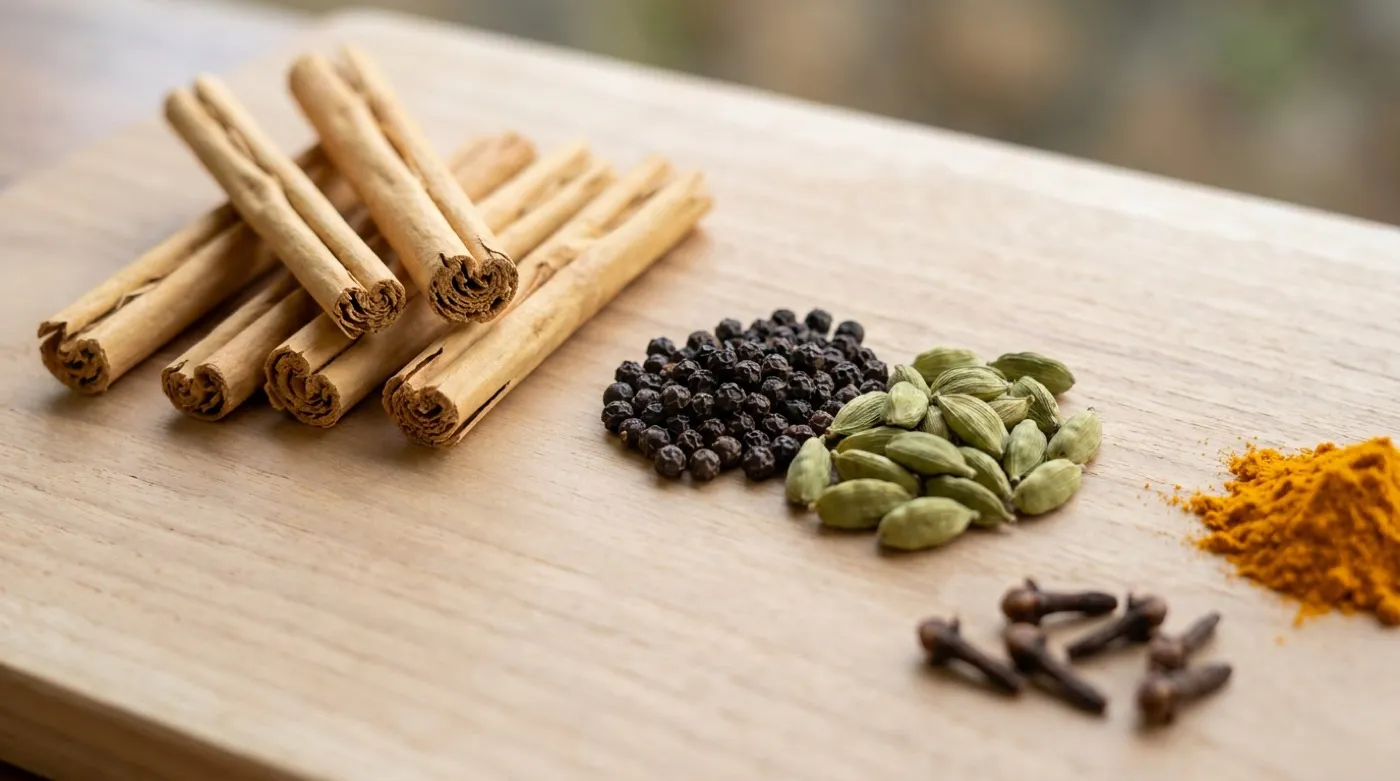
Sri Lanka, long known as Ceylon, is one of the world's historic spice sources. True Ceylon cinnamon (Cinnamomum verum) is the type example, but the island also produces pepper, cardamom, clove, nutmeg and mace, ginger, turmeric and vanilla across its uplands and coastal belts.
For B2B buyers, provenance is a specification, not a slogan. Ceylon-origin black pepper, for example, carries a distinct, pungent character. For a spice like turmeric, the curcuminoid content and heavy-metal load that matter to buyers are set by per-batch assay rather than by origin alone, so we match spices to your written specification and supporting documentation. When you specify Ceylon or Sri Lankan spices, you are specifying a defined origin with its own agronomy and trade conventions.
See the B2B buyer's guide to Ceylon spices for the market overview, and how to write a spice RFQ for specifying origin, certifications and MOQ.
The Ceylon spices we supply
Our signature spices, each in the forms buyers order:
Ceylon Cinnamon
True Ceylon cinnamon (Cinnamomum verum) in quills, powder, cut and chips. See our full range and grades.
Black & White Pepper
Sun-dried Ceylon pepper (Piper nigrum), pungent and aromatic, from whole to powder.
Cardamom
Whole green Ceylon cardamom pods, sweet and intensely aromatic, plus fine cut, TBC and powder.
Clove
Sun-dried Ceylon clove buds with a high natural oil content, whole, cut and powder.
Nutmeg & Mace
Ceylon nutmeg kernels and mace, warm and sweetly aromatic, in whole, cut and ground forms.
Ceylon Vanilla
Grade A vanilla beans, plump and seed-rich, plus vanilla powder and extract.
Turmeric
Whole dried turmeric fingers with a vivid golden interior, plus powder and extract.
Ginger
Dried Ceylon ginger with a clean heat that intensifies on grinding, whole, cut and powder.
Chili
Whole dried red chillies with colour and heat intact, plus crushed, flakes and powder.
Curry Powders
Classic Sri Lankan roasted and unroasted curry blends, plus meat, fish and vegetable powders.
Curry Leaves
Dried curry leaves (Murraya koenigii), bright and resinous, whole and powder.
Tamarind
Seedless tamarind slabs, tangy and sweet, for paste, sauces, drinks and confectionery.
See the full spices range, more than 80 products in all.
Traceability runs from farm to shipment. Our spices are processed at our Matale facility, and every batch carries its own Certificate of Analysis, so a buyer can trace a specific lot back to harvest year and packing date. Buyers qualifying us as a supplier are welcome to ask for the certificate scope statement alongside the certificate number, so it is clear which process, whether whole, cut, powder or tea-bag cut, sits inside it.
Forms and formats
We supply each spice in the forms buyers actually run: whole, coarse and fine cut, powder, and tea-bag cut (TBC) for infusion. The right form depends on your process, whether you grind in-house, blend, extract or pack for retail. Not every spice comes in every form; tell us the spice, form and volume and we will confirm and match it.
Specifications buyers ask for
A spice RFQ resolves on the same handful of parameters, whichever spice it names: botanical identity, physical grade, chemical minima, cleanliness and contaminant limits. The reference minima and maxima below are published for the category; the exact figure on your Certificate of Analysis depends on the specific spice, grade and lot, and we confirm it against your written specification before every order.
- Volatile oil
- Minimum by commodity, e.g. clove 14 ml/100 g, black pepper 2.0, cinnamon 0.7 to 1.0 (European Spice Association Quality Minima, Rev. 5)
- Moisture
- Typically 10 to 14% maximum depending on the spice (ESA Rev. 5); exact figure on request per lot
- Ash / acid-insoluble ash
- Typically up to 7 to 9% / 0.3 to 2.5% maximum depending on the spice (ESA Rev. 5)
- Cleanliness
- Defect tolerances (whole insects, mould, extraneous matter) per ASTA Cleanliness Specifications, by commodity
- Microbiology
- Total plate count, yeast and mould, Salmonella and E. coli, available on request per lot
- Heavy metals and aflatoxin
- Lead, cadmium, arsenic and mercury panel, and aflatoxin B1/B2/G1/G2 where applicable (Regulation (EU) 2023/915), available on request per lot
See how to write a spice RFQ for the ISO specification number and test method behind each of these figures, spice by spice.
Certifications
Our spice supply chain is certified to BRCGS, FSSC 22000, HACCP, ISO 22000 and GMP. USDA Organic and EU Organic certification applies to selected SKUs, so we confirm the organic status of the specific SKU you are interested in.
The commercials
What a first order looks like
- Minimum order
- From 50 kg per SKU. Capsule runs start at 180 bottles.
- Samples
- 3 to 5 business days, door to door.
- Production
- 2 to 3 weeks from purchase order to dispatch.
- Certification
- BRCGS, FSSC 22000, HACCP, ISO 22000 and GMP. USDA Organic and EU Organic on selected SKUs, confirmed for the SKU you need.
Packaging and export logistics
Retail formats ship in kraft pouches from 50 g to 1 kg. Bulk spices ship in 25 kg or 50 kg multiwall sacks with an LDPE inner liner, cased or palletised for container loading; case configuration and pallet pattern are confirmed against your destination market. Ground and cut forms are packed to protect volatile oil in transit, since that is usually the parameter buyers are paying for.
Our default pricing basis is FOB Colombo, the cleanest basis for comparing landed cost against other origins; CIF and DDP are quoted on request. Every shipment carries a certificate of origin and a phytosanitary certificate, and a Certificate of Analysis on every batch. Sample dispatch, production lead time and freight transit are three separate clocks worth planning against separately rather than as one number.
Private label and OBM spices
You can take any of these spices, single-origin or blended, under your own brand. We run private-label and own-brand-manufacturing programmes, from your recipe and pack format to a certified export run.
More on private label and OBM and our private-label spice blend range.
Where our spices are used
Buyers use Ceylon spices across retail spice lines and grinders, foodservice and bakery, beverage and tea, and nutraceutical formats such as botanical capsules.
For depth, see the 2026 Ceylon export compliance checklist, Ceylon vs Indian turmeric, black pepper origin comparison and cardamom grading.
How to order
- Send your specification. Contact us with the spice, grade or form, pack size, volume and destination market. No spec yet? Tell us the application and we will propose one.
- Confirm and sample. We confirm grade, certification and organic status against your SKU and dispatch samples in 3 to 5 business days.
- Approve and place the PO. Once samples are approved, we confirm pricing (FOB Colombo by default), packaging and Incoterm, and issue a pro-forma invoice.
- Production and dispatch. Production runs 2 to 3 weeks from purchase order to dispatch, with a COA on every batch and full export documentation.
FAQ
Ceylon spices: buyer FAQs
Which Ceylon spices do you supply?
What makes Ceylon spices different?
What is your minimum order quantity?
Are your spices organic certified?
Can you supply spices under our own brand?
What forms do you supply?
What packaging do you supply spices in?
What Incoterms do you quote?
Sourcing Ceylon spices?
Tell us the spice, form and volume, and we will send a quote and samples.