
Cardamom Grading for B2B Buyers - AGEB, Bold, Supreme, and Price Tiers
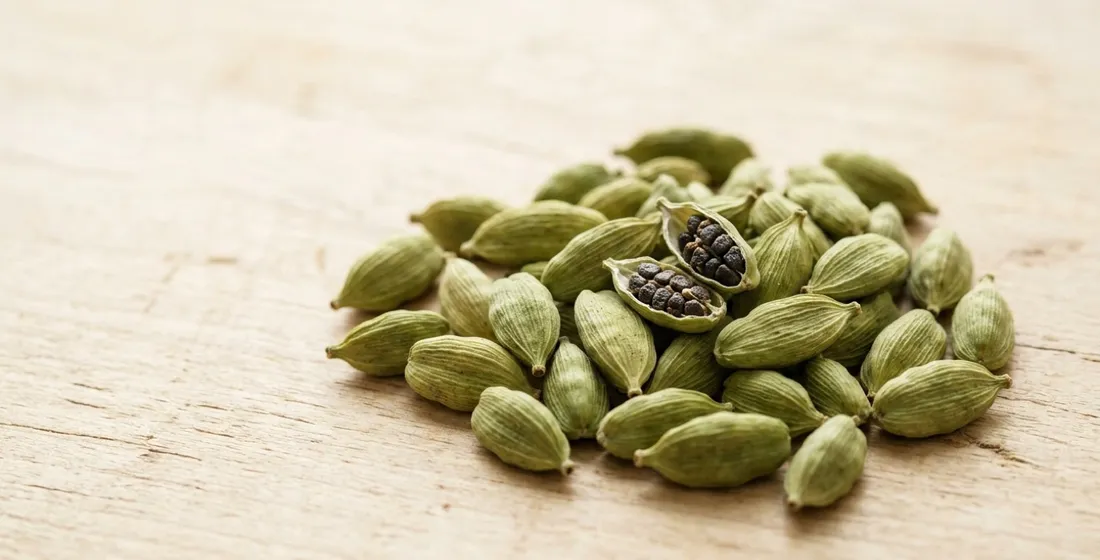
Buyer’s snapshot
- Global cardamom output sits near 35,000 tonnes a year, and Guatemala’s 2024-25 crop fell about 44% to 17,000 to 20,000 tonnes (Commodity Board Europe, 2025), pushing buyers back to Indian auctions and lifting prices.
- Grade labels like AGEB, Bold and Supreme are origin-specific shorthand for pod size, colour and bulk density, not a universal quality scale. Ceylon cardamom uses its own LG and LLG grades (Sri Lanka Export Development Board).
- The spec that travels across origins is the number underneath the label: pod diameter in mm, bulk density in g/L, volatile oil percentage and moisture. ISO 882-1 is the reference; top export lots carry volatile oil at 4% or above.
- Silk Route Ventures (SRV) supplies bulk and private-label Ceylon green cardamom from a Matale facility under FSSC 22000 V6, with a 100 kg first-order MOQ and a COA available on request.
- This post is for spice brands and distributors writing a cardamom RFQ. For lowest-shelf-price retail, a value-grade Indian or Guatemalan lot is the more honest answer.
Most buyers who ask for “extra bold” cardamom are quoting a grade name, not a spec. At origin the name carries real information: Alleppey Green Extra Bold means a measured pod size and a known bulk density. It carries far less once the pods cross a border and the label gets reused as a selling word. In 2026, with Guatemala’s crop short and Indian auction prices up roughly 36% since January, the gap between a grade name and a defensible spec is where margin leaks. This piece is the spec.
Why cardamom grading starts with pod size, not flavour
Cardamom grading is built first on physical sorting: pod diameter, colour retention and the count of malformed, black or split capsules. Flavour follows from oil content, but the grade letter on an offer sheet is mostly a size-and-appearance call. ISO 882-1:1993, the International Organization for Standardization reference for whole cardamom capsules, sets the parameters every grade sits on top of.
Green cardamom is graded the way most whole spices are graded, by what a sorter can measure and see. Pod diameter sets the tier. Colour retention, the deeper and more uniform green, lifts it. Defects pull it down: malformed capsules, blacks, splits, light seeds, extraneous matter. A bigger pod doesn’t guarantee more oil. The trade still pays for size and colour because they predict a fuller pod and a better shelf appearance.
So the grade letter is a proxy. Useful, fast, and good enough for an auction floor where everyone shares the same vocabulary. The spec underneath it is the real contract, the same way Cinnamomum verum has to be specified on an RFQ rather than assumed. It’s part of the wider discipline covered in the Ceylon spices sourcing buyer’s guide, and it’s the first thing to check when evaluating a Sri Lankan supplier against a documented standard like FSSC 22000 V6.
What do AGEB, Bold and Supreme actually mean?
AGEB stands for Alleppey Green Extra Bold, the top Indian export grade, with pods around 7 to 8 mm and bulk density near 435 g/L (Spices Board of India, 2026). Alleppey Green Bold (AGB) holds 90% of pods at 6.5 mm or above, near 415 g/L. Alleppey Green Superior (AGS) covers 5.5 to 6.5 mm pods near 385 g/L. Grading runs on pod size, colour retention and seed count.
| Grade | Pod size | Bulk density | Where it lands |
|---|---|---|---|
| Alleppey Green Extra Bold (AGEB) | ~7 to 8 mm and above | ~435 g/L | Whole-pod retail, gifting, GCC top tier |
| Alleppey Green Bold (AGB) | 90% at 6.5 mm and above | ~415 g/L | Mainstream whole-pod retail and foodservice |
| Alleppey Green Superior (AGS) | 5.5 to 6.5 mm | ~385 g/L | Grinding, blends, seed decortication |
Source: Spices Board of India, cardamom (small) grade catalogue, 2026.
One caution on vocabulary. “Supreme” and “Superior” drift between sellers. Some houses use “Supreme” for a top lot, others for a mid lot, and a few invent their own ladder entirely. Treat the word as a label, then ask for the millimetre and the bulk density. That single question separates a real offer from a hopeful one.
Where does Ceylon cardamom sit in the global grade tiers?
Ceylon cardamom is a niche origin, not a volume play. Sri Lanka serves roughly 0.1% of global cardamom demand (Sri Lanka Export Development Board), and it grades its crop as Lanka Green (LG) and Lanka Light Green (LLG) rather than the Indian AGEB system. The plant is the same species, Elettaria cardamomum; the grade names and the flavour are not.
The crop grows in the central hill country above 600 m, across Kandy, Matale, Kegalle, Nuwara Eliya and Ratnapura. That mid-elevation wet-zone terroir gives Ceylon cardamom a flavour the EDB describes as a mix of citrus, mint and herb, distinct from the heavier, more camphoraceous Guatemalan profile that dominates bulk supply. For a specialty brand telling an origin story, that difference is the whole point. For a commodity buyer filling a 20-foot container on price, it isn’t.
A buyer should read this honestly. Sri Lanka will not out-price India or Guatemala on a per-kilo bulk line, and it isn’t trying to. The Ceylon position is single-origin character, named geography and a documented chain back to the Matale belt. If that maps to your shelf, it’s a real edge. If it doesn’t, the larger origins are the right call, and a good supplier will tell you so.
Reading a cardamom grade against the ISO 882 spec
ISO 882-1 specifies the chemical and physical parameters that sit under any cardamom grade: volatile oil content, moisture, malformed capsules, extraneous matter, blacks, splits, and freedom from insects and moulds. Across the trade, top export lots carry a volatile oil content of 4% or above by weight, which is the number that actually predicts aroma strength in a finished blend.
Spec snapshot: whole green cardamom (export)
- Species: Elettaria cardamomum, whole green capsules
- Pod size: stated in mm (for example 6.5 mm+ for a Bold equivalent)
- Bulk density: stated in g/L (a fast cross-check on grade)
- Volatile oil: 4% or above by weight for top export lots (ISO 882 method)
- Moisture: controlled to keep pods firm and green and to limit mould risk
- Defects: capped limits on blacks, splits, light seeds and extraneous matter
Two parameters do most of the work for a buyer. Volatile oil drives the aroma you’re paying for, so a brand making a flavour claim should name a floor, not accept “export quality” as a stand-in. Moisture controls storage life: too dry and the pods go pale and brittle, too wet and they risk mould in the container. The grade letter implies both. The COA proves them.
There’s a regulatory layer on top of the spec for any EU-bound lot. Between July 2021 and August 2024, the EU’s RASFF system logged 13 pesticide residue cases for cardamom, most of them on Indian product (CBI, Centre for the Promotion of Imports from developing countries, 2025). EU buyers screen on pesticide MRLs and heavy metals before they screen on grade, which is why a clean residue panel on the COA now sits alongside pod size as a gating spec. The 2026 EU MRL changes for dried herbs and spices sharpened that further.
How grade and origin set the price tiers
Cardamom price tiers track grade and origin together. In April 2026, Indian auction lots averaged about Rs 2,487/kg, up roughly 36% since January, while Guatemalan wholesale ran near US$8.60/kg (Selina Wamucii and commodityonline, 2026). Extra Bold pods command the top of each origin’s range; smaller, defect-heavy or off-colour lots sit below. The grade ladder is, in effect, a price ladder.
The driver in 2026 is supply, not demand. Guatemala normally produces 40,000 to 50,000 tonnes; this season’s estimate is around 17,000 to 20,000 after thrips damage and early harvesting (Commodity Board Europe, 2025). That shortfall sent global buyers to Indian auction centres, where arrivals were projected at 30,000 to 31,000 tonnes for the calendar year. When the cheaper origin contracts, the grade premium for genuine Extra Bold widens, because there’s less top-size product to go around.
This is where the FOB-versus-landed-cost trap catches buyers. In the first quarter of 2026, the SRV procurement desk fielded the same request three times in a month: a US spice brand asking to match an “extra bold” price it had been quoted, with no millimetre, no oil percentage and no origin on the sheet. The quoted number was a landed price for a mid-size Indian lot relabelled as extra bold. Matched against a true 7 to 8 mm spec at FOB Colombo, it wasn’t cheaper at all. It was a different grade wearing the same word.
The honest comparison is grade-for-grade at the same trade term. Quote the pod size and the volatile-oil floor, fix the incoterm (FOB, CIF or DDP), then compare. A price that looks 20% lower usually resolves into a smaller pod, a thinner oil number, or a residue panel the buyer hasn’t seen yet.
Specifying cardamom on your RFQ
The fix for grade-name drift is a short, numeric RFQ. Name the grade if you like, but pin it to the spec so any supplier in any origin is quoting the same thing. The checklist below is the minimum that makes offers comparable.
Buyer’s checklist: specifying export cardamom
- 1. Species and form (Elettaria cardamomum, whole green capsules or seed)
- 2. Pod size in mm, with the percentage that must meet it
- 3. Bulk density target in g/L as a grade cross-check
- 4. Volatile oil floor (% by weight, ISO 882 method)
- 5. Moisture ceiling and defect limits (blacks, splits, light seeds, extraneous matter)
- 6. Pesticide MRL and heavy-metals panel aligned to the destination market
- 7. Per-batch COA and the certification stack (with versions)
- 8. Sample dispatched against the spec before any PO
Buyers running this checklist usually split into two camps: specialty brands specifying a single origin against a flavour claim, and distributors consolidating cardamom into a broader Ceylon spice line. Ingredient supply covers both. The same spec discipline applies whether the order is a bulk pod line or a private-label spice blend, and whether it ships next to Ceylon cinnamon and Ceylon black pepper or stands on its own.
Frequently asked questions
What is the difference between AGEB and Bold cardamom?
AGEB (Alleppey Green Extra Bold) is the top Indian grade, with pods around 7 to 8 mm and bulk density near 435 g/L. Bold (AGB) holds 90% of pods at 6.5 mm or above, near 415 g/L (Spices Board of India, 2026). The difference is pod size and density, which in turn sets the price.
Is Ceylon cardamom better than Indian or Guatemalan cardamom?
Not better, different. Sri Lanka serves about 0.1% of global cardamom demand (Sri Lanka Export Development Board) and competes on a distinct citrus-and-mint terroir profile and named single origin, not on bulk price. For a flavour-led brand it’s an edge; for a commodity line, India or Guatemala fits better.
What volatile oil content should I specify for export cardamom?
Specify a floor, not a vague grade. Top export lots carry a volatile oil content of 4% or above by weight, measured by the ISO 882 method. A brand making a flavour or aroma claim should name that floor on the RFQ and require it on the per-batch COA rather than accept “export quality” as a substitute.
Does Silk Route Ventures supply bulk or private-label Ceylon cardamom?
Yes. Silk Route Ventures supplies whole green Ceylon cardamom as bulk ingredient supply and as private-label retail packs from its Matale facility, under FSSC 22000 V6, with a 100 kg first-order MOQ per SKU and a COA available on request. Samples are free for evaluation (you cover the courier).
How Silk Route Ventures can help
Silk Route Ventures (SRV) supplies single-origin Ceylon spices, including whole green cardamom, to specialty brands and distributors across the US, EU and Australia, with USDA Organic and EU Organic on selected SKUs, confirmed per SKU. Bulk RM is shipped against the buyer’s spec from the BRCGS and FSSC 22000 V6 audited Silk Foods Ceylon (SFC) facility in Matale, with a COA available on request. First-order MOQ is 100 kg per SKU; samples are free for evaluation and ship by international courier (DHL, FedEx, UPS), with you covering the courier. For distributors consolidating a multi-spice line, or brands launching a private-label cardamom SKU, SRV runs ingredient supply and private label from the same site. Contact us to send an inquiry or request a sample pack. See our whole Ceylon cardamom spec for details.
Sources
1. International Organization for Standardization, “ISO 882-1:1993 Cardamom (Elettaria cardamomum) Specification, Part 1: Whole capsules,” (1993). Retrieved 2026-06-03. https://www.iso.org/standard/5269.html
2. Spices Board of India, “Cardamom (small) grade specifications,” (2026). Retrieved 2026-06-03. https://www.indianspices.com/spice-catalog/cardamom-small-1.html
3. Sri Lanka Export Development Board, “Cardamom from Sri Lanka (Ceylon Cardamom),” (2026). Retrieved 2026-06-03. https://www.srilankabusiness.com/spices/about/cardamom-cultivation-sri-lanka.html
4. CBI (Centre for the Promotion of Imports from developing countries), “Entering the European market for cardamom,” (2025). Retrieved 2026-06-03. https://www.cbi.eu/market-information/spices-herbs/cardamom-0/market-entry
5. Commodity Board Europe GmbH, “India’s cardamom exports set to grow in 2025,” (2025).
6. Selina Wamucii, “Cardamom prices in Guatemala,” (2026). Retrieved 2026-06-03. https://www.selinawamucii.com/insights/prices/guatemala/cardamom/
7. Commodityonline, “Cardamom market price (2026),” (2026). Retrieved 2026-06-03. https://www.commodityonline.com/mandiprices/cardamoms
Further reading
Sri Lanka Export Development Board, “Uses of Ceylon cardamom (FAQ)” -> https://www.srilankabusiness.com/faq/ceylon-spices/cardamom-uses.html
CBI, “Spices and herbs market entry and buyer requirements” -> https://www.cbi.eu/market-information/spices-herbs
Written by the Silk Route Ventures Trade Team. Silk Route Ventures (E-Silk Route Ventures (Pvt) Ltd) is a Sri Lankan B2B supply-chain operator for the Food, Beverage, Wellness and Nutraceuticals sectors. The Silk Foods Ceylon manufacturing arm holds BRCGS and FSSC 22000 V6 certifications. Questions or to request a sample: Contact us at https://www.esilkroute.com.lk/contact or email info@esilkroute.com.lk.