
Ceylon Lemongrass and Pandan (Rampe): A Dried Leaf Spec Primer
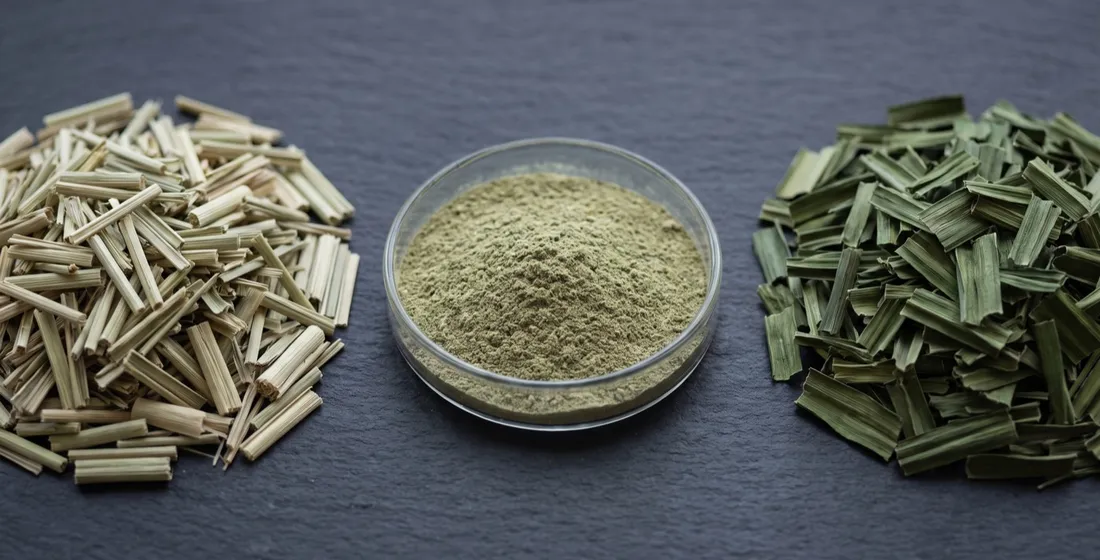
Buyer’s snapshot
- The European Spice Association sets dried lemongrass at 10% maximum moisture, 8.0% maximum total ash, and 2.5% maximum acid-insoluble ash, and recommends a water activity target of 0.65 across dried herbs (ESA Quality Minima Document Rev. 5, 2018).
- That same document sets no numeric microbiological limits for dried herbs. Specifications quoting “the ESA Salmonella figure” are quoting a superseded revision.
- Pandan, known in Sri Lanka as rampe, has no ESA entry at all: no reference moisture, no reference ash, no reference oil figure. Every parameter is contract-specified.
- Ethylene oxide is illegal in the EU, including on material treated before import. Irradiation is capped at 10 kGy in the EU against 30 kGy in the US, and carries a mandatory EU label.
- The treatment comparison table below is the part to forward to your quality lead.
A seasoning or extract buyer writing a dried leaf specification is really writing four documents at once: an identity spec, a physical spec, a microbiological spec, and a decontamination spec. Most RFQs that reach Matale cover the first two in detail and leave the last two to a sentence. That is where the disputes start, because the decontamination method a supplier chooses changes the aroma chemistry of what arrives, and because the microbiological limits most buyers believe are industry standard are not written down anywhere they think they are. This primer sets out what is actually specified, what is only convention, and what has to be agreed bilaterally.
For the species and citral side of lemongrass procurement, including the difference between Cymbopogon citratus and Cymbopogon flexuosus, the lemongrass powder sourcing primer covers that ground. This post takes the physical and microbiological half of the same spec sheet.
What does a dried leaf specification actually have to control?
The European Spice Association Quality Minima Document Rev. 5 sets dried lemongrass at 10% maximum moisture, 8.0% maximum total ash, and 2.5% maximum acid-insoluble ash, with moisture determined by ISO 939 and volatile oil by EN ISO 6571. It caps extraneous matter for herbs at 2% by weight and treats any object above 2 mm as a foreign-matter critical limit.
Those five numbers are the backbone of a defensible RFQ, and they are free to copy. The parameter that decides shelf stability, though, is the one buyers most often omit. ESA recommends a water activity target of a maximum of 0.65 for dried herbs and spices, on the grounds that water activity, not moisture percentage, governs microbial growth. Moisture and water activity are related but not interchangeable: a consignment can pass a 10% moisture check and still sit above 0.65 if the leaf has picked up humidity in transit.
One structural point in the same document deserves more attention than it gets. ESA states that products already further processed, including by grinding or microbial reduction, fall outside the scope of the document. In other words, the moment leaf is cut fine or steam treated, the quality minima formally stop applying and the specification becomes entirely bilateral. That is not a loophole. It is the reason a treated-material RFQ needs more detail than an untreated one, not less. The same cut-size logic runs across Ceylon’s dried rhizomes and leaves, as set out for dried ginger formats.
Why volatile oil belongs on the spec sheet, not just citral
ESA does not set a numeric volatile-oil minimum for lemongrass. It designates the parameter as traces, a label it applies where EN ISO 6571 quantification is not reliable, generally below 0.5%. Controlled-dried leaf assays well above that: hot-air drying at 50 °C returned 2.09% plus or minus 0.25% volatile oil in 2023 trial work, against 1.56% at 40 °C and 1.38% at 60 °C.
Read those three numbers in order and the drying curve stops being a processing detail. The best yield sits in the middle, not at the hottest or the coolest setting. Too cool and the leaf sits wet for longer, too hot and the oil goes up the stack. The same 2023 work reported geranial between 40.61% and 51.65% and neral between 30.30% and 45.25% of the oil across nine drying treatments, so the citral ratio a buyer specifies is itself partly a function of how the supplier dried the leaf.
The practical consequence for procurement is that a lemongrass RFQ should carry a volatile-oil floor expressed in percent v/w with EN ISO 6571 named as the method, alongside whatever citral ratio the application needs. Because ESA declines to set that floor, the number agreed in the contract is the only number that governs. Cut size is trade convention rather than standard: tea-bag cut runs around 1 mm, fine cut 1 mm to 2 mm, coarse cut up to roughly 5 mm, and none of those terms is defined in a published standard, so the millimetre range belongs in the contract too.
| Parameter | Dried lemongrass | Dried pandan (rampe) |
|---|---|---|
| ESA reference entry | Yes, in Appendix I | None, no entry exists |
| Moisture, maximum | 10% w/w (ESA) | Contract-specified only |
| Total ash, maximum | 8.0% w/w (ESA) | Contract-specified only |
| Acid-insoluble ash, maximum | 2.5% w/w (ESA) | Contract-specified only |
| Volatile oil | Designated traces by ESA; 1.38% to 2.09% in controlled drying trials | No reference figure; aroma governed by 2-acetyl-1-pyrroline |
| Water activity target | 0.65 maximum (ESA, all dried herbs) | 0.65 maximum applies as a herb, no product entry |
| Reference method, moisture | ISO 939 | Same method, no reference limit to test against |
What microbiological limits do EU buyers actually enforce?
This is the section where circulated specifications are most often wrong. ESA Quality Minima Document Rev. 5 contains no total plate count, no Enterobacteriaceae figure, no E. coli figure, no Salmonella figure and no yeast and mould figure. Its microbiology clause requires only that product be free from microorganisms at levels representing a health hazard, and that specific requirements be agreed between buyer and seller.
Nor does EU law fill the gap in the way buyers assume. The Food Safety Authority of Ireland, reviewing the position in 2020, recorded that Regulation (EC) 2073/2005 sets no criteria for Salmonella, Bacillus cereus, Enterobacteriaceae or E. coli in ready-to-eat dried herbs and spices. The single criterion that does apply is Listeria monocytogenes at 100 CFU/g. Everything else a European buyer enforces comes from national guidance or from the buyer’s own specification.
The national guidance is worth adopting because it is public and testable. Working to FSAI guidance, satisfactory means Salmonella absent in 25 g, E. coli below 20 CFU/g, Enterobacteriaceae below 100 CFU/g, and presumptive B. cereus below 1,000 CFU/g, with Enterobacteriaceae above 10,000 CFU/g treated as unsatisfactory.
That last organism is the one to watch on a Ceylon herb line. In the FSAI survey of 855 retail samples published in 2020, Enterobacteriaceae came back unsatisfactory in 4.4% of samples and borderline in a further 11.5%, against Salmonella at 0.5% and E. coli at 0.7%. Enterobacteriaceae is not itself a pathogen count. It is a hygiene indicator, and on dried leaf it is the parameter most likely to fail a batch. Silk Route Ventures (SRV) contracts dried herb lots against total plate count below 100,000 CFU/g and yeast and mould below 10,000 CFU/g in addition to the pathogen set, because those two have no regulatory limit to fall back on. How the resulting numbers appear on a batch document is covered in reading a per-lot heavy metal and pesticide report.
Specification snapshot
Species: Cymbopogon citratus (lemongrass), Pandanus amaryllifolius (pandan, rampe) Moisture: 10% maximum, ISO 939 Water activity: 0.65 maximum Volatile oil: contract floor, EN ISO 6571 Microbiology: Salmonella absent in 25 g, Enterobacteriaceae below 100 CFU/g Treatment: named in the contract, with method and target log reduction stated
Steam, ethylene oxide, or irradiation?
Three decontamination routes exist and only one of them is legal, unlabelled and organic-compatible on both sides of the Atlantic. ESA states that ethylene oxide treatment is banned under European legislation, and that the ban covers material treated outside the EU, so importing pre-treated material is equally illegal. Irradiation is permitted in both markets but at different ceilings, and the EU is the stricter of the two.
Dried aromatic herbs, spices and vegetable seasonings are the only category on the EU-wide positive list for irradiation, capped at an overall average absorbed dose of 10 kGy under Directive 1999/3/EC. The US permits up to 30 kGy for dried aromatic substances under 21 CFR 179.26. EU-irradiated material must be labelled as irradiated or treated with ionising radiation at every level of the chain, and ESA notes that irradiation does not have full consumer acceptability, so the treatment has to be agreed between buyer and seller. In practice almost nobody uses it: of the 855 samples FSAI surveyed, 1% were declared irradiated and 76% were declared non-irradiated.
| Route | EU | US | Label required | Practical position |
|---|---|---|---|---|
| Ethylene oxide | Banned, including on material treated before import | Permitted | Not applicable in EU | Closes the EU market on arrival |
| Irradiation | Permitted to 10 kGy | Permitted to 30 kGy | Yes, in the EU | Legal but commercially unpopular, 1% declared uptake |
| Saturated steam | Permitted | Permitted | No | The only route open in both markets without a label |
Steam is the default for Ceylon dried leaf going to Europe, and buyers should understand that it is not free. In 2017 work published in the Journal of Food Science, vacuum-assisted steam at 82.22 °C for two minutes, conditions previously validated at a 5-log Salmonella reduction, measurably changed black peppercorn: lightness fell from 22.60 to 18.63, the b* yellow coordinate fell from 9.16 to 7.17, water activity dropped from 0.563 to 0.436, and a trained sensory panel detected an odour difference at P equals 0.018. The volatile change was selective rather than uniform, with sesquiterpenes lost almost entirely while monoterpenes concentrated.
Two conclusions follow for a leaf buyer. First, any supplier quoting a tidy single figure for volatile-oil loss under steam is quoting marketing, because the published effect is class-dependent and does not reduce to one percentage. Second, the specification should name the treatment, the target log reduction, and the post-treatment volatile-oil floor together, so the quality cost is bounded by contract rather than discovered on arrival. Organic status survives steam, which is why it pairs with the certificates covered in the buyer’s guide to organic certifications.
Why pandan is the harder leaf to buy dried
Pandan carries its aroma in a single unstable compound, 2-acetyl-1-pyrroline, and the drying step decides how much of it survives. Fresh leaf assayed at 0.882 ppm in 2010 work published in the Journal of Food Science and Technology. Dried at 35 °C and 27% relative humidity, retention was 84.6%. Dried at 45 °C and 60% relative humidity, retention fell to 48.3%. Shade drying landed between the two at 66.7%.
A ten degree difference costs roughly a third of the aroma. The gentle route also takes 900 minutes against 540, and colour follows the same curve, with a nine-point sensory colour score falling from 8.5 for the 35 °C leaf to 5.3 for the 45 °C leaf. Fresh pandan starts at about 3.82 kg of water per kg of dry matter, so a processor is removing an enormous water load, and the fast, cheap, hot dry is precisely the one that destroys both the aroma and the colour the buyer is paying for.
This is the recurring shape of a pandan RFQ that arrives without a drying clause. The buyer specifies moisture and microbiology, receives compliant material, and finds the aroma thin. Nothing was breached, because the drying temperature was never in the contract. For pandan the drying profile is a specification parameter, not a process detail, and it belongs next to the moisture line.
There is a regulatory point to settle before any EU shipment. Pandan has no verifiable entry in the EU Novel Food Status Catalogue, and because that catalogue is expressly non-binding and non-exhaustive, absence is not a clearance in either direction. Under Regulation (EU) 2015/2283 the operative test is whether consumption in the EU was negligible before 15 May 1997, and the evidential burden sits with the food business operator. Buyers importing dried pandan into the EU should obtain a documented novel-food position from their supplier or their own regulatory counsel rather than assume one exists.
Where Silk Route Ventures walks away
Pandan is not a listed line in the SRV ingredient catalogue. Lemongrass cut and powder are, alongside the wider Ceylon herb portfolio. A buyer who needs contracted dried pandan at a defined 2AP retention should treat it as a development conversation with a drying trial attached, not as a catalogue order, and should expect a supplier who quotes it off the shelf to be reselling. Saying so costs an inquiry and saves a rejected container.
Frequently asked questions
What moisture and water activity should dried Ceylon lemongrass meet?
Ten percent maximum moisture determined by ISO 939, which is the ESA Quality Minima figure for lemongrass, paired with a water activity target of 0.65 maximum that ESA recommends across dried herbs. Specify both. Moisture alone does not predict microbial stability in transit.
Does the European Spice Association publish microbiological limits for dried herbs?
No. Rev. 5 of the Quality Minima Document, issued in 2018, contains no numeric microbiological limits and refers the matter to agreement between buyer and seller. Figures circulating as current ESA limits come from a superseded revision, and EU Regulation 2073/2005 sets only a Listeria monocytogenes criterion at 100 CFU/g.
Can ethylene oxide treated lemongrass be imported into the EU?
No. ESA records that the EU ban covers material treated outside the EU as well as within it, so pre-treated imported material is illegal. Saturated steam is the route that is permitted in both the EU and the US without a mandatory consumer label.
Does Silk Route Ventures supply steam-treated lemongrass against a buyer specification?
Yes. Lemongrass cut and powder ship against the buyer’s written spec from the BRCGS and FSSC 22000 V6 audited Silk Foods Ceylon (SFC) facility in Matale, with the treatment method, target log reduction and post-treatment volatile-oil floor written into the contract rather than left to process default.
How Silk Route Ventures can help
Silk Route Ventures (SRV) supplies bulk lemongrass cut and powder, alongside the broader Ceylon herb portfolio, to seasoning houses, extract manufacturers and beverage formulators in the US, EU and Australia. Material ships against the buyer’s written specification from the BRCGS and FSSC 22000 V6 audited Silk Foods Ceylon (SFC) facility in Matale, with USDA Organic and EU Organic on selected SKUs, confirmed per SKU. First-order MOQ is 50 kg per SKU, samples ship by international courier at 3 to 5 business days, and PO-to-dispatch lead time is 2 to 3 weeks. Buyers consolidating a Ceylon herb line, or scoping a treated-material spec for the first time, can also work through the ingredient supply playbook or the wider functional herbs and Ayurvedic botanicals guide before sending a brief. For buyers weighing formats and MOQ for a branded line, private labelling spices covers that route. Contact the team at https://www.esilkroute.com.lk/contact to send an inquiry, request a sample, or scope a specification. Bulk buyers can review specs on our Sri Lankan herbs supplier.
Sri Lanka exported US$245.36 million of spices and essential oils in the first seven months of 2025, up 10.51% year on year according to the Sri Lanka Export Development Board. The buyers taking the largest share of that growth are the ones writing the treatment clause into the contract before the first container moves. Buyers can review the Ceylon lemongrass spec sheet directly.
Sources
-
European Spice Association, “Quality Minima Document,” Rev. 5, March 2018. Retrieved 2026-08-21. https://www.srilankabusiness.com/pdf/read_more_products/annex_8_esa_doc_on_minima_quality_standards.pdf
-
Food Safety Authority of Ireland, “Survey of the Microbiological Safety of Pre-packaged Dried Herbs and Spices (17NS3),” 2020. Retrieved 2026-08-21. https://www.fsai.ie/getmedia/063d060c-c0c2-4d7d-83e9-f4bc34a479db/survey-of-the-microbiological-safety-of-pre-packaged-dried-herbs-and-spices.pdf
-
European Union, Directive 1999/3/EC establishing a Community list of foods and food ingredients treated with ionising radiation, 1999. Retrieved 2026-08-21. https://eur-lex.europa.eu/eli/dir/1999/3/oj/eng
-
US Food and Drug Administration, 21 CFR 179.26, “Ionizing radiation for the treatment of food.” Retrieved 2026-08-21. https://www.ecfr.gov/current/title-21/chapter-I/subchapter-B/part-179/subpart-B/section-179.26
-
Duncan, S. E. et al., “Processes to Preserve Spice and Herb Quality and Sensory Integrity During Pathogen Inactivation,” Journal of Food Science 82(5):1208-1215, 2017. Retrieved 2026-08-21. https://pmc.ncbi.nlm.nih.gov/articles/PMC5435955/
-
Rayaguru, K. and Routray, W., “Effect of drying conditions on drying kinetics and quality of aromatic Pandanus amaryllifolius leaves,” Journal of Food Science and Technology 47(6):668-673, 2010. Retrieved 2026-08-21. https://pmc.ncbi.nlm.nih.gov/articles/PMC3551131/
-
Setareh, M. et al., “The effectiveness of hot-air, infrared and hybrid drying techniques for lemongrass,” Scientific Reports, 2023. Retrieved 2026-08-21. https://pmc.ncbi.nlm.nih.gov/articles/PMC10620145/
-
Sri Lanka Export Development Board, “Sri Lanka’s exports surge to nearly US$10 billion in first seven months of 2025,” 25 August 2025. Retrieved 2026-08-21. https://www.srilankabusiness.com/news/sri-lankas-exports-surge-to-nearly-us-10-billion-in-first-seven-months-of-2025.html