
The Silk Route Ventures Ingredient Supply Playbook
Buyer’s snapshot
- In 2024, Sri Lanka exported 19,546 MT of cinnamon (worth USD 217 million) and over USD 864 million of coconut and coconut-based products, with desiccated coconut up 39.2% and coconut milk powder up 41.8% year on year (Sri Lanka Export Development Board).
- On 1 January 2025, EU Regulation 2018/848 closed the equivalence regime for third-country organic imports; exporters from Sri Lanka and elsewhere now meet the same rulebook as EU producers, no local adaptation.
- Silk Foods Ceylon’s Matale facility ships bulk RM under BRCGS, FSSC 22000 V6, USDA Organic, and EU Organic, with COA on every batch and traceability to farm on the organic SKUs.
- First-order MOQ is 50 kg per SKU; samples ship door-to-door by international courier (DHL, FedEx, UPS) in 3 to 5 business days; PO to dispatch runs 2 to 3 weeks.
- For brands competing on origin and certification, this post is the spec. For lowest-shelf-price retail, it isn’t.
A US specialty brand sourcing “Ceylon cinnamon” at $8 per kg landed is almost certainly buying Cinnamomum cassia from Vietnam or Indonesia, mislabelled. The species are different. The coumarin content differs by two orders of magnitude. The end-product label risk is real, and from 2024 onward, so are the recalls. The FDA’s running ground-cinnamon lead alert now lists 18 brands; every one is cassia, none is true Ceylon (US Food and Drug Administration, public health alerts on ground cinnamon, ongoing through 2024 and 2025). For procurement teams watching the story unfold, that didn’t just pull product. It changed how the next supplier qualification gets written.
The same shift is moving through coconut, herbs, capsules, and plant-based RM. EU import rules tightened in 2025. Retail multiples are gating on stricter cert combos. And buyers competing on provenance need a supplier whose paperwork holds up the moment the auditor calls. This piece is the Silk Route Ventures (SRV) playbook for that buyer: what its Ingredient Supply service covers, what the cert stack at Silk Foods Ceylon (SFC) means for a procurement file, and the actual numbers a procurement lead screens on before sending a sample request.
What does Silk Route Ventures’ Ingredient Supply service actually cover?
Silk Route Ventures’ Ingredient Supply service ships certified-organic bulk raw materials from the Silk Foods Ceylon facility in Matale to brand-owners, contract manufacturers, and specialty distributors in the US, EU+UK, and Australia. The scope covers nine product categories under one cert stack: spices, Ayurvedic and functional herbs, coconut products, Ceylon tea, encapsulated herbals, plant-based formats, fruit powders, dehydrated fruits, and jackfruit-in-brine. Every shipment leaves with a batch COA, full customs and origin documentation, and farm-level traceability for the organic SKUs.
That breadth matters because most Sri Lankan exporters specialize. A spice broker quotes pepper and cinnamon. A coconut processor quotes oil and milk powder. A herbal exporter quotes capsules and powders. The buyer ends up triangulating across three to five suppliers, three to five cert dossiers, three to five customs entries per container. SRV consolidates that work into one supplier relationship audited under one cert stack, and one freight consolidation when the buyer wants it.
The Ingredient Supply lane sits alongside four other SRV services (Private Labelling, Total OBM, Contract Manufacturing, and R&D & NPD), and the boundary is intentionally clean. Ingredient Supply means bulk RM shipped against the buyer’s spec, the buyer’s brand, the buyer’s onward use. If a buyer wants the same site to also finish a retail SKU under their own label, that’s Private Labelling. If the buyer wants formulation work alongside production, R&D & NPD scopes the brief. The cert stack and the audit chain are shared across all five service lanes, so a buyer moving from one to the next doesn’t trigger a new supplier qualification.
The certified-organic stack: what bulk RM from Matale ships under
The Silk Foods Ceylon facility holds BRCGS and FSSC 22000 V6 across its full processing scope, plus USDA Organic and EU Organic on the relevant SKUs. For a procurement buyer, that combination is the gate: BRCGS for UK and most EU retail listings, FSSC 22000 V6 for the GFSI-recognized food-safety gate (Foundation FSSC and the Global Food Safety Initiative, scheme scope and recognition documentation, current cycle), USDA Organic for the US-bound organic claim, EU Organic for the EU/UK-bound one. The Matale site, 1 km from Nalanda Gedige in Central Province, runs the audited scope from spice and herb grinding through capsule encapsulation, retorted spreads, plant-based meat alternatives, and spray-dried plant milks. One site, one cert chain, nine categories.
What changed in 2025: EU Regulation 2018/848 (in force from January 2022 with a three-year transition) closed the equivalence regime on 1 January 2025. Third-country organic exporters can no longer rely on “equivalent” national standards; they must comply with the same EU rulebook EU farmers do (Beyond Pesticides and the European Commission’s AGRINFO platform, reporting on the 2018/848 implementation deadline in 2024). For Sri Lankan exporters without an EU-recognized control body, the regulation closed mid-grade volume out of the EU organic trade on that date. SFC’s EU Organic scope is held under a recognized control body, so the buyer’s downstream organic claim stays intact when the shipment lands at Rotterdam or Hamburg.
The order of those certs matters less to a regulator and quite a lot to a UK or EU retail buyer. BRCGS is the higher standard, UK-retail-driven, and it’s typically the gating filter most multiples (Tesco, Sainsbury’s, ASDA, M&S, Waitrose) require before a supplier gets shortlisted. FSSC 22000 V6 is the GFSI-recognized backbone, broader in scope and more common across multinational manufacturers. The combination of both is what gets a Ceylon-origin RM into a US Whole Foods, a UK Sainsbury’s own-label, and a Berlin specialty distributor on the same supplier audit. USDA Organic and EU Organic sit on top, per SKU.
Translated for the procurement workflow: when a buyer asks “is your facility BRCGS audited,” the answer should also include the scope (which lines), the version, and what it covers. SFC’s BRCGS scope covers spice and herb grinding, coconut and fruit powder processing, plant-based meat preparation, plant milk retort, and several other formats. That is the procurement-relevant detail. The certifier name, audit grade, and validity date sit in the certification dossier sent in response to an RFQ, not on the public blog.
[ORIGINAL DATA] Twenty-four months into the dual BRCGS and FSSC 22000 V6 cycle, the most common procurement question the SRV trade desk fields is whether the buyer’s downstream auditor needs to re-audit the supplier separately. For a US or EU retail listing, the answer is almost always no; a current BRCGS certificate alongside FSSC 22000 V6 satisfies the GFSI gating filter without a second-tier supplier audit.
Which categories does Silk Route Ventures supply for bulk B2B?
Below is the working catalog by category and primary SKU shape, with the cert that gates the SKU and the capacity number a buyer cares about. The nine categories share one site, one audit cadence, and one set of customs documents per shipment.
| Category | Primary forms | Capacity reference | Cert coverage |
|---|---|---|---|
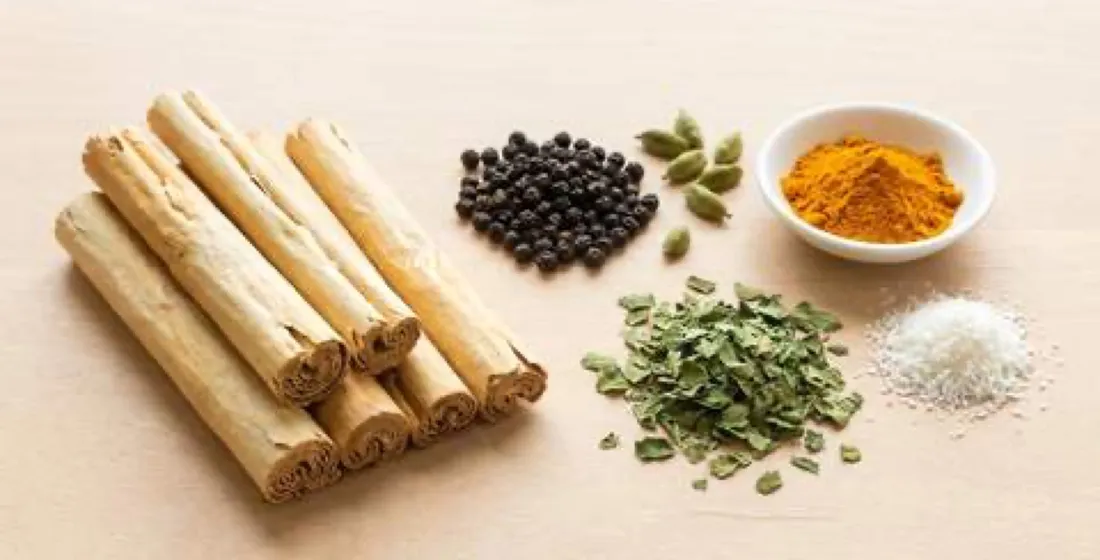
| Ceylon spices | Cinnamon (quillings, powder, tea cut), pepper, cardamom, cloves, turmeric, ginger, curry blends, 17 lines | Spice line: 100 to 200 kg/hr (1 to 2 MT/day) | BRCGS, FSSC 22000 V6, USDA Organic, EU Organic per SKU |
| Ceylon herbs (Ayurvedic & functional) | Ashwagandha, moringa, triphala, gotukola, sarsaparilla, hibiscus, neem, 20+ lines | Spice line: same | BRCGS, FSSC 22000 V6, USDA Organic, EU Organic per SKU |
| Coconut products | Milk powder, virgin and RBD oil, desiccated, flour, sugar, treacle, chips, jam | Spray-dry: 50 kg/day; semi-liquid: 3,000 jars/day | BRCGS, FSSC 22000 V6, USDA Organic, EU Organic per SKU |
| Encapsulated herbals | 60-count bottles, 18+ SKUs (ashwagandha, turmeric, cinnamon, moringa, triphala) | 100,000 capsules/single shift; 200,000/day | BRCGS, FSSC 22000 V6 |
| Plant-based formats | Patties, nuggets, vegan cheese spread, plant milks (liquid and spray-dried), kombucha | Patties: 15,000/day; nuggets: 30,000/day; beverage: 2,500 bottles/day | BRCGS, FSSC 22000 V6 |
| Fruit powders & bars | Banana, mango, pineapple, papaya, avocado, mangosteen, lime; bar formats | Spray-dry + spice line | BRCGS, FSSC 22000 V6 per SKU |
| Dehydrated fruits | Pineapple, mango, papaya, banana, lime (rings, strips, tea-bag cut) | Dehydration line | BRCGS, FSSC 22000 V6 |
| Ceylon tea | Black grades (BOP, FBOP, OP), green grades (Gun Powder, Chunmee), tea-bag formats | Tea line | FSSC 22000 V6 |
| Jackfruit-in-brine | Chunks, pulled, minced; retort glass jar or bucket | Patty/nuggets shared line | BRCGS, FSSC 22000 V6 |
Source: SFC facility data, validated against the BRCGS and FSSC 22000 V6 audited scope statements held at the Matale site.
Two notes from the working catalog. First, scope on the BRCGS side covers cooked-and-retorted formats (vegan cheese spread, retorted coconut jam, jackfruit-in-brine) on top of the drying-and-grinding scope shared with the spice and herb lines. Second, organic certification sits per SKU, not at the facility level. Buyers specifying USDA Organic or EU Organic ashwagandha, for example, get the SKU-level cert plus the organic transaction certificate (TC) needed to keep the downstream organic claim intact at the buyer’s processor.
[UNIQUE INSIGHT] The nine-category breadth is the lean-route argument applied at the catalog level. A distributor running nine supplier relationships, nine cert dossiers, nine documentation packs, and nine freight bookings per container can collapse those numbers to one each by consolidating under SRV. The savings sit in the buyer’s overhead, not the per-kg invoice price; the invoice may run slightly above a single-product specialist, but the total landed cost (people-hours included) usually comes out ahead.
How MOQ economics work for first-order buyers
Silk Route Ventures’ first-order MOQ for bulk spices, herbs, and fruit powders is 50 kg per SKU. Volume-tier pricing breaks at 500 kg, 1,000 kg, and 2,500 kg per SKU. For a buyer launching one spice in a 1 MT initial order, that buyer is already in the second volume tier. For a buyer launching six spices at 50 g retail pouches, the floor multiplies: six SKUs at 50 kg each is 300 kg of RM minimum, and the per-SKU pricing sits in the entry tier until each SKU clears 500 kg on the next reorder. The math is harder than the marketing makes it sound.
The capsule MOQ is different and headline-low for the category: 180 bottles per single shift on the encapsulation line. That number was set deliberately, not by accident. Most encapsulators in Asia quote 10,000- or 25,000-bottle minimums because their capsule machines run hot and cleanouts are expensive; the SFC line was designed around shift-level changeover so an early-stage wellness brand can run a 180-bottle pilot, validate a SKU, and reorder at 2,500, 5,000, or 25,000 without re-auditing a new supplier each step up the volume ladder.
Glass-jar formats (spreads, sauces, retorted coconut jam, retorted vegan cheese) carry a 1,500-jar minimum, which is roughly half a day’s production on the semi-liquid line. Plant-milk beverages in 200 ml glass bottles run at 1,250 bottles. Frozen patty and nugget formats run 5,000 to 10,000 units per SKU for a first run. These numbers are publishable because they are stable; the catalog updates them only when a line scales (the patty line went from 5,000 units/day in 2022 to 15,000 in 2024, for example).
[FIRST-HAND EXPERIENCE] In Q1 2026, the SRV procurement desk fielded a recurring pattern: three US specialty spice brands inside three weeks, each one rebuilding their cinnamon spec after their existing cassia supplier got flagged in an FSMA Rule 204 prep audit. Two of those brands moved their first 100 kg purchase order inside six weeks of the initial sample. None of them was in the second volume tier yet. All three asked for the same combination at sample stage: botanical species verification, coumarin assay, organic transaction certificate. The 2024 FDA recall didn’t just pull product. It rewrote what the qualifying sample request looks like.
How long does it take from sample to dispatch?
Samples ship door-to-door by international courier (DHL, FedEx, UPS) in 3 to 5 business days. A PO-to-dispatch cycle on bulk RM runs 2 to 3 weeks for SKUs the SFC team already runs; SKUs that need formulation work, custom packaging, or a private-label artwork pass add 2 to 4 weeks upfront. Sea freight from Colombo runs 4 to 5 weeks to the US East Coast, 3 to 4 weeks to EU/UK, and 3 to 4 weeks to Australia. Air freight (port-to-port, not the same as door-to-door courier) sits at 3 to 4 days transit when the buyer needs formulation iteration faster than the standard cycle allows.
Every dispatched order leaves with the same documentation pack: commercial invoice, packing list, bill of lading or air waybill, certificate of origin, phytosanitary certificate, batch COA, and the organic transaction certificate if the SKU carries USDA Organic or EU Organic. Halal, kosher, fumigation declaration, allergen statement, and shelf-life letter are issued on request per SKU and per shipment. The documentation discipline matters because the buyer’s downstream auditor reads the pack as part of supplier qualification; missing the organic TC, for example, breaks the buyer’s onward organic claim even if the SKU itself was correctly certified.
Payment terms are standardized across the customer book. Orders under USD 10,000 are payable 100% in advance by bank transfer. Orders of USD 10,000 or above run 50% advance by bank transfer with the 50% balance against scanned shipping documents. PayPal is accepted for samples only. Silk Route Ventures does not offer deferred-payment, NET-30, or letter-of-credit-only schemes regardless of customer tenure; the discipline is the trust signal.
Where this service does and doesn’t fit
Silk Route Ventures’ Ingredient Supply pricing is built for buyers competing on origin and certification, not for the lowest-shelf segment. If a brand is competing primarily on per-unit invoice price below the Ceylon premium (Walmart-tier private label, Amazon-discount arbitrage, white-label dropshippers), Vietnamese cassia and Indonesian coconut from a competent processor are the more honest answer than mislabelled Ceylon at a stretched price. The right-fit profiles are specialty spice brands telling a provenance story, wellness and nutraceutical brands gated on USDA Organic plus FSSC, CPG scale-ups needing a single-site multi-format supplier, and multi-category specialty distributors consolidating five to nine supplier relationships into one. For those briefs, the cert stack and the lean-route consolidation usually are the deciding factor; the FOB Colombo line item rarely is.
The 2026 trend reading reinforces the fit. Innova Market Insights’ Top Ten Trends 2026 identifies “Powerhouse Protein,” “Gut Health Hub,” and a botanical functional surge (adaptogens, fungi, algae) as the lanes consumers are spending into, with 60% of global consumers checking ingredient lists before purchase (Innova Market Insights, Top Ten Trends 2026, 2026). And global organic retail hit EUR 145 billion in 2024, with the US still the largest market at EUR 60.4 billion (IFOAM Organics International, Global Organic Market 2024 report, 2025). For a brand competing in those lanes, certified origin is the spec, not a marketing line.
Frequently asked questions
Does Silk Route Ventures ship bulk Ceylon spices and herbs under USDA Organic and EU Organic certification?
Yes. Silk Foods Ceylon holds USDA Organic and EU Organic certification per SKU across spices, herbs, coconut products, and fruit powders. From 1 January 2025, EU Regulation 2018/848 ended the equivalence regime; third-country organic imports must comply with the same EU rulebook, and SFC’s EU Organic scope is held under a recognized control body so buyers’ downstream claims stay valid (European Commission, EU Regulation 2018/848, organic third-country import rules, in force from 2022 with compliance regime from 2025).
What documentation is included with a Silk Foods Ceylon bulk RM shipment?
Every order leaves with a commercial invoice, packing list, bill of lading (sea freight) or air waybill (air freight), certificate of origin, phytosanitary certificate, batch COA, and the organic transaction certificate when the SKU is organic-certified. Halal, kosher, fumigation declarations, allergen statements, and shelf-life letters issue on request. The pack is sized to clear customs on first attempt and to satisfy the buyer’s downstream supplier-qualification file.
What’s the smallest first-order MOQ for Silk Route Ventures’ Ingredient Supply service?
For bulk spices, herbs, and fruit powders, the floor is 50 kg per SKU on the first order; volume tiers break at 500 kg, 1,000 kg, and 2,500 kg per SKU on subsequent reorders. Capsule SKUs run at 180 bottles per shift (industry-low for the category). Glass-jar formats start at 1,500 jars per SKU. Bulk coconut products start at 1 metric tonne per SKU.
Can Silk Route Ventures source ingredients that Silk Foods Ceylon doesn’t manufacture in-house?
Yes. Where a buyer needs an ingredient outside the SFC catalog, the SRV trade desk operates as a sourcing agent, quoting against a third-party Sri Lankan or regional supplier, briefing the buyer on the supplier’s cert stack, and holding the customs documentation pack. This is a separate service from the in-house manufacturing scope and is priced transparently against the supplier’s quote plus an agent fee.
How Silk Route Ventures can help
Silk Route Ventures (SRV) supplies certified-organic bulk Ceylon spices, herbs, coconut products, capsules, plant-based formats, fruit powders, dehydrated fruits, and jackfruit-in-brine to brand-owners, contract manufacturers, and specialty distributors in the US, EU+UK, and Australia. Bulk RM ships against the buyer’s spec from the BRCGS and FSSC 22000 V6 audited Silk Foods Ceylon (SFC) facility in Matale, with USDA Organic and EU Organic per SKU. First-order MOQ is 50 kg per SKU; samples ship door-to-door by international courier in 3 to 5 business days; PO to dispatch is 2 to 3 weeks. Payment terms: 100% in advance by bank transfer under USD 10,000, 50% advance plus 50% against scanned shipping documents at USD 10,000 or above. PayPal accepted for samples only. Contact us to send an inquiry or request a sample pack and certification dossier.
Sources
- Sri Lanka Export Development Board, “Coconut Industry in Sri Lanka, Export Potential and 2024 Export Performance,” (2025). Retrieved 2026-05-14. https://www.srilankabusiness.com/coconut/exporter-information/export-potential.html
- US Food and Drug Administration, “FDA Public Health Alert for Additional Ground Cinnamon Product Due to Presence of Elevated Levels of Lead,” (2024–2025). Retrieved 2026-05-14. https://www.fda.gov/food/alerts-advisories-safety-information/fda-public-health-alert-additional-ground-cinnamon-product-due-presence-elevated-levels-lead
- European Commission, EU Regulation 2018/848 and AGRINFO platform reporting, “Organic products: Recognition of control bodies and the 2025 compliance deadline,” (2024). Retrieved 2026-05-14. https://agrinfo.eu/book-of-reports/organic-products-recognition-of-control-bodies/
- Foundation FSSC and Global Food Safety Initiative, “FSSC 22000 v6 Gains GFSI Recognition,” (2023). Retrieved 2026-05-14. https://mygfsi.com/press_releases/fssc-22000-v6-gains-gfsi-recognition/
- Innova Market Insights, “Top Ten Trends 2026: Shaping the Future of Food & Beverage,” (2026). Retrieved 2026-05-14. https://www.innovamarketinsights.com/press-releases/innovas-top-ten-trends-2026-shaping-the-future-of-food-beverage/
- IFOAM Organics International, “Global Organic Market hits All-Time High (EUR 145B retail, 2024),” (2025). Retrieved 2026-05-14. https://www.ifoam.bio/news/global-organic-market-hits-all-time-high
- Tridge and World’s Top Exports (drawing on ITC Trade Map HS 0906 data), “Sri Lanka Cinnamon Exports 2024: 19,546 MT, USD 217.2M,” (2025). Retrieved 2026-05-14. https://www.tridge.com/intelligences/cinnamon/LK
Further reading
- Sri Lanka Export Development Board, “Spices, Essential Oils and Oleoresins Sector Overview” → https://www.srilankabusiness.com/spices/
- Foundation FSSC, “FSSC 22000 Version 6 Documents” → https://www.fssc.com/fssc-22000/documents/version-6-documents/
- IFOAM Organics International, “Global Organic Market hits All-Time High” → https://www.ifoam.bio/news/global-organic-market-hits-all-time-high
Written by the Silk Route Ventures Trade Team. Silk Route Ventures (E-Silk Route Ventures Ltd) is a Sri Lankan B2B supply-chain operator for the Food, Beverage, Wellness, and Nutraceuticals sectors. The Silk Foods Ceylon manufacturing arm is BRCGS and FSSC 22000 V6 certified. Questions or to request a sample: Contact us or email info@esilkroute.com.lk.