
Veganuary 2027 Plant-Based Private Label Timeline for DTC Launches
By Silk Route Ventures Trade Team, 25 October 2026
Buyer’s snapshot
- Veganuary estimated 30 million participants worldwide in 2026 and logged at least 1,187 new products and menu items across 20 countries (Veganuary, March 2026 review). Those launches were fixed well before January.
- On 25 October 2026, a brand-new private label SKU shipped by sea cannot reach a European or Australian port by 1 January 2027. The 10-week best case needed a signed brief on 23 October.
- A buyer with a locked formulation can still make January. A purchase order signed by 13 November reaches an EU or Australian port by 1 January even at the slow end of every range.
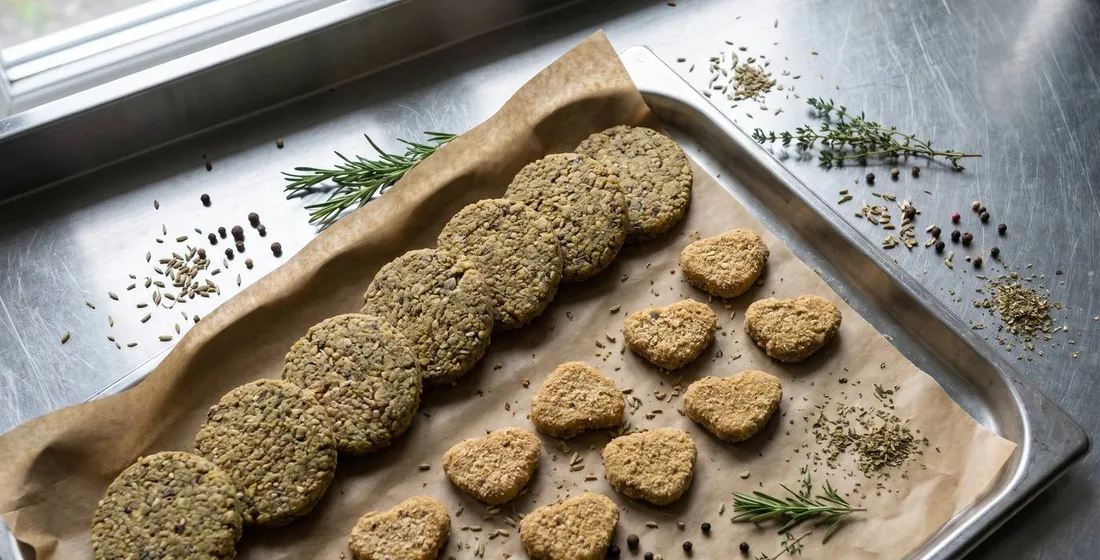
- Silk Foods Ceylon (SFC) runs vegan patties at 15,000 units a day and nuggets at 30,000 a day under BRCGS and FSSC 22000 V6. First-run minimums typically sit at 5,000 to 10,000 units per SKU, confirmed on the quote.
- This post is for DTC and foodservice brands. Grocery ranging for January is normally settled before autumn, so retail is outside the window.
Veganuary 2027 starts on a Friday, 1 January. For a plant-based brand, the date is fixed and the lead time is the variable. Silk Route Ventures (SRV) publishes its stage times, and they add up to 10 to 14 weeks from a signed brief to a port for a new private label SKU. Today is 25 October. The arithmetic is unforgiving, but it is not hopeless, and this post shows which launches still fit and which should move.
What does Veganuary actually demand of a launch?
Veganuary demands a product that is on sale, in stock and ready to ship when the campaign opens. Its own review put 2026 participation at 30 million people, an estimate built from surveys in 12 core countries, with at least 1,187 launches across 20 countries (Veganuary, 2026). Traffic is real. Patience from buyers is not.
The category behind that traffic is selective. US plant-based meat and seafood retail fell about 10% in 2025 to roughly $1 billion, while global plant-based meat and seafood sales were estimated at $6.6 billion (Good Food Institute, 2026 State of the Industry). A late, loosely specified launch into that market costs more than waiting a year.
How long does a plant-based private label launch take?
A new private label SKU takes 10 to 14 weeks from signed brief to port by sea to the EU or Australia, and 11 to 15 weeks to the US. A locked formulation on a standard SKU takes 5 to 7 weeks to the EU or Australia and 6 to 8 weeks to the US. Each figure is the sum of three published stage times.
| Route | Formulation (signed brief to approved) | Production (PO to dispatch) | Sea freight | Brief or PO to port |
|---|---|---|---|---|
| New SKU, private label, to EU or Australia | 3 to 4 weeks | 4 to 6 weeks | 3 to 4 weeks | 10 to 14 weeks |
| New SKU, private label, to the US | 3 to 4 weeks | 4 to 6 weeks | 4 to 5 weeks | 11 to 15 weeks |
| Locked spec, standard SKU, to EU or Australia | None | 2 to 3 weeks | 3 to 4 weeks | 5 to 7 weeks |
| Locked spec, standard SKU, to the US | None | 2 to 3 weeks | 4 to 5 weeks | 6 to 8 weeks |
The R&D promise at SRV is 3 to 4 weeks at most, from signed brief to approved formulation. Samples are free for evaluation, and the buyer pays the courier. UK lanes are not published separately, so UK buyers should ask the forwarder for the actual transit.
Which signing dates still hit 1 January 2027?
Working back from a port arrival on 1 January 2027, the new-SKU routes have already closed and the locked-spec routes close in mid to late November. The dates below use the slow and fast ends of each range.
| Route | Latest brief or PO date, slow end | Latest brief or PO date, fast end | Status on 25 October |
|---|---|---|---|
| New SKU to EU or Australia | 25 September | 23 October | Closed |
| New SKU to the US | 18 September | 16 October | Closed |
| Locked spec to EU or Australia | 13 November | 27 November | Open |
| Locked spec to the US | 6 November | 20 November | Open |
On 10 March 2026, Veganuary published its review of the January campaign: 30 million participants and at least 1,187 launches. Behind each of those launches sat a brief signed in the summer or earlier. The campaign calendar is public every year. What differs between the brands that launch and the ones that apologise on social media is the signing date.
These are port arrivals, not shelf dates. Customs clearance, cold storage and DTC fulfilment come on top, and the buyer’s forwarder quotes them. Line slots are confirmed on the quote.
What can a DTC or foodservice brand still do?
There are three honest options, in order of how much they ask of the buyer.
- Ship a locked spec. If the formulation already exists, from a previous co-packer or an approved SFC standard SKU, a PO inside the November window still lands in time.
- Air freight a first drop. Larger shipments move port to port by air in 3 to 4 days of transit. That removes sea time from the table above, at a freight cost the buyer’s forwarder has to quote.
- Treat January as pre-launch. Open a waitlist, send samples to foodservice buyers, and ship a new SKU in February. A pre-order list built during Veganuary is worth more than a launch that arrives in March with no audience.
SRV does not recommend a fourth option: compressing R&D below the 3 to 4 weeks to hit a date. A patty that fails its first freeze and bake test costs more time than the squeeze saved.
What does a frozen first run look like?
A first run at SFC typically sits at 5,000 to 10,000 units per SKU, confirmed on the quote. On a line that makes 15,000 patties a day, that is a third to two thirds of one production day. On the nuggets line at 30,000 a day, it is a sixth to a third.
| Format | Line capacity | Typical first-run unit minimum (per SKU) | Pack and freight |
|---|---|---|---|
| Vegan burger patty | 15,000 units a day | 5,000 to 10,000, confirmed on the quote | Frozen, vacuum-packed in buckets, or retort in glass jars |
| Vegan nuggets | 30,000 units a day | 5,000 to 10,000, confirmed on the quote | Frozen, vacuum-packed |
| Seitan and pre-minced mix | Shared patty and nugget line | 5,000 to 10,000, confirmed on the quote | Frozen, shipped by reefer at minus 18 C |
The minimum is per SKU, not per order. A brand launching a patty in two flavours books two runs. The patty and nugget lines share one cellular floor in Matale, so a brand can run both under one BRCGS and FSSC 22000 V6 scope without a second supplier audit. The patty line and the nugget line each have a full capability write-up, and the seitan and minced mix format covers the reefer plan in detail.
What should a buyer lock before the clock starts?
Every week a brief spends in revision is a week taken from production. These items, settled before the signature, protect the dates above.
Buyer’s checklist: before signing a plant-based private label brief
- Protein base, fat system and binder agreed in writing, with the target bite and cook method
- Seasoning profile approved, since spice inputs are the usual place a spec stalls (SRV also supplies Ceylon spices for the blend)
- Pack format, case count and reefer plan confirmed with the forwarder
- Claim platform and destination label rules checked, including product names
- Sample approved against the spec before any PO
- A named owner on the buyer side for approvals, so feedback returns in days
On naming, the EU reached a provisional deal on 5 March 2026 that bans 31 meat-related terms for plant-based products, including chicken, bacon and steak, while keeping burger, sausage and nuggets (EuroVeg, 2026). The deal still needed formal approval when this post was written, so check the current status before locking EU pack copy. A vegan burger patty sold as a burger is on safe ground. A patty labelled as chicken is not.
Where SRV’s model doesn’t fit
Brands that need January shelf stock from a cold start, brands testing 500 units from a home kitchen, and buyers who want a locked recipe at a price set before any development work. For those briefs, a smaller local kitchen or a later launch date is the honest answer.
When should the Veganuary 2028 brief be signed?
A brand starting from a blank page should sign by the end of August 2027. The slowest US route needs 15 weeks, which puts the hard deadline for a 1 January 2028 port arrival at 18 September 2027. A margin of two to three weeks covers one revision round, a freight delay and the buyer’s own clearance time.
The same arithmetic applies to other seasonal windows, and the botanical capsule version shows it for a different format. The pattern repeats: the stage times are stable, and the signing date is the only lever.
Frequently asked questions
Can a new plant-based private label SKU be ready for Veganuary 2027?
Not by sea from a cold start on 25 October 2026. A new SKU needs 10 to 14 weeks to reach an EU or Australian port, and the fast-end deadline was 23 October. A locked spec on a standard SKU, signed by 13 November, still fits. Air freight shortens transit to 3 to 4 days but costs more.
How long does plant-based R&D take at Silk Foods Ceylon?
Silk Route Ventures commits to 3 to 4 weeks at most from a signed brief to an approved formulation. Production then takes 2 to 3 weeks from PO to dispatch for standard SKUs, or 4 to 6 weeks for private label and custom specifications. Samples are free for evaluation, with the buyer paying the courier.
What is the first-run minimum for vegan patties and nuggets?
A first run typically sits at 5,000 to 10,000 units per SKU, confirmed on the quote. The Silk Foods Ceylon patty line makes 15,000 units a day and the nugget line 30,000 a day. The minimum applies per SKU, so a two-flavour launch books two runs.
Does Silk Foods Ceylon manufacture vegan patties under a food safety certification?
Yes. The Matale facility holds BRCGS (Food Safety Issue 9) and FSSC 22000 Version 6, and the BRCGS scope covers vegan meats. Many UK and EU buyers screen on that audit before they review a brand. Certification documents are available on request.
How Silk Route Ventures can help
Silk Route Ventures (SRV) contract-manufactures frozen plant-based SKUs for private label brands at the Silk Foods Ceylon (SFC) facility in Matale, with vegan patties at 15,000 units a day and nuggets at 30,000 a day. The site holds BRCGS and FSSC 22000 V6, a COA is available on request, and pricing is FOB Colombo with CFR and CIF on request. R&D is 3 to 4 weeks at most and first-run minimums are confirmed on the quote. For a locked-spec Veganuary 2027 order, send the specification through the contact page this week. For a new SKU, send the brief now and plan the launch for February or Veganuary 2028. The contract manufacturing overview explains how the service works.
Sources
- Veganuary. “Veganuary 2026: 30 million tried vegan and over 1,000 new products launched globally” (10 March 2026). Retrieved 2026-10-25. https://veganuary.com/veganuary-2026-campaign-review/
- Veganuary. “Veganuary celebrates 30 million global participants” (2026). Retrieved 2026-10-25. https://veganuary.com/veganuary-2026-results/
- Good Food Institute. “2026 State of the Industry: plant-based summary” (2026). Retrieved 2026-10-25. https://gfi.org/pb-summary-2026
- EuroVeg. “EU agrees on ban for plant-based food names: veggie burger and sausage saved” (March 2026). Retrieved 2026-10-25. https://www.euroveg.eu/eu-agrees-on-ban-for-plant-based-food-names-veggie-burger-and-sausage-saved/
Further reading
- Green Queen. “Global sales of plant-based food grew by 3% in 2025 amid funding decline: GFI report.” https://www.greenqueen.com.hk/gfi-state-of-the-industry-report-2025-2026-plant-based-sales/
Written by the Silk Route Ventures Trade Team. Silk Route Ventures (E-Silk Route Ventures (Pvt) Ltd) is a Sri Lankan B2B supply-chain operator for the Food, Beverage, Wellness, and Nutraceuticals sectors. The Silk Foods Ceylon manufacturing arm holds BRCGS and FSSC 22000 V6 certifications. Questions or to request a sample: Contact us or email info@esilkroute.com.lk.