
Ordering Ceylon Baking Spices for December Arrival: The Q4 Order-By Calendar
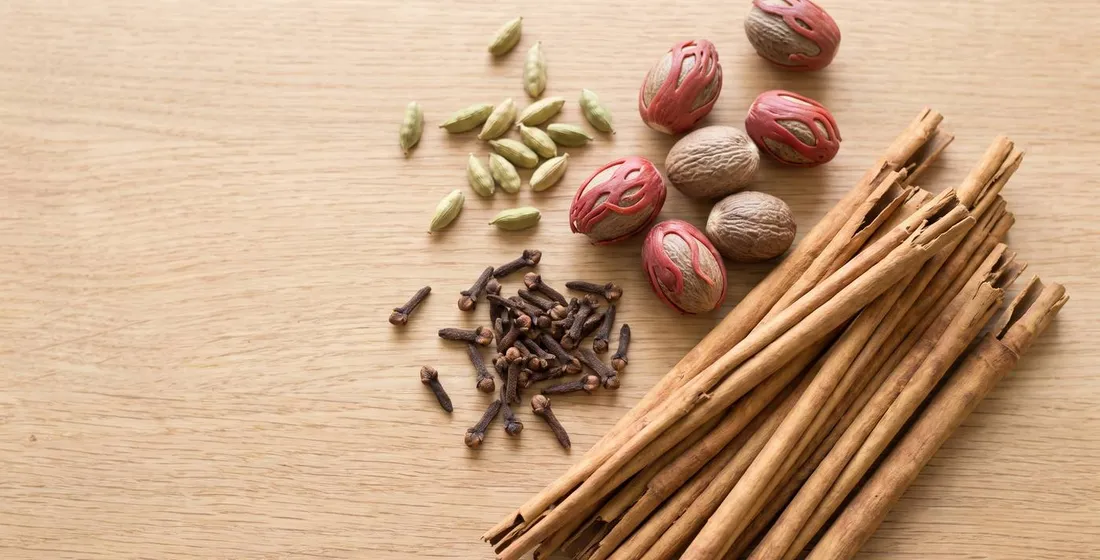
Buyer’s snapshot
- Sri Lanka’s cinnamon exports earned about US$260 million in 2025, and the Cinnamon Development Department is targeting US$300 million for 2026 (Daily Mirror, July 2026). Q4 is when a large share of that bark is baked.
- Working back from a 1 December warehouse date, a repeat Ceylon spice SKU by sea needs a PO by about 6 October for the EU and Australia, and the US window closed on 29 September at the conservative end.
- Silk Route Ventures (SRV) publishes its stage times: samples 1 to 2 weeks, PO to dispatch 2 to 3 weeks, sea freight 3 to 4 weeks (EU, AU) or 4 to 5 weeks (US), air 3 to 4 days.
- The order-by table below is the one to forward to procurement. Every date is a planning range, not a guarantee.
December spice demand does not arrive in December. It arrives in a purchase order placed in late September or early October, by a buyer who worked backwards from a shelf date. A cinnamon, nutmeg, clove, or cardamom order that goes out in the first week of November is usually a January product, whatever the invoice says. This calendar sets out the order-by dates for Ceylon baking spices bound for a December shelf, using only the stage times Silk Route Ventures publishes for every order. It is written for distributors and brand buyers in the EU, UK, US, and Australia running a multi-SKU festive programme.
When does a December spice programme actually start?
A December spice programme starts eight to twelve weeks before the goods need to be in the buyer’s warehouse. The chain has four stages SRV controls or publishes (sample, production, freight, and air as the fallback) and two the buyer controls: bench approval of the sample and customs clearance plus inland delivery at destination.
The festive quarter is not a small-brand quirk. McCormick, the largest branded spice company in the US market, states in its FY2025 annual report that its “sales, operating income, and cash from operations are generally higher in the fourth quarter because of the holiday season”. Retailers and bakery manufacturers plan against the same curve.
| Stage | Owner | Published range | Planning note |
|---|---|---|---|
| Sample preparation and courier | SRV | 1 to 2 weeks | Door-to-door by international courier |
| Bench approval | Buyer | Buyer’s own figure | This calendar allows 1 week |
| PO to dispatch | SRV / SFC | 2 to 3 weeks | Production, packing, documents |
| Sea freight, EU and AU | Carrier | 3 to 4 weeks | Port to port |
| Sea freight, US | Carrier | 4 to 5 weeks | Port to port |
| Air freight | Carrier | 3 to 4 days | Airport to airport |
| Clearance and inland delivery | Buyer | Buyer’s own figure | This calendar allows 1 week |
Source: Silk Route Ventures published lead times, 2026. Buyer-side allowances are planning assumptions.
The Q4 order-by calendar for a 1 December warehouse date
The calendar below takes 1 December 2026 as the date the spices must be cleared and in the buyer’s warehouse. The “conservative” column uses the top of every published range; the “fast” column uses the bottom. Plan from the conservative date; the fast date is the last-resort line.
A repeat SKU is one with an approved spec already on file at SRV, so no new sample is needed. A new SKU needs a sample drawn, shipped, and approved first.
| Route | Repeat SKU: PO by (conservative) | Repeat SKU: PO by (fast) | New SKU: sample request by (conservative) | New SKU: sample request by (fast) |
|---|---|---|---|---|
| Sea, EU and UK | 6 October | 20 October | 15 September | 6 October |
| Sea, Australia | 6 October | 20 October | 15 September | 6 October |
| Sea, US | 29 September | 13 October | 8 September | 29 September |
| Air, any market | 30 October | 7 November | 9 October | 24 October |
Source: calculated from Silk Route Ventures published lead times, 2026. For a 15 December warehouse date, add 14 days to every date.
Read the table from today’s date, 30 September. For a new SKU going by sea, every conservative window has already closed, and the fast US window closed yesterday. That is not a sales line. It is arithmetic, and it points to three honest options: move the new SKU to air, reorder an existing approved SKU for December and launch the new one for a January or Lunar New Year window, or accept a mid-December date and add 14 days.
For repeat SKUs, the EU, UK, and Australian sea windows are still open at the conservative end for about a week. The US repeat window is at its fast edge, so a US buyer placing a sea PO in early October should confirm the vessel schedule with the SRV trade desk before committing a retail date.
What shortens the calendar?
Two things shorten the calendar more than any freight negotiation: an approved spec already on file, and a repeat SKU with no change to pack or label. Together they remove the sample stage and the bench approval, which is two to three weeks at the conservative end.
An approved spec on file
When a buyer’s spec for Ceylon cinnamon (grade, cut, moisture, coumarin, and the destination-market residue panel) is already approved, the PO goes straight to production. The cinnamon grade sheet from Alba to C5 is the reference most buyers attach, and the spice RFQ guide covers the lines that belong in the spec in the first place.
A repeat SKU with no changes
A change of pouch size, label artwork, or carton count sends a private-label order back through artwork approval. For a December programme, freeze the pack in September and change it in January.
One consolidated container, not four shipments
A festive range usually runs four to six SKUs: cinnamon quills and powder, nutmeg, cloves, cardamom, and often mace. Silk Foods Ceylon (SFC) produces them on the same spice and herb lines in Matale, so a multi-SKU PO can dispatch on one sailing with one document pack. The minimum is 50 kg per SKU, so a five-SKU range needs at least 250 kg in total. The clove, nutmeg, and mace primer and the cardamom grading guide set out the spec lines for the rest of the basket.
Buyer’s checklist: before placing a December PO
- Confirm each SKU’s spec is approved and on file, or mark it as a new SKU
- Freeze pack size, label artwork, and carton count for the festive run
- Name the destination market so the COA residue panel matches it
- State the warehouse date, not the shipping date, on the PO
- Agree the freight mode per SKU (sea for the base volume, air for gaps)
- Confirm the payment milestone so production is not held on a transfer
When is air freight worth it for spices?
Air freight is worth it when the shelf date cannot move and the SKU is light relative to its value. Whole cardamom, mace, and small top-up volumes of cinnamon powder fit that description. Bulk cinnamon quills for a bakery manufacturer usually do not, because the freight cost per kilogram can erase the margin the SKU was bought for.
Air cuts the transit stage from 3 to 5 weeks to 3 to 4 days. On a repeat SKU, it moves the conservative PO date for a 1 December warehouse target from 6 October (EU sea) to 30 October. It does not shorten the 2 to 3 week production slot, which still comes first.
The pattern the SRV trade desk sees most often in October is a split order: the base festive volume by sea, placed early, and a smaller air top-up for the SKU that sold faster than forecast. Buyers who plan the split in September pay air rates on a small slice of the volume. Buyers who discover the need in November pay air rates on most of it, and some still miss the shelf.
| Situation | Better mode | Why |
|---|---|---|
| Base festive volume, repeat SKU, early October | Sea | Lowest landed cost per kg |
| New SKU for December, sample not yet approved | Air, or move to January | Sea windows have closed |
| Top-up of a fast-selling SKU in late October | Air | Production slot plus 3 to 4 days |
| Bulk bakery cinnamon, price-sensitive contract | Sea, or a later shelf date | Air freight erodes the margin |
Source: Silk Route Ventures trade desk practice, 2026.
Why the sea ranges deserve a buffer this year
The published sea ranges are the planning figures SRV quotes. They are not a promise about vessel schedules, and 2026 is not a year to plan against the bottom of any freight range. UNCTAD’s Review of Maritime Transport 2025 found that rerouting around the Cape of Good Hope added about 30 percent to voyage lengths on affected trades. Most Asia to Europe services were still routing around the Cape in 2026, and carriers had not committed to a full Red Sea return.
Colombo sits on the main east-west trade lane, so Sri Lankan cargo to Europe shares those services and their schedule changes. For EU and UK buyers, that is the practical reason to work from the conservative column rather than the fast one. Plan against 3 weeks and get 4, and the shelf date is gone. Plan against 4 and get 3, and the stock is simply early.
Destination paperwork is part of the same buffer. US buyers must file FDA prior notice before the shipment arrives, and Australian importers face biosecurity inspection on arrival. The Australia import and labelling guide covers that side. SRV’s side is the export document pack, including the phytosanitary certificate and a batch COA for every lot.
What holds a December order up at the supplier end?
Three things hold a December spice order at the supplier end, and none of them is capacity. The spice and herb line at SFC runs 100 to 200 kg per hour, about 1 to 2 MT a day, which covers a typical distributor’s festive range in a few production days.
The first is an unapproved spec: a sample still sitting with the buyer’s QA team when the PO arrives. The second is late artwork for private-label pouches. The third is payment timing. SRV’s terms are 100 percent advance by bank transfer for orders under US$10,000, and 50 percent advance with the balance against scanned shipping documents at US$10,000 and above, so a transfer that lands a week late moves the dispatch date by a week.
Grade availability is worth a line too. Alba, the finest cinnamon grade, was fetching about Rs. 7,500 per kilogram in July 2026, according to the Cinnamon Development Department. Fine grades sell through earliest in a strong season, so a buyer who needs Alba or C5 quills for a premium festive SKU should confirm the grade at the PO, not at dispatch. The true Ceylon cinnamon stick range lists the cuts SFC packs for bulk and private-label buyers.
Frequently asked questions
How early should I order Ceylon spices for December delivery?
For a 1 December warehouse date, a repeat SKU by sea needs a PO by about 6 October for the EU, UK, and Australia, and by 29 September for the US, at the conservative end of Silk Route Ventures’ published ranges. New SKUs need a sample first, which adds 2 to 3 weeks, so most are now air or January launches.
What is the lead time from PO to dispatch for Ceylon spices?
Silk Foods Ceylon’s published production lead time is 2 to 3 weeks from PO to dispatch for spices and herbs, from the BRCGS and FSSC 22000 V6 audited facility in Matale. Sea freight then adds 3 to 4 weeks to the EU and Australia, or 4 to 5 weeks to the US, and air freight adds 3 to 4 days.
Can Silk Route Ventures consolidate cinnamon, nutmeg, cloves, and cardamom in one shipment?
Yes. SRV consolidates multi-SKU spice orders on one sailing with one document pack, including a batch COA for every lot. The first-order minimum is 50 kg per SKU, so a five-SKU festive range needs at least 250 kg in total, with volume-tier pricing at 500 kg, 1,000 kg, and 2,500 kg per SKU.
Is air freight worth it for spices?
Air freight suits light, high-value SKUs such as whole cardamom and mace, and small top-ups of a fast-selling line, when the shelf date cannot move. It cuts transit from 3 to 5 weeks to 3 to 4 days but does not shorten the 2 to 3 week production stage, so the PO date still matters.
How Silk Route Ventures can help
Silk Route Ventures consolidates Ceylon cinnamon, nutmeg, mace, cloves, cardamom, and pepper supply under one supplier, one certification stack (BRCGS, FSSC 22000 V6, USDA Organic, and EU Organic on the relevant SKUs), and one document pack per shipment. Spices are produced at the Silk Foods Ceylon facility in Matale, with PO to dispatch in 2 to 3 weeks and a batch COA on every lot. First orders start at 50 kg per SKU, with volume tiers at 500 kg, 1,000 kg, and 2,500 kg. Distributors building a festive range can review the full Ceylon spice supply range and send one RFQ for the whole basket. Contact us to confirm a December order-by date against the current vessel schedule, or email info@esilkroute.com.lk.
Sources
- Daily Mirror (Sri Lanka), “Sri Lanka targets US$300mn in cinnamon exports as Alba price hits record Rs. 7,500”, July 2026, citing the Cinnamon Development Department. dailymirror.lk article (retrieved 30 September 2026)
- McCormick and Company, Form 10-K for the fiscal year ended 30 November 2025, Seasonality. https://www.sec.gov/Archives/edgar/data/63754/000006375426000037/mkc-20251130.htm (retrieved 30 September 2026)
- UNCTAD, Review of Maritime Transport 2025: Staying the course in turbulent waters. https://unctad.org/system/files/official-document/rmt2025_en.pdf (retrieved 30 September 2026)
- Zencargo, “Red Sea shipping 2026: how will the Suez Canal reopening affect supply chains”, 2026. https://www.zencargo.com/resources/red-sea-reopening-2026/ (retrieved 30 September 2026)
- US Food and Drug Administration, Prior Notice of Imported Foods. https://www.fda.gov/food/importing-food-products-united-states/prior-notice-imported-foods (retrieved 30 September 2026)
Written by the Silk Route Ventures Trade Team. Silk Route Ventures (E-Silk Route Ventures Ltd) is a Sri Lankan B2B supply-chain operator for the Food, Beverage, Wellness and Nutraceuticals sectors. The Silk Foods Ceylon manufacturing arm holds BRCGS and FSSC 22000 V6 certifications. Questions or to request a sample: Contact us or email info@esilkroute.com.lk.