
Shatavari (Hathawariya) Capsules: Root Powder Spec and Formulation Notes
Buyer’s snapshot
- Shatavarin IV, the marker most shatavari specifications quote, ranged from 3.15 to 152.06 micrograms per gram across 12 cultivated accessions in a 2020 Heliyon study: a 48-fold spread within one species.
- The Ayurvedic Pharmacopoeia of India caps total ash in shatavari root at 5 percent. A 2019 study of Sri Lankan-grown roots measured 9.7 percent. Which pharmacopoeia frames the spec is a decision, not a default.
- Human evidence on lactation is split: a 1996 placebo-controlled trial found no effect on prolactin, while manufacturer-linked trials in 2022 and 2025 reported higher milk volume at 72 hours.
- Silk Route Ventures encapsulates shatavari root powder at a Matale facility under BRCGS and FSSC 22000 V6, with the capsule MOQ confirmed on the quote and bulk root powder from 25 kg per SKU.
- The spec table and the RFQ checklist below are the procurement-actionable sections.
A purchase order that reads “Asparagus racemosus root powder, 500 mg capsules” has settled almost nothing. It has not said which pharmacopoeia the ash and extractive limits come from, whether the saponin figure is a guarantee or a per-batch report, how the root was dried, or what the label will be allowed to say in the buyer’s market. This post is for the wellness brand writing that specification for the first time, and for the procurement team re-reading one it inherited.
Which root is actually in the bag?
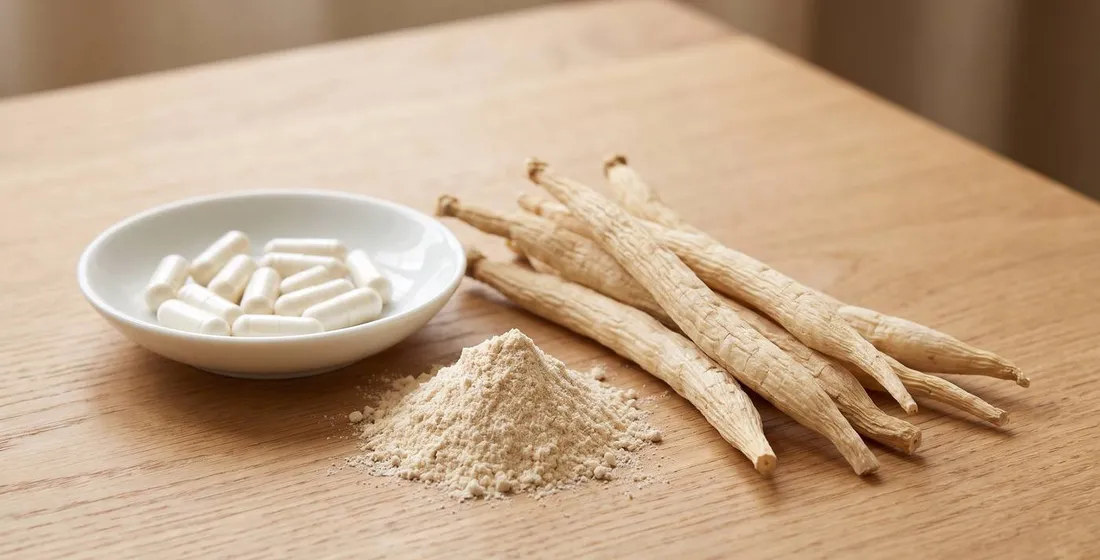
Asparagus racemosus Willd. is the shatavari of Ayurvedic practice, and the Ayurvedic Pharmacopoeia of India describes its dried tuberous root as cream coloured, 10 to 30 centimetres long, tapering at both ends, with longitudinal wrinkles and a sweetish taste. In Sri Lanka the plant trades as Hathawariya, a name that covers more than one species, so botanical identity has to be confirmed on the raw root.
The genus is less tidy here than the trade name suggests. In 2016, a University of Peradeniya molecular study of native Sri Lankan Asparagus, using nuclear and chloroplast DNA plus seed morphology, found that low-country, small-cladode plants best match the published description of A. racemosus, while an upcountry group matches the endemic A. zeylanicus, which an earlier flora had merged into A. racemosus. For a buyer, “Hathawariya from Sri Lanka” can mean two taxa under one Sinhala name.
The control is the one that applies to every botanical: identity at raw-material intake, not on the finished powder. That means macroscopic and microscopic examination against the pharmacopoeial description (the API lists rings of stone cells and calcium oxalate raphides as diagnostic features), a thin-layer chromatography fingerprint against a reference, and the botanical name and plant part written on the specification, per lot. The same discipline across the wider range is set out in the guide to sourcing functional herbs and Ayurvedic botanicals from Sri Lanka.
What does a pharmacopoeial spec for shatavari root look like?
The Ayurvedic Pharmacopoeia of India, Part I Volume IV, sets five identity-and-purity limits for shatavari root: foreign matter not more than 1 percent, total ash not more than 5 percent, acid-insoluble ash not more than 0.5 percent, alcohol-soluble extractive not less than 10 percent and water-soluble extractive not less than 45 percent.
| Parameter | API Part I Vol IV limit | Sri Lankan-grown roots, 2019 study |
|---|---|---|
| Foreign matter | Not more than 1% | Not reported |
| Total ash | Not more than 5% | 9.7% (SD 0.2) |
| Acid-insoluble ash | Not more than 0.5% | 0.5% (SD 0.0) |
| Water-soluble ash | Not specified | 4.4% (SD 0.2) |
| Alcohol-soluble extractive | Not less than 10% | Not reported |
| Water-soluble extractive | Not less than 45% | Not reported |
Source: Ayurvedic Pharmacopoeia of India, Part I Vol IV; Karunarathne et al., Asian Journal of Pharmacognosy, 2019.
In 2019, researchers at the University of Colombo’s Institute of Indigenous Medicine and the Industrial Technology Institute published the first standardisation data for Sri Lankan-grown A. racemosus, from roots collected in Hambantota, Anuradhapura and Colombo and authenticated at the Peradeniya botanic garden. Total ash came in at 9.7 percent, nearly double the API ceiling and, the authors noted, significantly higher than Indian-grown root. Acid-insoluble ash sat exactly at the API limit.
Nothing about that makes the Sri Lankan root a worse root. It means an API total-ash line, applied unread to Sri Lankan material, will reject lots that are clean on the parameter that actually tracks sand and soil contamination, which is acid-insoluble ash. A defensible spec names the pharmacopoeia it uses and why, or sets a total-ash ceiling from the supplier’s batch history. Three districts and one harvest window are a small base, so treat 9.7 percent as a warning rather than a national figure.
The United States Pharmacopeia is proposing monographs for Shatavari Root and Shatavari Root Powder, with a content test for shatavarin IV by quantitative high-performance thin-layer chromatography against a USP reference standard. Until adopted, treat that as the direction of travel: a US-bound brand will eventually be asked for a shatavarin IV figure by a method with a reference standard behind it.
Shatavarin markers: what a saponin assay can and cannot promise
Shatavarin IV is the steroidal saponin used as the identity and content marker for Asparagus racemosus, but its level in the root is not stable across plants. In a 2020 Heliyon study, twelve cultivated accessions grown under identical conditions ranged from 3.15 to 152.06 micrograms per gram by LC-MS/MS, and the ranking held across two harvests four years apart.
A 48-fold spread inside one species, one field and one method is why shatavarin IV belongs on a specification as a per-batch report rather than a guaranteed floor on root powder. The same study found root yield per plant varied threefold between accessions, and the heaviest-yielding line was not the highest-marker line, so a grower optimising for tonnage is not automatically optimising for the number on your certificate of analysis.
The “40 percent saponin” figures on extract catalogues are a different measurement: gravimetric totals from a concentrated extract, by methods that do not isolate shatavarin IV. A capsule filled with plain root powder should not borrow them. “Shatavarin IV 0.01 percent” means nothing without the method, the reference standard and the extraction solvent beside it.
Drying and milling the root for a capsule fill
Fresh shatavari tubers yield only 10 to 12 percent dry matter after the outer skin is removed, according to the Indian government’s published agro-technique for the crop, which specifies washing, one to two days in open sun, softening in lukewarm water, manual peeling, four to five hours in shade and finishing in a hot-air oven at 40 degrees Celsius.
That 40-degree finish belongs on the specification. In 2022, a Thai engineering study compared tray drying at 60 degrees with microwave-assisted hot air and found total phenolics and flavonoids highest in unblanched roots at the lower microwave power. The study did not measure shatavarin, so it cannot settle the saponin question. It does show that drying choices move the chemistry, which is reason enough to write the drying method and maximum temperature into the brief.
Spec snapshot: shatavari root powder, capsule grade Species and part: Asparagus racemosus Willd., peeled dried tuberous root, stated on the specification Identity: macroscopic and microscopic report plus TLC fingerprint against a reference, per lot Purity: foreign matter, total ash, acid-insoluble ash and extractives, with the pharmacopoeia named Marker: shatavarin IV reported per batch, method and reference standard named, no guaranteed floor on root powder Drying: peeled root, shade then hot air, maximum temperature stated; moisture and water activity ceilings stated Milling: sieve fraction and bulk density stated for capsule flow and fill-weight control Silk Route Ventures: bulk root powder from 25 kg per SKU; capsule MOQ confirmed on the quote; 2 to 3 weeks PO to dispatch for standard SKUs
The powder also has to run on an encapsulator: a coarse powder bridges in the hopper and underfills, an over-milled one dusts. Specify a sieve fraction and a bulk density, then size the capsule from the measured density rather than the nominal dose. The arithmetic is worked through in the capsule size and fill weight post.
Heavy metals and microbial lines for a capsule SKU
For a shatavari capsule sold in the European Union, Regulation (EU) 2023/915 caps lead at 3.0 mg/kg, cadmium at 1.0 mg/kg and mercury at 0.10 mg/kg in the finished food supplement. In the United States, USP General Chapter 2232 works per day instead, with permitted daily exposures of 5 micrograms for lead and for cadmium and 15 micrograms for inorganic arsenic and for total mercury.
A brand selling into both markets carries both lines, because the units disagree. A 3-gram daily dose of root powder sitting at the EU lead ceiling delivers 9 micrograms, nearly double the USP permitted daily exposure. Write the metals ceiling from the serving size, not from the regulation with the friendlier number. The 2019 Sri Lankan study reported tested heavy metals below WHO limits and no coliforms, Salmonella, yeasts or moulds in the roots sampled, which is a starting point rather than a lot release.
| Material (USP General Chapter 2023) | Total aerobic count | Yeasts and moulds | Bile-tolerant Gram-negatives | E. coli and Salmonella |
|---|---|---|---|---|
| Dried or powdered botanicals | Not more than 100,000 cfu/g | Not more than 1,000 cfu/g | Not more than 1,000 cfu/g | Absent in 10 g |
| Finished supplements containing botanicals | Not more than 10,000 cfu/g | Not more than 1,000 cfu/g | Not specified | Absent in 10 g |
Source: USP General Chapter 2023, Microbiological Attributes of Nonsterile Nutritional and Dietary Supplements.
The finished capsule is held to a tenfold tighter aerobic count than the raw powder, so a lot that passes at intake can still fail as a capsule if the filling room adds load. Ask how the supplier closes that gap: a steam or dry-heat treatment of the powder, and an in-process count after filling. How to read the resulting certificate is in the per-lot heavy metal and pesticide testing post.
What can a women’s-health label honestly say about shatavari?
Shatavari is sold for lactation, menopause and general women’s health, but the human trial base is small and divided. A 1996 multicentre placebo-controlled trial in Indian Pediatrics found no rise in prolactin and no galactogogic effect over four weeks, while a 2025 trial in the Journal of Obstetrics and Gynaecology reported faster breast fullness and higher milk volume at 72 hours.
In August 1996, Sharma and colleagues at Maulana Azad Medical College in New Delhi published a randomised, double-blind trial in 64 mothers with lactational inadequacy. Prolactin, the primary outcome, declined in both arms by a comparable amount; supplementary feeds and infant weight gain were no different. For nearly thirty years that was the best-controlled lactation evidence on shatavari, and it was negative. The newer trials are larger and positive, and both are linked to the product’s manufacturer. That is the evidence a label claim stands on, thinner than the category’s marketing suggests.
| Study | Design | Finding |
|---|---|---|
| Sharma et al., Indian Pediatrics, 1996 | Multicentre double-blind RCT, 64 mothers, 4 weeks, combination product with A. racemosus as the active | Prolactin, supplementary feeds and infant weight gain comparable with placebo |
| Birla et al., Cureus, 2022 | Double-blind RCT, 78 postpartum women, 5 days; bars supplied by the manufacturer | Milk volume 64.7 vs 49.7 mL (p=0.008); breast fullness at 30.5 vs 38.1 hours (p=0.024); authors call it exploratory |
| Ajgaonkar et al., J Obstet Gynaecol, 2025 | Double-blind RCT, 120 enrolled, 113 analysed, 300 mg extract twice daily for 72 hours; extract from its manufacturer | Shorter time to breast fullness (p=0.002), higher milk volume at 72 hours (p<0.001) |
| O’Leary et al., Nutrients, 2021 | Double-blind RCT, 20 postmenopausal women, 1,000 mg/day, 6 weeks | Handgrip strength +0.7 kg vs -0.4 kg (p=0.04); no change in knee extensor strength or bone turnover |
What the label may say then depends on the market. In the EU, shatavari sits among the more than 2,000 botanical health claims still on hold under Regulation 1924/2006, usable only under the transitional rules and never as an authorised claim. In the US, a structure-function statement under 21 CFR 101.93 carries the mandatory disclaimer and no disease language. In Australia, Asparagus racemosus appears in listed medicines on the Australian Register of Therapeutic Goods, so the TGA’s permitted indications govern the wording. The market-by-market rules are compared in the botanical capsule claims post. One safety line belongs on every brief: a 2018 exchange in Australian Prescriber noted that human data on reproductive use are limited and advised avoiding shatavari in the first trimester on the strength of animal studies.
Sourcing and the capsule run at Silk Foods Ceylon
Wild shatavari is considered endangered in its natural habitat and over-exploited, according to the 2020 Heliyon accession study, so a defensible 2026 supply chain starts with cultivated root. Silk Foods Ceylon (SFC) encapsulates shatavari root powder at its Matale facility under BRCGS and FSSC 22000 V6, with encapsulation capacity of 100,000 capsules per single shift and 200,000 per day.
Silk Route Ventures (SRV) supplies the root as bulk powder and as a finished private-label shatavari capsule, and the facility is registered with Sri Lanka’s Department of Ayurveda. Lots are traceable from raw-material intake to shipment through batch coding. A certificate of analysis is available on request, and shatavarin IV, heavy metals, microbiology and pesticide residues are run through an external laboratory on request. Organic status is confirmed per SKU; shatavari should not be assumed to be on a current organic certificate. The dried herb and root powder range sits on the Sri Lanka herbs supplier page.
For a custom blend, shatavari with ashwagandha or fenugreek being a common brief, the SRV R&D desk takes a signed brief to an approved formulation in 3 to 4 weeks at most. Production then runs 2 to 3 weeks from purchase order to dispatch for standard SKUs and 4 to 6 weeks for private label and custom specifications, with sea freight of 3 to 4 weeks to the EU and Australia and 4 to 5 weeks to the US.
Buyer’s checklist: shatavari capsule RFQ
- Botanical name, plant part and “peeled dried root” on the specification
- Identity per lot: macroscopy, microscopy and a TLC fingerprint against a reference
- Pharmacopoeia named for ash and extractive limits, with the total-ash ceiling justified
- Shatavarin IV reported per batch, method and reference standard stated
- Drying method and maximum temperature stated; moisture and water activity ceilings
- Sieve fraction and bulk density for the fill-weight calculation
- Metals ceilings derived from the daily serving, EU and US both
- Microbial limits for raw powder and finished capsule, and the treatment step between them
- Claim wording checked per market before artwork
Frequently asked questions
Is Hathawariya the same plant as shatavari?
Usually. Hathawariya is the Sinhala trade name for Asparagus racemosus, but a 2016 University of Peradeniya molecular study found Sri Lankan plants under that name include a distinct upcountry taxon matching the endemic A. zeylanicus. Require the botanical name on the specification and identity confirmation on the raw root, per lot.
What shatavarin IV level should a root powder spec require?
A reported value, not a guaranteed floor. Across twelve cultivated accessions in a 2020 Heliyon study, shatavarin IV ranged from 3.15 to 152.06 micrograms per gram by LC-MS/MS. Name the method and the reference standard, and compare lots against the supplier’s batch history rather than an extract catalogue figure.
Can a shatavari capsule carry a lactation claim?
Not as an authorised claim in the EU, where botanical claims remain on hold under Regulation 1924/2006. In the US a structure-function statement needs the 21 CFR 101.93 disclaimer. The evidence is divided: a 1996 placebo-controlled trial found no prolactin effect, while 2022 and 2025 manufacturer-linked trials reported higher milk volume at 72 hours.
Does Silk Foods Ceylon private-label shatavari capsules?
Yes. Silk Foods Ceylon (SFC) encapsulates shatavari root powder at its Matale facility under BRCGS and FSSC 22000 V6, with capacity of 100,000 capsules per shift. The capsule MOQ is confirmed on the quote, bulk root powder starts at 25 kg per SKU, samples are free for evaluation (you cover the courier), and private-label lead time is 4 to 6 weeks from purchase order to dispatch.
How Silk Route Ventures can help
Silk Route Ventures (SRV) manufactures nutraceutical capsules and supplies bulk Ayurvedic botanicals, shatavari among them, to wellness brands in the United States, Australia, the European Union and the United Kingdom. The Silk Foods Ceylon (SFC) facility in Matale holds BRCGS and FSSC 22000 V6 covering encapsulation, with USDA Organic and EU Organic on selected SKUs, confirmed per SKU. Capsule MOQ is confirmed on your quote, bulk root powder starts from 25 kg per SKU, and samples are free for evaluation (you cover the courier). For a shatavari blend that does not yet exist as a formula, the SRV R&D and NPD team takes a signed brief to an approved formulation in 3 to 4 weeks at most. Contact us to send an inquiry or request a sample.
Sources
- Government of India, Ministry of AYUSH, The Ayurvedic Pharmacopoeia of India, Part I, Volume IV, monograph 50, Satavari (Root). Retrieved 23 October 2026. https://naturalingredient.org/wp/wp-content/uploads/API-Vol-4.pdf
- Karunarathne, Y.A.U.D. et al., “Physicochemical, phytochemical, and nutritional profiles of root powder of Asparagus racemosus (Willd) of Sri Lankan origin,” Asian Journal of Pharmacognosy 3(3):29-35, 2019. Retrieved 23 October 2026. https://pharmacognosyasia.com/Files/Other/AJPV3I3p2935.pdf
- Wijesundara, A.W.R.R.M.R. and Yakandawala, D.M.D., “Molecular phylogeny and species limits of native Asparagus in Sri Lanka,” Proceedings of the Peradeniya University International Research Sessions, 2016. Retrieved 23 October 2026. https://ir.lib.pdn.ac.lk/items/1ba63ced-6547-42f5-8aa9-130ffffb9889
- Saran, P.L. et al., “Identification of potential accessions of Asparagus racemosus for root yield and shatavarin IV content,” Heliyon 6(12):e05674, 2020. Retrieved 23 October 2026. https://pmc.ncbi.nlm.nih.gov/articles/PMC7734231/
- United States Pharmacopeia, Dietary Supplement Monographs: Shatavari Root (proposed monograph briefing). Retrieved 23 October 2026. https://doi.usp.org/USPNF/USPNF_M16676_10201_01.html
- European Commission, Commission Regulation (EU) 2023/915 on maximum levels for certain contaminants in food, Annex I points 3.1.28, 3.2.21 and 3.3.2. Retrieved 23 October 2026. https://eur-lex.europa.eu/eli/reg/2023/915/oj/eng
- United States Pharmacopeia, General Chapter 2232, Elemental Contaminants in Dietary Supplements. Retrieved 23 October 2026. https://www.drugfuture.com/Pharmacopoeia/usp38/data/v38332/usp38nf33s2_c2232.html
- United States Pharmacopeia, General Chapter 2023, Microbiological Attributes of Nonsterile Nutritional and Dietary Supplements. Retrieved 23 October 2026. https://www.drugfuture.com/Pharmacopoeia/usp38/data/v38332/usp38nf33s2_c2023.html
- Sharma, S., Ramji, S., Kumari, S. and Bapna, J.S., “Randomized controlled trial of Asparagus racemosus (Shatavari) as a lactogogue in lactational inadequacy,” Indian Pediatrics 33:675-677, 1996. Retrieved 23 October 2026. https://indianpediatrics.net/aug1996/675.pdf
- Birla, A. et al., “Postpartum Use of Shavari Bar Improves Breast Milk Output: A Double-Blind, Prospective, Randomized, Controlled Clinical Study,” Cureus 14(7):e26831, 2022. Retrieved 23 October 2026. https://pmc.ncbi.nlm.nih.gov/articles/PMC9375125/
- Ajgaonkar, A. et al., “Shatavari (Asparagus racemosus Willd) root extract for postpartum lactation: A randomised, double-blind, placebo-controlled study,” Journal of Obstetrics and Gynaecology 45(1):2564168, 2025. Retrieved 23 October 2026. https://doi.org/10.1080/01443615.2025.2564168
- O’Leary, M.F. et al., “Shatavari Supplementation in Postmenopausal Women Improves Handgrip Strength and Increases Vastus lateralis Myosin Regulatory Light Chain Phosphorylation but Does Not Alter Markers of Bone Turnover,” Nutrients 13(12):4282, 2021. Retrieved 23 October 2026. https://doi.org/10.3390/nu13124282
- McGuire, T.M., “Adverse effects of herbs as galactogogues (author’s response),” Australian Prescriber 41(3):66, 2018. Retrieved 23 October 2026. https://pmc.ncbi.nlm.nih.gov/articles/PMC6003012/
- General Court of the European Union, Order in Case T-578/14 (botanical health claims on hold under Regulation (EC) 1924/2006). Retrieved 23 October 2026. https://infocuria.curia.europa.eu/document/T-0578-2014-14-00000000RD-01-I-01-168926-1-EN.html
- US Food and Drug Administration, 21 CFR 101.93, Certain types of statements for dietary supplements. Retrieved 23 October 2026. https://www.ecfr.gov/current/title-21/chapter-I/subchapter-B/part-101/subpart-F/section-101.93
- Therapeutic Goods Administration, Australian Register of Therapeutic Goods entry 369618 (listed medicine containing Asparagus racemosus). Retrieved 23 October 2026. https://www.tga.gov.au/node/316687
- Vikaspedia (Government of India), “Asparagus racemosus: package of practices,” from Agro-techniques of selected medicinal plants. Retrieved 23 October 2026. https://en.vikaspedia.in/viewcontent/agriculture/crop-production/package-of-practices/medicinal-and-aromatic-plants/asparagus-racemosus
- Thiangma, P. et al., “Effect of Drying Condition on Shatavari (Asparagus racemosus Willd) Root Quality and Energy Consumption,” Engineering Access 8(2):330-335, 2022. Retrieved 23 October 2026. https://ph02.tci-thaijo.org/index.php/mijet/article/view/246870
Written by the Silk Route Ventures Trade Team. Silk Route Ventures (E-Silk Route Ventures (Pvt) Ltd) is a Sri Lankan B2B supply-chain operator for the Food, Beverage, Wellness and Nutraceuticals sectors. The Silk Foods Ceylon manufacturing arm operates under BRCGS and FSSC 22000 V6. Questions or to request a sample: Contact us or email info@esilkroute.com.lk.