
Consolidating Spice, Herb and Fruit-Powder Suppliers onto One Certified Site: What Changes
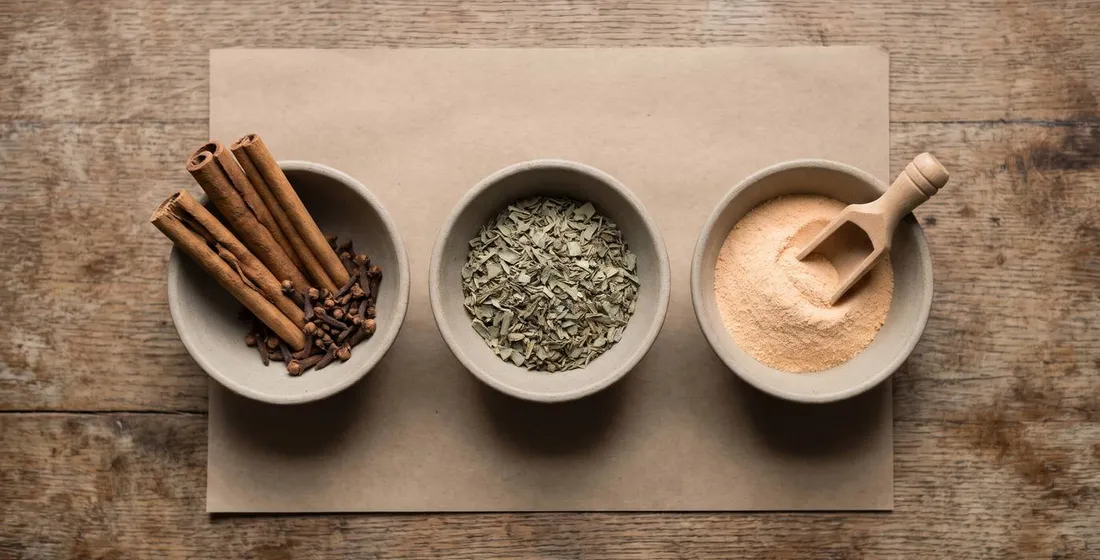
Buyer’s snapshot
- A distributor buying spices, dried herbs and fruit powders from four suppliers keeps four approval files, four certificate sets and four COA formats. On one certified site that drops to one of each, plus any per-SKU organic documents.
- Consolidation does not remove per-product work. The US FDA’s FSVP rule requires a separate verification programme for each food, even when many foods come from a single supplier (US FDA, FSVP final rule).
- The real cost is concentration: one site means one point of failure, and a certificate non-conformance touches every SKU at once. The section on risk below sets out how to hold a second source without losing the benefit.
- Silk Route Ventures (SRV) supplies spices, herbs and fruit powders from the Silk Foods Ceylon (SFC) site in Matale, with first orders from 100 kg per SKU (25 kg for dried herbs) and a COA on request.
- For distributors and multi-category buyers in the US, EU, UK and Australia. If you need 40 grades of one spice, a specialist is the better answer.
Most distributor supplier lists were not designed. They accumulated. A cinnamon supplier was approved in 2019, a herb supplier after a customer request, a fruit-powder supplier because the first sample was good. Each one arrived with its own certificate, its own audit report, its own COA layout and its own questionnaire answers, and each one now needs an annual review.
This post is for the procurement and QA teams who suspect that list is costing more than it earns. It covers what actually changes when spice, herb and fruit-powder purchasing moves to one certified site, what does not change, and the concentration risks that a sensible buyer should plan around. It is a document and QA view only. It does not cover logistics.
What changes in the approval file?
The approval file shrinks in proportion to the number of suppliers, not the number of products. A supplier approval has fixed parts: a questionnaire, a certificate with its scope, a recent audit report, a hazard summary, an allergen statement, a specification format and a complaints route. Those parts are written once per supplier. Moving four suppliers to one removes three copies of each.
| Item the QA team holds | Four suppliers | One certified site | Still per product |
|---|---|---|---|
| Supplier approval questionnaire | 4, each reviewed annually | 1 | No |
| Food-safety certificate and scope line | 4, different schemes and scopes | 1 | Scope must cover each category |
| Audit report and non-conformance close-out | 4 | 1 | No |
| Allergen statement | 4 site-level statements | 1 site-level statement | Product allergen status |
| COA layout and parameter list | 4 formats | 1 format | Parameters set per spec |
| Product specification | One per SKU | One per SKU | Yes |
| Organic documents | Varies by supplier | Per SKU, confirmed per SKU | Yes |
The rows marked “still per product” matter. A specification is written for a product, not a supplier, so a buyer who consolidates nine SKUs still reviews nine specifications. What disappears is the duplicate site-level paperwork around them. The supplier approval questionnaire guide maps each questionnaire section to the controlled document that answers it, and a single site answers it once.
Does consolidation reduce the regulatory workload?
Partly, and it is worth being exact about which part. For a US importer, the FDA’s Foreign Supplier Verification Programs rule (21 CFR Part 1, Subpart L) asks for hazard analysis and verification for each imported food and its foreign supplier. FDA’s rule summary states that if an importer obtains many foods from a single supplier, a separate FSVP is needed for each food. So the per-food analysis stays.
What shrinks is the supplier-level evaluation: the supplier’s procedures, its compliance history and its audit evidence are assessed once instead of four times. In the EU, Article 18 of Regulation (EC) No 178/2002 requires a food business operator to identify its immediate suppliers and customers. Four suppliers means four traceability links to keep current. One supplier means one, with the batch-level records behind it held by that supplier’s own system.
A useful test before consolidating: list every document your auditor asked for in the last cycle, and mark each one as per supplier or per product. Buyers are often surprised that most of the pile is per supplier.
Which certificate covers which category?
Certificate scope is the first thing to check, and it differs by product category. Consolidating onto “a certified site” is only safe if the certificate scope line names the product types you buy.
At the Silk Foods Ceylon site in Matale, FSSC 22000 V6 covers the processing scope, and BRCGS covers herbal and plant-based powders, capsules, plant milks, vegan meats, beverages and jams. BRCGS does not cover spices, so for spice SKUs the certificate to cite is FSSC 22000 V6. GFSI recognised FSSC 22000 Version 6 in August 2024 under its 2020 Benchmarking Requirements (FSSC), and recognised BRCGS Food Safety Issue 9 the same month (GFSI), which matters because many buyers’ own schemes accept either as the gating certificate.
| Category | Certificate to cite | What to ask for |
|---|---|---|
| Ground and whole spices | FSSC 22000 V6 | Scope statement naming the product type |
| Dried herbs and herbal powders | BRCGS and FSSC 22000 V6 | Scope statement and latest audit summary |
| Fruit powders | BRCGS and FSSC 22000 V6 | Scope statement naming plant-based powders |
| Organic SKUs | USDA Organic and EU Organic on selected SKUs, confirmed per SKU | Current organic certificate listing the exact product |
Organic is the clearest case where consolidation does not flatten the file. Organic status belongs to the SKU, not the site, so each organic product needs its own certificate check. The guide to running a certified organic line beside conventional production covers how a site separates the two.
What does one COA format change?
A single COA layout lets QA review results against specifications faster and compare lots over time without translating between formats. With four suppliers, the same parameter may appear as “moisture”, “loss on drying” or “water content”, measured by different methods and reported to different decimals. One site means one column order, one method list and one set of units.
A COA is available on request from SFC, and heavy metals, microbiology, aflatoxin, pesticide residues and coumarin are tested through an external laboratory on request. The practical gain is trend visibility: when the same parameter is reported the same way for six months, drift shows up before it fails. The guide to reading a per-lot heavy metal and pesticide COA shows what to check on each page.
A worked example: nine SKUs, four suppliers
The numbers below are illustrative and describe no specific customer. A distributor stocks three spices, three dried herbs and three fruit powders, bought from four suppliers: one spice specialist, one herb trader, and two fruit-powder sources.
Before consolidation, QA keeps four questionnaires, four certificates, four audit reports and four COA formats, plus nine specifications. After moving all nine SKUs to one site, it keeps one of each of the first four, plus the same nine specifications. The site-level documents fall from sixteen to four.
The ordering side changes too. First orders start at 100 kg per SKU, 25 kg for dried herbs, with trial quantities from 10 kg. Because the minimum applies per SKU, a nine-SKU range at the standard minimum means about 600 kg across the three spices and three fruit powders and 75 kg across the three herbs. That is a real commitment, and it is why a trial round at 10 kg per SKU comes first. The sample and documentation pack guide lists what arrives with a sample so the approval file can be built before volume is committed.
What are the real risks of concentration?
Concentration risk is real, and a buyer who ignores it will pay for it once. Three risks matter most.
Single-site dependency. If the one site has an unplanned shutdown, a failed audit or a line breakdown, every SKU is affected in the same week. Four suppliers fail independently. One does not.
Category depth. A site that makes forty products will not match a specialist that makes one. If a buyer needs a narrow range of grades, particle sizes or origins within a single spice, the specialist usually has more depth. SRV’s position is breadth with a defined specification per SKU, not unlimited grade choice.
Shared failure in the paperwork. A certificate non-conformance, a suspended scope line or an allergen-control finding at the site is a finding against every product that site ships. The certificate is one document, so its risk is shared too.
Neither risk argues against consolidating. They argue for consolidating with a plan:
- Keep a qualified second source for the two or three SKUs that carry the most revenue, approved but ordered at a low volume.
- Hold safety stock sized to the real replenishment cycle, not a number copied from an old policy.
- Ask the site for its audit non-conformance history and the close-out evidence, not only the certificate.
- Write the exit step into the approval file, so that a second source can be activated without starting a fresh approval.
The guide to allergen control in a multi-product export facility covers the statement to request when a single site handles many categories, which is the check that matters most once consolidation puts more products under one roof.
Where consolidation does not fit
SRV’s model is not for every buyer. Consolidation is the wrong answer for a distributor whose customers specify a named estate, a single grade series or an unusual origin that only a specialist holds. It also does not suit a buyer whose own policy requires at least two independent suppliers for every product, which is a sound policy and one SRV supports by quoting alongside a second source.
For most mixed-category distributors the maths still favours fewer, better-documented suppliers. The comparison of manufacturer-direct and broker supply sets out why the document trail from a manufacturer is shorter than one passed through an intermediary.
What to do first
The least risky route is staged, not a single switch.
- Pick the three SKUs with the clearest specifications and the weakest current supplier documentation.
- Request samples and the site documents, and check the certificate scope line against each category.
- Run one lot through your own incoming QA and compare the COA to your specification.
- Move those three SKUs, keep the old supplier approved, and review after two cycles.
How Silk Route Ventures can help
Silk Route Ventures (SRV) supplies Ceylon spices alongside dried herbs and fruit powders from the Silk Foods Ceylon (SFC) site in Matale, under BRCGS and FSSC 22000 V6, with USDA Organic and EU Organic on selected SKUs, confirmed per SKU. Distributors consolidating a multi-category range get one set of site documents and one COA format, with a COA on request. First orders start from 100 kg per SKU, dried herbs from 25 kg, and trial quantities from 10 kg. Samples are free for evaluation, and the buyer pays the courier. Contact us to send an inquiry for the consolidated catalogue and the site document pack.
Frequently asked questions
Does consolidating suppliers reduce FSVP work for a US importer?
Only partly. FDA’s FSVP rule requires a separate programme for each food, even when one supplier ships many foods, so per-product hazard analysis stays. The supplier-level evaluation, covering procedures, compliance history and audit evidence, is done once instead of per supplier, which removes the duplicated part.
Does Silk Route Ventures supply spices, herbs and fruit powders from one site?
Yes. Silk Route Ventures supplies all three categories from the Silk Foods Ceylon site in Matale. First orders start from 100 kg per SKU, dried herbs from 25 kg, with trial quantities from 10 kg and a COA on request. Organic status is confirmed per SKU, so ask for the product you need.
Which certificate should I cite for spices?
For spice SKUs, cite FSSC 22000 V6. The BRCGS scope at the Matale site covers herbal and plant-based powders, capsules, plant milks, vegan meats, beverages and jams, not spices. For herbs and fruit powders, both certificates apply. Always check the scope line on the certificate against the product you buy.
How much second-source cover should a distributor keep?
Keep a second qualified source for the few SKUs carrying the most revenue, approved and ordered at a low volume so it can scale quickly. Pair it with safety stock sized to the real replenishment cycle. A second source for every SKU removes most of the document saving that consolidation was meant to deliver.
Sources
Retrieved 15 November 2026.
- US FDA, Foreign Supplier Verification Programs (FSVP) for Importers of Food for Humans and Animals, final rule summary: https://www.fda.gov/food/guidanceregulation/fsma/ucm361902.htm
- US Code of Federal Regulations, Title 21, Part 1, Subpart L (FSVP): https://www.law.cornell.edu/cfr/text/21/part-1/subpart-L
- European Union, Regulation (EC) No 178/2002, Article 18 (traceability): https://eur-lex.europa.eu/eli/reg/2002/178/oj
- FSSC, FSSC 22000 Version 6 achieves GFSI recognition (August 2024): https://www.fssc.com/scheme/fssc-22000-version-6
- GFSI, Recognised certification programme owners (August 2024): https://mygfsi.com/wp-content/uploads/2024/08/GFSI-Recognised-CPOs-202408.pdf
Written by the Silk Route Ventures Trade Team. Silk Route Ventures (E-Silk Route Ventures (Pvt) Ltd) is a Sri Lankan B2B supply-chain operator for the Food, Beverage, Wellness, and Nutraceuticals sectors. The Silk Foods Ceylon manufacturing arm holds BRCGS and FSSC 22000 V6 certifications. Questions or to request a sample: Contact us or email info@esilkroute.com.lk.