
Turmeric Capsule Formulation: Curcumin Assay and Piperine Pairing
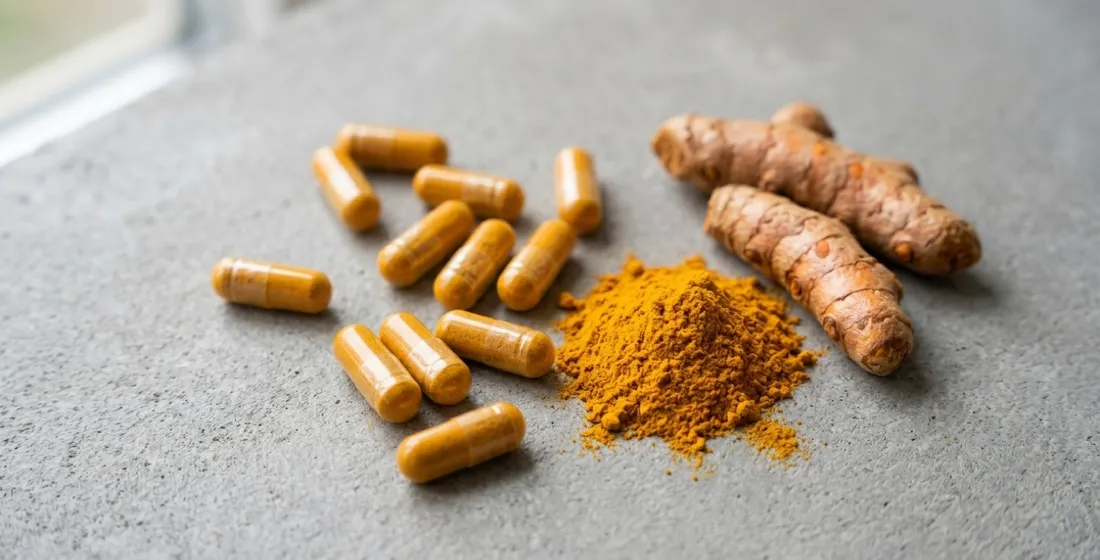
Buyer’s snapshot
- A turmeric capsule lives or dies on one number most briefs never state: curcuminoids by HPLC. A 500 mg fill of plain turmeric powder carries roughly 2 to 5 percent curcuminoids (about 10 to 25 mg), while a 500 mg fill of 95 percent standardized extract carries about 475 mg. Same capsule weight, a twentyfold difference in actives.
- “95 percent curcuminoids” is a sum, not a single compound. The United States Pharmacopeia method totals three molecules, curcumin, demethoxycurcumin, and bisdemethoxycurcumin, by high-performance liquid chromatography (USP Powdered Turmeric Extract monograph, 2021). Specify the assay method, because the percentage alone is not the spec.
- Curcumin is famously hard to absorb. Low water solubility, poor gut permeability, and fast liver conjugation mean most of an oral dose leaves the body before it reaches the blood (Nutrients review, 2019). Bioavailability is a formulation decision, not a given.
- Piperine is the cheapest absorption lever. A landmark human study found 20 mg of piperine raised curcumin bioavailability by 2,000 percent (Shoba et al., Planta Medica, 1998). It works by blocking the glucuronidation that otherwise clears curcumin within minutes.
- The lever has a cost. Piperine inhibits CYP3A4 and P-glycoprotein, so it can raise blood levels of prescription drugs (Bhardwaj et al., 2002), and turmeric-piperine products feature in a growing cluster of liver-injury case reports (NIH LiverTox, 2024). A defensible capsule treats piperine as a pharmacology decision, not a free upgrade.
- Silk Foods Ceylon (SFC) encapsulates private-label turmeric capsules in HPMC vegetarian shells from a Matale facility under BRCGS and FSSC 22000 V6, with curcuminoids assayed by HPLC, lead screened per batch by ICP-MS, and a 180-bottle first-order MOQ. Standardized extract and piperine are sourced to COA spec through the Silk Route Ventures (SRV) procurement desk.
Most turmeric capsule briefs name a milligram strength and a bottle count and stop there. The brief says “500 mg turmeric,” the artwork gets drawn, and nobody asks the one question that decides whether the product does anything: how many milligrams of curcuminoids are actually in the capsule, and how many of those reach the bloodstream. The category rewards getting this right. The turmeric supplement market was worth about 1.63 billion dollars in 2025 and is growing near 8.5 percent a year (Verified Market Research, 2025), and the shelf is crowded with capsules that share a strength number but not a curcuminoid number. A turmeric capsule is really a chain of three decisions, the extract, the assay, and the absorption route, and a wellness brand that specifies all three controls both its label claim and its risk. This piece works that chain the way a nutraceutical product team should work it before the first batch is filled.
What does “95% curcuminoids” actually specify?
“95 percent curcuminoids” means a turmeric extract assayed to contain at least 95 percent total curcuminoids by high-performance liquid chromatography, where total curcuminoids is the sum of three molecules: curcumin, demethoxycurcumin, and bisdemethoxycurcumin (USP Powdered Turmeric Extract monograph). The percentage is a purity grade for the extract, not the dose in the finished capsule.
The figure that sells turmeric capsules is also the most misread number in the category. “95 percent curcuminoids” describes the standardized extract before it is filled, and it is a sum of three related compounds rather than a single one. The United States Pharmacopeia method, run on a reversed-phase HPLC column, separates curcumin, demethoxycurcumin, and bisdemethoxycurcumin and totals them (USP Dietary Supplements, Powdered Turmeric Extract; NIH Office of Dietary Supplements and NIST multi-laboratory study, Journal of AOAC International, 2021). A certificate of analysis that says “95 percent curcumin” instead of “95 percent curcuminoids” is using the wrong word, and the difference matters when a buyer is matching an assay to a label claim.
The method is the spec, not the marketing number. A credible turmeric capsule brief names the assay technique, HPLC rather than a cheaper spectrophotometric reading, because spectrophotometry tends to read high and inflates the apparent curcuminoid content. The NIH and NIST quality-assurance program documented exactly this kind of laboratory-to-laboratory variation in curcuminoid measurement across commercial turmeric supplements (Journal of AOAC International, 2021). The buyer who writes “curcuminoids by HPLC, USP method, reported per batch” on the purchase order is closing a gap that a buyer who writes only “95 percent” leaves wide open.
Turmeric powder or standardized extract: the strength math
The single biggest driver of a turmeric capsule’s actives is whether the fill is whole turmeric powder or standardized extract. Whole turmeric root powder is roughly 2 to 5 percent curcuminoids, so a 500 mg powder capsule carries about 10 to 25 mg. A 500 mg capsule of 95 percent extract carries about 475 mg, a twenty to fortyfold difference at the same fill weight.
This is where most “500 mg turmeric” claims quietly mislead the shopper. Dried turmeric rhizome holds only a few percent curcuminoids, with the commonly cited range sitting around 2 to 5 percent depending on origin and grade. A capsule filled with whole turmeric powder is therefore a low-curcuminoid product no matter how large the milligram figure on the front of the bottle. The strength number describes the weight of plant material, not the weight of the molecules a curcumin claim depends on.
The table below shows what the same 500 mg capsule delivers across three common fill formats. The figures are illustrative and should be confirmed against the batch certificate of analysis, but the order of magnitude is the point a brief needs to settle before artwork.
| Fill format | Curcuminoid content of the material | Curcuminoids per 500 mg capsule | Typical positioning |
|---|---|---|---|
| Whole turmeric root powder | about 2 to 5 percent | about 10 to 25 mg | whole-food, culinary-adjacent |
| Blended powder plus extract | about 10 percent | about 50 mg | mid-tier “high potency” |
| Standardized 95 percent extract | at least 95 percent | about 475 mg | stated-dose, clinical-style |
A brand is free to sell any of the three. What it cannot defend is a clinical-sounding curcumin claim printed on a whole-powder fill. The honest move is to print the curcuminoid milligram alongside the turmeric milligram, so the shopper and the regulator read the same number the laboratory measured.
Why is curcumin so poorly absorbed?
Curcumin has low oral bioavailability for four stacked reasons: it barely dissolves in water, crosses the gut wall poorly, is unstable at intestinal pH, and is rapidly conjugated by the liver and gut into glucuronide and sulfate forms that are flushed out (Nutrients, 2019). Most of an oral dose never reaches circulation as free curcumin.
The poor absorption is not a supplier failing, it is the molecule. Low water solubility limits how much curcumin dissolves in the gut, poor intestinal permeability limits how much of the dissolved fraction crosses into the blood, and rapid phase-one and phase-two metabolism in the liver and intestinal wall converts most of what does cross into glucuronide and sulfate conjugates within minutes (Nutrients, “Dietary Curcumin: Correlation between Bioavailability and Health Potential,” 2019). Those conjugates do not carry the same activity attributed to free curcumin, and they are prepared for excretion rather than circulation.
The practical consequence for a capsule is that the curcuminoid milligram on the label is the starting amount, not the delivered amount. Two capsules can carry an identical 475 mg of curcuminoids and still differ several-fold in how much free curcumin reaches the blood, depending entirely on the absorption route the formulator chose. That is why a serious turmeric capsule brief treats bioavailability as a specified design decision rather than a claim borrowed from a competitor’s bottle.
Does piperine actually increase curcumin absorption?
Yes. In the most-cited human study, 20 mg of piperine taken with 2 g of curcumin raised curcumin bioavailability by 2,000 percent with no adverse effects at the dosages used (Shoba et al., Planta Medica, 1998). Piperine works by inhibiting the glucuronidation step that otherwise clears curcumin from the blood within minutes.
The 1998 study by Shoba and colleagues remains the reference point for the whole piperine-curcumin category. In healthy volunteers, co-administering 20 mg of piperine with a 2 g curcumin dose produced much higher serum concentrations and a 2,000 percent increase in bioavailability (Planta Medica, 1998). The mechanism is specific: piperine, the pungent principle of black pepper, inhibits the hepatic and intestinal glucuronidation that is curcumin’s main clearance route, so more free curcumin survives the first pass and reaches circulation.
That 2 g to 20 mg pairing is a 100-to-1 ratio, and it sets the template most commercial capsules still follow at a smaller scale. A typical turmeric capsule pairs a standardized 95 percent piperine extract at around 5 mg with a curcuminoid-extract dose in the few-hundred-milligram range. Piperine is also the cheapest absorption route on the shelf, which is why it is the default for value-positioned turmeric SKUs. The standardized piperine itself should carry its own assay on the certificate of analysis, the same discipline a buyer applies to the curcuminoid extract.
Piperine is a pharmacology decision, not a free upgrade
Piperine inhibits the drug-metabolizing enzyme CYP3A4 and the transporter P-glycoprotein, so it can raise blood levels of prescription medicines that use those pathways (Bhardwaj et al., Journal of Pharmacology and Experimental Therapeutics, 2002). The same mechanism that boosts curcumin can boost a statin or an immunosuppressant, which is why high-absorption turmeric belongs in the drug-interaction conversation.
The uplift and the risk come from one mechanism, and a brand cannot take the first without inheriting the second. By inhibiting CYP3A4, CYP2C9, and P-glycoprotein, piperine has been shown to raise the exposure of common drugs, with reported increases in the area under the curve of roughly 59 percent for simvastatin and 35 percent for cyclosporine (Pharmacy Times, summarizing the interaction literature; Bhardwaj et al., 2002). For a turmeric capsule, that means the absorption claim and the safety language are the same decision.
There is a second signal a responsible formulator should not skip. Turmeric is now a recognized cause of drug-induced liver injury, with a ten-case series from the United States Drug-Induced Liver Injury Network and a growing set of newer reports, several involving piperine-containing and high-bioavailability products (American Journal of Medicine, 2022; NIH LiverTox, 2024). The injury is usually hepatocellular and resolves when the product is stopped, but the pattern is real and it concentrates in exactly the high-absorption formulations brands reach for to differentiate. The candid reading is that enhanced bioavailability lifts efficacy and the interaction and safety profile together. A brand that adds piperine should pair the claim with a clear cue to consult a healthcare provider when taking prescription medication, and should treat the absorption route as a risk decision it owns, not a free upgrade the filler waved through.
Piperine, phytosome, or micellar: choosing an absorption route
Piperine is the cheapest absorption route but carries an interaction profile. Phospholipid (phytosome) complexes raise curcumin bioavailability roughly two to six times over unformulated extract without a CYP inhibitor, at higher cost and fill weight (ACS Omega review, 2023). Micellar and nanoparticle systems push absorption further but complicate a clean-label position.
The route is a positioning decision as much as a pharmacology one, and the formulation, not the raw curcuminoid number, sets how the product actually performs in the body (Journal of Functional Foods crossover study, 2021). The table maps the three routes a turmeric capsule brand realistically chooses between, with the trade-off each one carries to the label and the cost line.
| Absorption route | How it works | Bioavailability vs plain extract | Label and cost note |
|---|---|---|---|
| Plain 95 percent extract | none added | baseline (low) | cleanest label, lowest absorption |
| Extract plus 95 percent piperine | blocks glucuronidation | large uplift (study: up to about 20x) | cheapest; drug-interaction and label caution |
| Phospholipid / phytosome complex | lipid carrier improves uptake | about 2 to 6x | no CYP inhibitor; higher cost, larger fill |
| Micellar / nanoparticle | solubilized delivery | highest in some studies | premium; more complex clean-label story |
Figures are drawn from the cited pharmacokinetic literature and should be confirmed against the specific raw material’s clinical file, because formulations branded under the same category can perform very differently. The decision a brand actually makes is not “which is best in a study,” it is “which absorption story matches my claim, my price, and my drug-interaction stance.” Piperine wins on cost. Phytosome wins for a brand that wants an absorption claim without a CYP inhibitor on the label. The route belongs in the brief, not in the filler’s standard recipe.
Specifying a turmeric capsule in an RFQ: the lines that matter
A turmeric capsule request for quotation should pin six lines: extract standardization and assay method (curcuminoids by HPLC), curcuminoid milligrams per capsule, the absorption route and any piperine dose, capsule shell (HPMC vegetarian or gelatin), heavy-metal limits with lead by ICP-MS per batch, and bottle count against MOQ. Leaving any line to the filler’s default is how a label claim drifts from the capsule.
The strongest briefs state the curcuminoid milligram alongside the turmeric milligram, and name HPLC as the method behind it. They decide the absorption route on purpose, piperine in or out, phytosome or plain, against the brand’s own drug-interaction position. They specify the capsule shell, HPMC vegetarian for a vegan-friendly position or gelatin for cost, and they remember that a hygroscopic extract needs a shell and a moisture spec that hold up in transit. And they pin heavy metals, because turmeric carries a documented lead-adulteration risk where lead chromate has been used to brighten color at some origins, which makes lead by ICP-MS per batch a non-negotiable line rather than a nice-to-have.
In the first quarter of 2026 the SRV procurement desk worked this exact gap. A wellness brand arrived with “1,000 mg turmeric, high potency” already on draft artwork. The desk pulled the proposed supplier’s certificate of analysis and found the fill was whole turmeric powder at roughly 3 percent curcuminoids, about 30 mg per serving, while the artwork implied a clinical curcumin dose closer to several hundred milligrams. The product was safe and legal. The claim was not defensible. The fix was not a louder label, it was a respec: move to a stated-strength 95 percent extract, decide piperine in or out against the brand’s drug-interaction stance, and print the curcuminoid number beside the turmeric number. Settled before artwork, that is one spec line. Caught after print, it is a relabel and a delayed launch.
Frequently asked questions
How much piperine should a turmeric capsule contain?
Most commercial turmeric capsules pair a standardized 95 percent piperine extract at around 5 mg with a few-hundred-milligram curcuminoid-extract dose. The landmark human study used 20 mg of piperine with 2 g of curcumin, a 100-to-1 ratio (Shoba et al., Planta Medica, 1998). The right dose is the one that clears the brand’s drug-interaction review, since piperine inhibits CYP3A4 and P-glycoprotein.
Is turmeric powder or curcumin extract better in a capsule?
It depends on the claim. Whole turmeric powder carries only about 2 to 5 percent curcuminoids, so a 500 mg powder capsule delivers roughly 10 to 25 mg. A 500 mg capsule of 95 percent standardized extract delivers about 475 mg (USP Powdered Turmeric Extract monograph, 2021). For any curcuminoid-dose claim, the standardized extract is the honest choice.
What assay should a turmeric capsule certificate of analysis show?
Total curcuminoids by high-performance liquid chromatography, following the United States Pharmacopeia method, reported per batch. The figure is the sum of curcumin, demethoxycurcumin, and bisdemethoxycurcumin. A spectrophotometric reading tends to read high, so naming HPLC on the purchase order protects the label claim (NIH and NIST multi-laboratory study, 2021).
Who private-labels turmeric capsules with piperine under BRCGS and FSSC?
Silk Foods Ceylon encapsulates private-label turmeric capsules in HPMC vegetarian shells from a Matale, Sri Lanka facility under BRCGS and FSSC 22000 V6, with curcuminoids assayed by HPLC and lead screened per batch by ICP-MS. Silk Route Ventures sources the standardized extract and piperine to COA spec and runs the formulation and export documentation, from a 180-bottle first-order MOQ.
How Silk Route Ventures can help
Silk Route Ventures (SRV) and its manufacturing arm Silk Foods Ceylon (SFC) private-label turmeric and curcumin capsules for wellness and nutraceutical brands. The team specifies the fill against the claim, whether that is whole turmeric powder, a stated-strength 95 percent curcuminoid extract, or an extract paired with piperine, and assays curcuminoids by HPLC so the milligram on the label matches the milligram in the capsule.
Encapsulation runs in HPMC vegetarian shells from a Matale facility under BRCGS and FSSC 22000 V6, with lead screened per batch by ICP-MS, organic certification available for qualifying lines, and a 180-bottle first-order MOQ that lets an early-stage brand test a SKU without a full production commitment. For brands weighing piperine against a phospholipid or micellar route, the SRV R&D desk will cost and document each option against the brand’s claim and its drug-interaction stance before the formulation is locked.