
Gymnema Sylvestre (Gurmar): A Sourcing Spec for Blood-Sugar SKUs
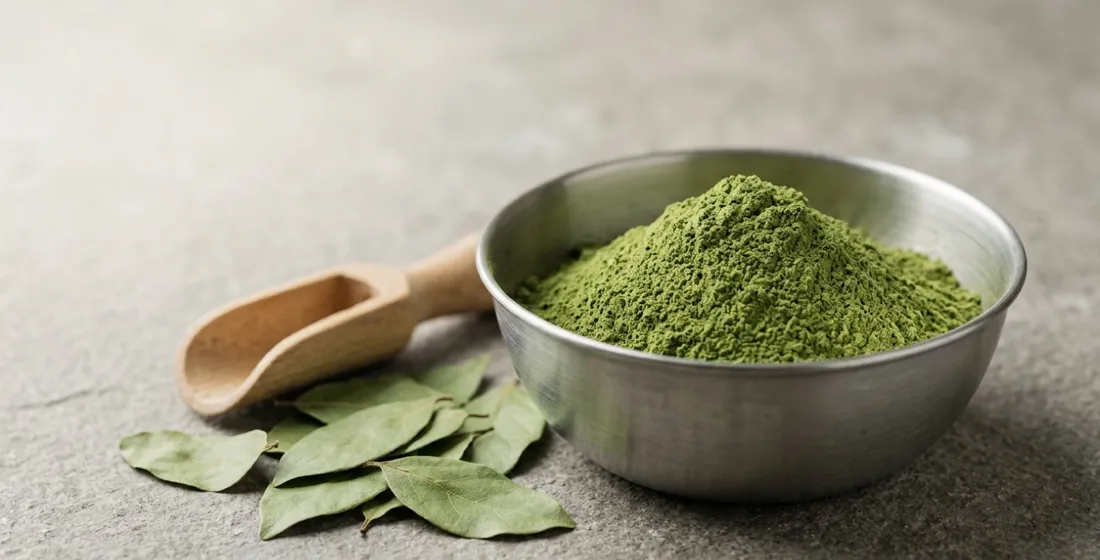
RFQ snapshot
- Gymnema sylvestre, known in Ayurveda as gurmar, the sugar destroyer, is one of the fastest-moving botanicals in US blood-sugar and sugar-craving SKUs. North America held about 45 percent of the diabetes-management supplement market in 2024 (Research and Markets), and the CDC counts roughly 96 million US adults with prediabetes.
- The evidence is unusually solid for a botanical. A 2024 randomized, placebo-controlled trial in Nutrients reported significant reductions in fasting blood glucose and HbA1c, and a 2021 meta-analysis in Phytotherapy Research found the same direction across studies.
- The actives are gymnemic acids, triterpenoid saponins that both blunt the perception of sweetness on the tongue and slow intestinal glucose absorption. The number that defines a claim-grade ingredient is the gymnemic-acid percentage.
- Whole-leaf gurmar powder and a standardized extract are two different ingredients. Leaf powder carries variable, usually low gymnemic acid; standardized extract is assayed to 25 percent or 75 percent. The form decides the claim and the cost.
- Silk Foods Ceylon (SFC) supplies gurmar as bulk leaf powder and as private-label capsules from Matale under BRCGS and FSSC 22000 V6, with a 50 kg first-order MOQ and per-batch COA. This post is the spec to put in your next RFQ.
Gymnema sells on a single, repeatable trick: chew the leaf and sugar stops tasting sweet for the next half hour. That sensory effect, plus a real glucose-absorption mechanism behind it, has made gurmar one of the most-specified botanicals in the US blood-sugar and weight-management category, and the demand is running well ahead of most buyers’ spec discipline. A brand that orders gurmar on price, then builds a metabolic claim on top of it, can end up with an unstandardized leaf powder that the label cannot defend. This piece is for the wellness and nutraceutical teams who want a defensible gymnema spec, and a claim that holds, before the first sample request.
Why gymnema is one of the fastest-moving botanicals in US blood-sugar SKUs
Demand for gurmar is being pulled by the same forces driving the wider metabolic-health category. The CDC counts roughly 96 million US adults with prediabetes, most unaware of it, and in 2024 North America held about 45 percent of the global diabetes-management supplement market (Research and Markets). Gymnema’s sugar-craving angle has also ridden the GLP-1 conversation, with trade press in 2025 covering gurmar as a sweet-craving curb.
For a sourcing team, the read is simple. This is a category with rising volume, a clear functional story, and a willingness to pay for a credible ingredient. That combination rewards brands that can show a real spec and punishes brands caught shipping a commodity leaf powder behind a metabolic claim. The opportunity is real and so is the scrutiny.
In Q1 2026, the SRV procurement desk fielded a run of gurmar inquiries from US wellness brands, most of them adding a sugar-craving or blood-sugar SKU to an existing line. The recurring gap was the same one that shows up across the herb category: the buyer had a marketing claim and a target price, but no gymnemic-acid number and no contaminant panel. The fix was a complete spec before the first order, not a cheaper supplier.
Buyers building a botanical actives line usually run the same questions across herbs; the gotukola spec and clinical evidence overview and the triphala formulation for adaptogen blends walk the same spec-versus-claim logic.
What does the clinical evidence say about gymnema and blood sugar?
Gymnema has a stronger human evidence base than most botanicals in the category. A 2024 randomized, double-blind, placebo-controlled trial in Nutrients, testing a gymnema-containing supplement in adults with mildly elevated fasting glucose, reported significant reductions in fasting blood glucose and HbA1c versus placebo. A 2021 meta-analysis in Phytotherapy Research found gymnema lowered fasting glucose, post-meal glucose, and HbA1c across studies.
That is a usable evidence base for a structure-function position, with two caveats a careful brand keeps in view. Many trials use a standardized extract or a defined gymnemic-acid dose rather than raw leaf powder, so the dose that carries the data is an actives dose, not a teaspoon of powder. And trial supplements are often multi-ingredient, which means the gymnema effect is rarely isolated. The honest claim rests on a defined gymnemic-acid intake, which points the spec back at the ingredient form.
None of the cited studies reported significant safety signals at the doses tested, and gymnema has a long traditional-use record in Ayurveda. As with any blood-sugar-active botanical, the label should carry the standard caution for users on glucose-lowering medication, since the mechanism is real enough to matter alongside a drug.
| Attribute | Whole-leaf gurmar powder | Standardized gymnema extract |
|---|---|---|
| Form | Milled dried leaf | Concentrated, assayed fraction |
| Gymnemic acid | Low and variable | Stated (25 percent or 75 percent), HPLC plus gravimetry |
| Active dose control | Approximate | Calculable per capsule, batch to batch |
| Best-fit claim | Traditional use, full-spectrum, sugar-craving chew | Actives-led blood-sugar claim |
| Relative cost per kg | Lower | Higher |
| Typical format | Tea cut, leaf-powder capsules, chews | Capsules, tablets, stick packs |
Source: Silk Route Ventures (SRV) trade desk plus the gymnema pharmacology literature.
The same form-versus-actives split shapes adaptogen sourcing; see moringa leaf powder spec primer.
How gurmar works: sweetness suppression and glucose absorption
Gymnema’s actives are gymnemic acids, a group of triterpenoid saponins, alongside the peptide gurmarin. A 2014 review in the journal Phytochemistry Reviews (NIH) describes two complementary mechanisms: gymnemic acids temporarily bind sweet-taste receptors on the tongue, suppressing sweetness for roughly 15 to 50 minutes, and they slow glucose uptake in the small intestine, blunting the post-meal blood-sugar spike.
The taste effect is the part consumers feel, and it is the reason gurmar shows up in sugar-craving and appetite SKUs as well as in glucose-support formulas. The absorption effect is the part the clinical claims rest on. Both trace to the gymnemic-acid fraction, which is why that single number does more work on a gurmar spec than any other line.
This is also why the delivery format matters. A chewable or a fast-dissolve format puts the taste effect to work; a capsule bypasses the tongue and relies on the absorption mechanism alone. A buyer who knows which effect the SKU is selling can pick the format and the gymnemic-acid grade that match, rather than ordering a generic powder and hoping the claim survives.
Leaf powder versus standardized extract: matching gymnemic acid to your claim
Whole-leaf gurmar powder is milled dried leaf with a low, variable gymnemic-acid content. A standardized extract is concentrated and assayed to a stated figure, most commonly 25 percent or 75 percent gymnemic acids by gravimetry, with HPLC confirmation. The two are not interchangeable. The powder suits traditional-use and full-spectrum SKUs; the extract carries an actives-led blood-sugar claim at a calculable dose.
Leaf powder is the right call for tea formats, full-leaf capsule blends, and traditional-use positioning where the buyer wants the whole leaf rather than an isolated fraction. Its gymnemic-acid level is real but modest and shifts with origin, season, and leaf maturity, so unless the supplier assays each lot, the powder ships without a defensible actives number.
A standardized extract is the right call when the claim leans on a gymnemic-acid dose, because the percentage lets a formulator hold the active constant capsule to capsule and match the doses used in the trials. The trade-off is cost and a slightly different regulatory profile in some markets. Match the form to the claim first, then to the destination market.
Spec snapshot: gymnema sylvestre (gurmar) leaf powder
- Botanical identity: Gymnema sylvestre, leaf, species-verified
- Marker actives: gymnemic acids, stated range for leaf powder or stated percentage for extract, HPLC plus gravimetry
- Mesh: specify (commonly 80 to 100 mesh for capsules); tea cut for brew formats
- Moisture: typically below 10 percent for powder stability
- Heavy metals: lead, cadmium, arsenic, mercury to destination action levels
- Microbial: TPC, yeast and mould, Salmonella and E. coli absence; pesticide panel to market
- SFC MOQ: 50 kg first order per SKU; per-batch COA; farm traceability for organic lines
Traceability is the backbone of a clean contaminant story; the Sri Lankan herb supply chain traceability post covers how far back the documentation runs.
Making a blood-sugar claim: what US and EU labels allow
In the US, gymnema blood-sugar and glucose-metabolism positioning runs as a structure-function claim under DSHEA, with the standard FDA disclaimer and held substantiation, and no disease claims. In the EU, most botanical health claims, including for gymnema, sit on hold pending evaluation, so a specific glucose claim on a food supplement is not cleared for use. The market decides the wording before the artwork is drawn.
For US-bound product, the defensible language is structure-function: supports healthy glucose metabolism, helps maintain blood sugar already in the normal range, helps curb sugar cravings, with substantiation on file and the gymnemic-acid dose documented. The 2024 Nutrients trial and the 2021 meta-analysis are usable anchors, with the caveat that the data sits on defined actives doses.
For EU-bound product, a brand works within the on-hold botanical-claims regime and the general labelling rules rather than against a cleared glucose claim. Either way, a gymnema SKU carries a caution for users already on glucose-lowering medication. Briefing the supplier on the destination market early keeps the form, the dose, and the label aligned from the first sample.
Specifying gymnema in a sourcing RFQ
A defensible gymnema RFQ names the form (leaf powder or standardized extract) and the gymnemic-acid basis before it names a price, then asks for the contaminant panel the destination market will audit. Gurmar is an Ayurvedic leaf crop, so heavy metals belong on the spec alongside the microbial set. The checklist below is the one the SRV trade desk works from on a gymnema line.
Buyer’s checklist: gymnema (gurmar) RFQ
- Form stated: leaf powder or standardized extract, before price is discussed
- Botanical identity confirmed in writing: Gymnema sylvestre, leaf
- Gymnemic-acid basis: stated range for powder or stated percentage for extract, named method (HPLC plus gravimetry)
- Mesh and bulk density for your capsule, tablet, or stick-pack dosing system
- Moisture percentage and a moisture-barrier pack for shelf life
- Heavy-metal panel (lead, cadmium, arsenic, mercury) to destination action levels
- Pesticide-residue panel aligned to the destination market
- Microbial panel: TPC, yeast and mould, Salmonella and E. coli
- Per-batch COA and farm-level traceability for any organic SKU
- Target-market claim stated up front so form, dose, and label stay aligned
- Sample dispatched against the spec before any purchase order
New buyers can start with how to evaluate a Sri Lankan supplier. The cert questions behind the spec are covered in the FSSC 22000 V6 scope explainer and the USDA Organic and EU Organic dual certification guide.
How does Silk Foods Ceylon supply gymnema (gurmar)?
Silk Foods Ceylon (SFC) supplies gurmar as milled leaf powder and tea cut, and as finished private-label capsules, processed at its Matale facility on a herb line rated at 100 to 200 kg per hour. The site holds BRCGS and FSSC 22000 V6, ships a per-batch COA, and sets a 50 kg first-order MOQ per SKU. For standardized-extract requirements, the SRV trade desk specs and sources to the buyer’s gymnemic-acid parameters.
The MOQ is per product, not per total order. A buyer opening a single gurmar SKU starts at 50 kg of leaf powder, with volume-tier pricing at the 500 kg, 1,000 kg, and 2,500 kg breaks. Private-label gurmar capsules run at a 180-bottle MOQ from the same site. Samples ship door-to-door by international courier in 3 to 5 business days; production lead time from purchase order to dispatch is 2 to 3 weeks; sea freight runs 4 to 5 weeks to the US and 3 to 4 weeks to the EU and Australia.
Because the same site covers bulk ingredient supply, private-label capsules, and sourced extract, a US brand can run a leaf-powder full-spectrum SKU and a standardized-extract glucose SKU under one supplier relationship, one certification stack, and one documentation pack. The SRV R&D and NPD team scopes custom blends where gurmar sits alongside other metabolic-support botanicals such as cinnamon, turmeric, and bitter gourd. Matale, near the geographic centre of Sri Lanka, is the country’s long-standing herb-growing belt, which keeps the leaf close to the dryer.
For brands weighing a finished SKU, the 180-bottle capsule contract manufacturing MOQ sets out the economics.
Frequently asked questions
Does gymnema sylvestre actually lower blood sugar?
The human evidence is comparatively strong for a botanical. A 2024 randomized, placebo-controlled trial in Nutrients reported significant reductions in fasting blood glucose and HbA1c, and a 2021 Phytotherapy Research meta-analysis found the same direction across studies. Most of that data sits on a defined gymnemic-acid dose, not raw leaf powder.
What is gurmar and is it the same as gymnema sylvestre?
Yes. Gurmar is the Ayurvedic name for Gymnema sylvestre, translating roughly as the sugar destroyer, after the leaf’s ability to suppress the taste of sweetness for 15 to 50 minutes. The actives responsible are gymnemic acids, which also slow glucose absorption in the small intestine.
What gymnemic acid percentage should I specify?
It depends on the form and claim. Whole-leaf gurmar powder carries a low, variable gymnemic-acid level and suits full-spectrum or traditional-use SKUs. A standardized extract is assayed to a stated figure, commonly 25 percent or 75 percent gymnemic acids by gravimetry with HPLC confirmation, for an actives-led blood-sugar claim at a calculable dose.
What contaminant testing does gymnema powder need?
Gurmar is an Ayurvedic leaf crop, so a nutraceutical-grade spec names heavy metals (lead, cadmium, arsenic, mercury) to destination action levels, a pesticide panel to market, plus TPC, yeast and mould, Salmonella, and E. coli, with a per-batch COA. Leaf crops can take up lead from soil, so the heavy-metal panel is not optional.
Does SRV supply bulk or private-label gymnema (gurmar) under USDA Organic or EU Organic?
Yes. Silk Route Ventures supplies gurmar as bulk leaf powder or tea cut, and as a finished private-label capsule SKU, from the BRCGS and FSSC 22000 V6 audited Silk Foods Ceylon facility in Matale, with USDA Organic and EU Organic available per SKU. First-order MOQ is 50 kg of powder or 180 bottles for capsules, with a per-batch COA.
How Silk Route Ventures can help
Silk Route Ventures (SRV) supplies gymnema sylvestre (gurmar) and a broad range of metabolic-support and Ayurvedic botanicals (cinnamon, turmeric, bitter gourd, fenugreek, moringa) to wellness and nutraceutical brands across the US, EU, and Australia. Bulk leaf powder and tea cut ship against the buyer’s spec from the BRCGS and FSSC 22000 V6 audited Silk Foods Ceylon facility in Matale, with a per-batch COA, a heavy-metal panel to destination action levels, and USDA Organic and EU Organic available per SKU. First-order MOQ is 50 kg per SKU; samples ship door-to-door by international courier in 3 to 5 business days.
For brands building a blood-sugar or sugar-craving SKU, gurmar is available as a finished private-label capsule run at a 180-bottle MOQ from the same site, and the SRV R&D and NPD team develops custom metabolic-support blends to a defined gymnemic-acid dose. Contact SRV to send an inquiry or request a sample.