
Coconut Sourcing and Contract Manufacturing in Sri Lanka
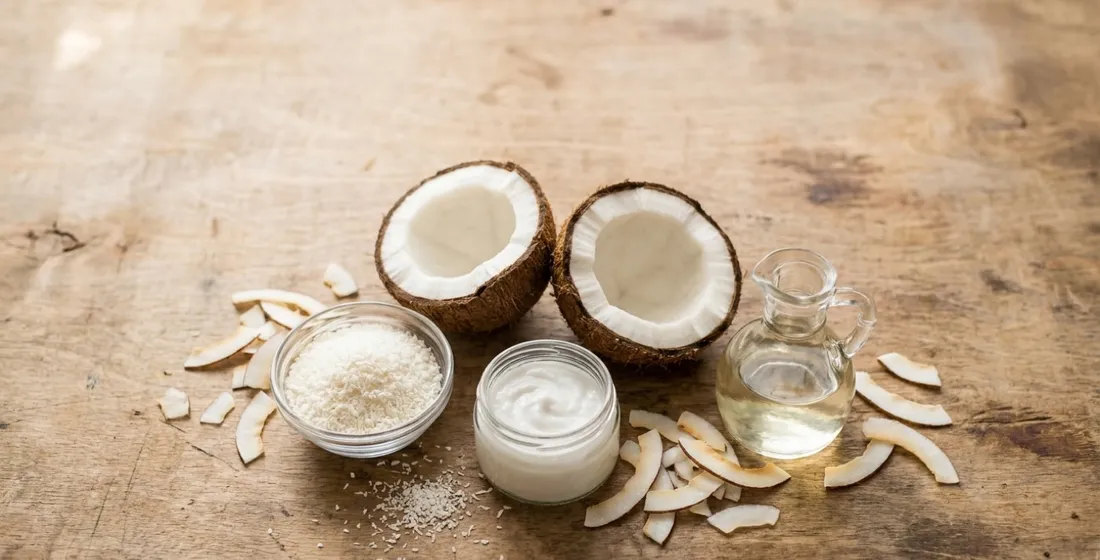
Hero: editorial flat-lay of coconut sourcing formats (halved coconuts, desiccated, coconut cream, coconut oil). Generated for SRV blog, May 2026.
Buyer's snapshot • Sri Lanka recorded coconut and coconut-product export earnings of USD 1.034 billion from January to October 2025, a 43.83% jump over the same period in 2024 (Sri Lanka Coconut Development Authority, via Xinhua, 2026). Value-added formats, not raw nuts, are driving the rebound. • Indonesia and the Philippines together produce roughly 33 million metric tonnes of coconuts a year, against Sri Lanka's 2.75 billion nuts in 2024 (FAOSTAT 2023; CDA 2024). Sri Lanka competes on certified manufacturing capacity, not on raw-tonnage cost. • Coconut milk and cream is forecast to grow from USD 4.65 billion in 2025 to USD 9.19 billion by 2031 at a 12.02% CAGR (Mordor Intelligence, 2025). Coconut milk unit sales rose 17% YoY in US retail in 2024 (Good Food Institute, 2025). • Silk Foods Ceylon contract-manufactures coconut spreads, retorted coconut cream, vegan plant-based formats using coconut as the fat carrier, and spray-dried coconut milk powder under one BRCGS and FSSC 22000 V6 audit at the Matale facility, with bulk RM made at our Matale facility and by approved Sri Lankan coconut processors. • This post is for CPG procurement and R&D leads building a coconut-anchored SKU from Sri Lanka. For lowest-shelf desiccated coconut on price alone, the Philippines or Indonesia is the more honest answer. |
Sri Lanka’s coconut sector earned USD 864.3 million in export value across calendar year 2024, then accelerated to USD 1.034 billion in just the first ten months of 2025 (Sri Lanka Coconut Development Authority, via Xinhua, 2026). The story behind those numbers is not raw-nut volume. Sri Lanka was the fourth-largest exporter of coconut-based products globally in 2024, ranking behind producers with 5x to 8x its standing tree count. What lifted earnings was the shift to value-added formats: liquid coconut milk, virgin coconut oil, coconut cream, desiccated coconut, coconut milk powder, and finished coconut-based CPG SKUs.
For a US, EU, UK, or AU brand sourcing coconut ingredients or a contract-manufactured coconut SKU, that shift changes which questions matter. Raw-nut cost stops being the screening filter. Cert stack, line capacity, MOQ math, and the ability to launch four or five formats under one audit start to. This piece walks through what coconut sourcing from Sri Lanka actually looks like in 2026, and where Silk Route Ventures (SRV) and the Silk Foods Ceylon (SFC) facility in Matale sit inside that map.
What “coconut ingredient and contract manufacturing in Sri Lanka” actually covers
A 2026 Sri Lankan coconut sourcing brief covers two distinct supplier types: bulk ingredient houses shipping repacked RM against a buyer’s spec, and contract manufacturers building a finished retail-ready SKU under the buyer’s brand. The Silk Foods Ceylon site in Matale operates as both, with a cellular manufacturing layout that runs more than 400 SKUs across spices, herbs, coconut, capsules, plant-based meat alternatives, retorted spreads, and beverages at one site certified to BRCGS and FSSC 22000 V6, with spices covered under FSSC 22000 (SRV facility data, 2026).
The product map breaks into five working categories:
- Bulk ingredient supply. Desiccated coconut (fine cut, medium cut), coconut flour, coconut sugar, coconut flakes, coconut chips, coconut milk powder (high-fat and low-fat), virgin and extra-virgin coconut oil, white coconut oil, and RBD coconut oil. Made at our Matale facility and by approved Sri Lankan coconut processors, and shipped in pouches, kraft sacks, or bulk per the buyer’s spec.
- Semi-liquid CPG (glass jar, retort). Coconut cream at 22% or 24% fat, coconut milk at 7%, 11%, 17%, and 18% fat formats, coconut treacle, kithul treacle, natural coconut jam in five flavors, coconut spread.
- Beverage formats. Retorted plant milks and functional beverages in 200 ml glass bottles, with coconut available as the primary base or as a fat carrier in oat, soy, or rice blends.
- Spray-dried powders. Coconut milk powder and plant-milk powders, batched to 50 kg per single-day run at the Matale spray-dry line.
- Coconut as a fat carrier in plant-based meat alternatives. Vegan burger patties, nuggets, sausages, seitan, and pre-minced mixes share the patty/nuggets line and frequently use coconut oil as the structural fat.
Most B2B coconut sourcing requests SRV fields in 2026 land in two of those five buckets at once: a bulk ingredient PO running alongside a contract-manufactured finished SKU. The cellular layout is what makes that economically workable on one site instead of two.
Spec snapshot: Silk Foods Ceylon coconut scope Site: Hapugasyaya, Nalanda, Matale (1 km from Nalanda Gedige) Floor: 10,000 sq ft cellular manufacturing Certifications: BRCGS, FSSC 22000 V6, USDA Organic and EU Organic on selected SKUs, confirmed per SKU Spray-dry capacity (powders): 50 kg per single-day run Semi-liquid line (300 g jars): 3,000 jars per day Beverage line (200 ml bottles): 2,500 bottles per day Bulk ingredient throughput: 100 to 200 kg per hour on the repacking and spice line |
Why Sri Lanka, not Indonesia or the Philippines, for value-added coconut
Indonesia and the Philippines together produced roughly 33 million metric tonnes of coconuts in 2024, against Sri Lanka’s 2.75 billion nuts that year (FAOSTAT 2023; Sri Lanka Coconut Development Authority, 2024). On tonnage alone, the comparison is not close. What changes the picture is what each origin specializes in, and at what cert depth.
Indonesia and the Philippines lead on bulk crude RM: copra, low-spec desiccated coconut, low-cost virgin coconut oil, and coconut water in commodity formats. Sri Lanka’s industry has shifted, deliberately, toward certified value-added: organic-certified desiccated, BRCGS-audited semi-liquid jars and retort glass, USDA Organic and EU Organic single-origin lots, and finished CPG SKUs that ship retail-ready with the buyer’s brand on the label. That repositioning is what produced the 43.83% earnings jump in 2025 even as nut production stayed flat (CDA, 2026).
For a US bakery formulator looking for 100 metric tonnes a month of unwashed medium-cut desiccated at the lowest possible landed cost, the Philippines is the more honest answer. For a US or EU brand launching a USDA Organic coconut spread with retort glass-jar packaging at 10,000 jars per SKU under BRCGS-audited manufacturing, the Matale option is built for the brief.
| Origin | Production scale (2024) | Cert profile | Strongest CPG fit |
| Indonesia | ~18 MT nuts/yr | BRCGS less common; FSSC available at major sites | Commodity desiccated, RBD oil, copra |
| Philippines | ~14.9 MT nuts/yr | BRCGS and FSSC at top-tier sites; smaller exporters varied | Bulk VCO, desiccated, coconut water |
| Sri Lanka | 2.75 bn nuts/yr | BRCGS and FSSC 22000 V6 at the top exporters; USDA Organic and EU Organic single-origin available | Value-added: organic desiccated, retort spreads, spray-dried powders, finished CPG |
| Source: FAOSTAT 2023; CDA 2024; SRV facility data |
The lean-route argument applies here too. A Sri Lankan exporter sitting one or two steps from the farm is operating a shorter chain than a multi-tier Filipino or Indonesian broker network selling against a USD-denominated retail buyer. That structural difference is part of why SRV’s pricing at FOB Colombo is usually compared most fairly against a competing exporter’s CIF or DDP into the destination port, not against an invoice-to-invoice number.
The coconut ingredient grade-and-spec ladder buyers actually screen on
Most “premium” claims in the coconut category collapse into four to six measurable parameters per format. The Asian and Pacific Coconut Community (APCC) publishes the reference standards that most certified Sri Lankan exporters write into their spec sheets (APCC Quality Standards, current edition).
For desiccated coconut, the buyer’s screen is:
- Particle size (fine cut typically 0.5 to 1.5 mm; medium cut 1.5 to 3 mm)
- Moisture content (APCC: ≤3% for standard grade, ≤4.5% for special cuts)
- Free fatty acid (APCC: ≤0.30% as lauric acid)
- Oil content (APCC: ≥60%)
- Total plate count (APCC: ≤5,000 cfu/g) and absence of Salmonella in 25 g
- Extraneous matter (APCC: ≤15 fragments per 100 g)
For virgin coconut oil, the screen tightens further:
- Moisture (APCC: ≤0.15%)
- Free fatty acid (APCC: ≤0.2% as lauric acid)
- Peroxide value (refined-grade benchmark: ≤10 meq/kg)
- Iodine value (7.5 to 11.0 per Codex CXS 210-1999)
- Saponification value
- Lauric acid fraction (typically 45 to 52% for genuine coconut oil)
For coconut milk powder, the screen is fat percentage (high-fat typically 65 to 70%; low-fat 27 to 32%), moisture, dispersibility, particle size, and microbial. Different end-applications take different fat tiers. A retail coconut creamer or a coconut-base ice cream wants high-fat. A spray-dried base for instant beverage mixes or bakery powders usually wants low-fat for a longer shelf life and cleaner reconstitution.
For retorted coconut cream and coconut milk in glass jars or cans, the screen adds: fat percentage (commonly 22% or 24% cream; 7% to 18% milk), commercial sterility validation, container-headspace oxygen, and the seal-integrity audit chain.
The piece that buyers most often miss on a first sourcing pass: the parameters above are not in themselves SRV-specific. They are the buyer’s own RFQ template. What changes between origins is whether the supplier can deliver them on every batch with COA traceable to farm-level lots, the basis on which the buyer’s downstream listing claim holds up.
What can be contract-manufactured under one roof at Silk Foods Ceylon
The Matale facility was built around the cellular layout because a CPG scale-up brand rarely launches one SKU. The typical brief from buyers (CPG Contract Manufacturing Scale-up) is three to five SKUs at launch, often spanning two or three formats, all on one cert and one supplier audit. That structure is what differentiates SFC from a single-line bulk RM exporter (SRV facility data, 2026).
The publishable capacity stack relevant to a coconut-anchored brief:
| Line / format | Capacity per day | Coconut SKUs commonly run |
| Semi-liquid (300 g glass jars) | 3,000 jars | Coconut jam, coconut spread, coconut cream, coconut treacle |
| Beverage (200 ml glass bottles) | 2,500 bottles | Retorted coconut milk, coconut-based plant-milk blends |
| Spray-dried powders | 50 kg per single-day batch | Coconut milk powder, plant-milk powders with coconut |
| Patty line (plant-based meat alternatives) | 15,000 units | Vegan patties using coconut oil as structural fat |
| Nuggets line (plant-based meat alternatives) | 30,000 units | Vegan nuggets, vegan sausage, seitan, pre-minced mix |
| Repacking and spice line | 100 to 200 kg per hour | Desiccated coconut, coconut flour, coconut chips, coconut sugar, coconut flakes |
One US-based plant-based coconut-spreads brand co-manufactured at Silk Foods Ceylon scaled from a 5,000-unit pilot run in 2021 to multi-container monthly orders by 2024, becoming SRV’s largest customer relationship by order count. The reason they consolidated under one supplier was not unit cost. It was that the same audit and the same cert stack covered the next three SKU launches without re-qualifying a new site. For a brand running a 24-month roadmap with three formats and two flavor extensions per format, that’s the calculus the cellular layout is set up to serve.
Two qualifications that procurement teams should hear straight: the patty line and the nuggets line share one footprint, so booking depends on the production calendar; and retort glass-jar tooling for a new SKU adds about one week of lead time on top of the standard PO-to-dispatch window. Neither is unusual for the format, but both are worth specifying upfront in the RFQ.
Certifications and what they enable for US, EU, UK, and AU listings
The Silk Foods Ceylon facility holds BRCGS and FSSC 22000 V6 covering the coconut processing scope (ingredient repacking, semi-liquid retort, beverage retort, spray-dry, and the patty/nuggets line that uses coconut oil as a fat carrier), with spice repacking covered under FSSC 22000. USDA Organic and EU Organic sit on selected SKUs, confirmed per SKU (SRV cert dossier, 2026).
What that combination unlocks at the listing stage, by destination market:
- UK and EU multiple grocers. BRCGS is usually the gating cert. Tesco, Sainsbury’s, Carrefour, REWE, and most German and Dutch retail multiples don’t list a private-label or branded supplier without a current BRCGS certificate covering the relevant product category. FSSC 22000 V6 is accepted at many of the same retailers, but BRCGS is the more common minimum. Leading with BRCGS signals the listing readiness directly.
- US Whole Foods, Sprouts, Target, and major specialty distribution. FSSC 22000 V6 covers the GFSI requirement most natural and conventional US retailers reference. USDA Organic is the parallel filter for the natural-channel buyer.
- EU retail under the organic label. EU Organic (Regulation (EU) 2018/848) is the gating cert; USDA Organic is recognized under the US-EU equivalency arrangement for most categories.
- Australia and NZ. FSANZ-aligned standards plus BRCGS or FSSC at the supplier; organic via NASAA or ACO is sourced per-SKU.
The reason cert order matters in body prose: when a UK supermarket buyer reads “BRCGS and FSSC 22000 V6 audited,” they read the cert that gates their listing first, then the global standard that confirms the food-safety management system. Flipping the order (“FSSC and BRCGS”) inverts the listing-stage signal, especially for UK and EU retail-bound briefs. SRV puts BRCGS first by policy.
MOQ and freight: what a first PO actually looks like
A coconut-anchored first order with Silk Route Ventures runs across three MOQ tiers depending on format. The number a scale-up should run through their unit-cost model:
| Format | First-order MOQ | Volume tier breaks |
| Bulk coconut RM (desiccated, flour, sugar, oil) | 100 kg per SKU | 5 MT, 10 MT, 20 MT |
| Semi-liquid (coconut jam, coconut spread, retort cream in glass) | Unit minimums confirmed on your quote | Quoted per SKU |
| Beverage (retorted coconut milk in 200 ml glass) | Unit minimums confirmed on your quote | Quoted per SKU |
| Spray-dried coconut milk powder | 100 kg per SKU | Quoted per SKU |
| Patties using coconut as fat carrier | Unit minimums confirmed on your quote | First-run trial |
A multi-SKU launch multiplies. A buyer launching three coconut SKUs (a spread, a powder, and a desiccated grade) carries three separate floors as a minimum first commitment (the spread’s unit minimum confirmed on your quote, plus 100 kg of powder and 100 kg of desiccated), not a single bulk number.
Samples are free for evaluation (you cover the courier). Production lead time from PO to dispatch is 2 to 3 weeks for standard SKUs (4 to 6 weeks for private label, custom specifications and organic orders), with formulation work adding 2 to 4 weeks upfront when the buyer is briefing an R&D pilot. Sea freight to the US runs 4 to 5 weeks; EU and AU 3 to 4 weeks. Air freight at 3 to 4 days transit is available for urgent reorders or the first formulation iteration.
Payment terms (the SRV team applies them consistently, no exceptions): orders under USD 10,000 are payable 100% in advance by bank transfer. Orders of USD 10,000 or above run 50% in advance and 50% against scanned shipping documents. PayPal is accepted for sample payments only. The framework is the same across the customer book, including for repeat buyers.
How procurement teams should structure a coconut RFQ from Sri Lanka
A defensible coconut RFQ runs eight to ten lines. Procurement teams sending it out to two or three Sri Lankan exporters in parallel get a usable shortlist back inside two weeks.
Buyer's checklist: a coconut RFQ to a Sri Lankan supplier 1. Format and spec (desiccated grade and particle size; milk powder fat tier; oil type; cream fat %; jar fill weight) 2. Volume per SKU and total annual run-rate 3. Destination market and the gating cert (BRCGS, FSSC 22000 V6, USDA Organic, EU Organic, FSANZ, halal, kosher) 4. Required COA parameters per batch (moisture, FFA, microbial, heavy metals, pesticide MRL panel) 5. Traceability depth (farm-level for organic SKUs; lot-level for conventional) 6. Packaging (pouch sizes, jar volumes, bottle formats, kraft sack or LDPE inner-bag) 7. Pricing basis (FOB Colombo for landed-cost comparison; CFR or CIF if the buyer needs door-to-port) 8. Shipping documentation pack expected (commercial invoice, packing list, BL or AWB, COO, phytosanitary, organic TC where relevant, batch COA) 9. Payment terms (the supplier states their terms; the buyer matches against their accounts payable policy) 10. Sample request and the spec the sample is expected to match |
A buyer who sends the version above gets back a structured response from a serious supplier inside three to five business days. A buyer who sends a one-line “please send your coconut catalogue” rarely gets the same quality of response.
Frequently asked questions
What’s the lowest MOQ for a private-label coconut spread from Sri Lanka?
Silk Foods Ceylon’s semi-liquid line produces coconut spread, coconut jam, and retorted coconut cream in 300 g glass jars at 3,000 jars per day. First-order unit minimums for a private-label SKU are confirmed on your quote, with a volume tier at 3,000 jars. Glass-jar tooling for a new SKU adds about one week to the PO-to-dispatch lead, which runs 2 to 3 weeks for standard SKUs and 4 to 6 weeks for private label, custom specifications and organic orders (SRV facility data, 2026).
Does Silk Route Ventures supply USDA Organic and EU Organic desiccated coconut in bulk?
Yes, on selected SKUs, confirmed per SKU. USDA Organic and EU Organic apply per SKU across the relevant bulk coconut lines (desiccated, coconut flour, coconut sugar, virgin coconut oil), made at our Matale facility and by approved Sri Lankan coconut processors. First-order MOQ is 100 kg per SKU, with volume tier breaks at 5 MT, 10 MT, and 20 MT. Each organic shipment carries the organic import certificate the destination requires (EU or GB Certificate of Inspection, USDA NOP Import Certificate) to preserve the buyer’s downstream organic claim under USDA NOP and EU Regulation (EU) 2018/848.
What contract-manufacturing capacity does SFC have for spray-dried coconut milk powder?
The Silk Foods Ceylon spray-dry line runs at 50 kg per single-day batch for coconut milk powder and other spray-dried powders. The line covers both high-fat (65 to 70% fat) and low-fat (27 to 32% fat) formats. First-order MOQ is 100 kg per SKU; PO-to-dispatch lead time is 2 to 3 weeks for standard SKUs (4 to 6 weeks for private label, custom specifications and organic orders). Samples are free for evaluation (you cover the courier).
Can a US or EU brand contract-manufacture a coconut-based vegan patty or coconut-anchored plant-based SKU at SFC?
Yes. The plant-based meat alternatives line runs at 15,000 vegan patties per day and 30,000 vegan nuggets per day. Coconut oil is one of the standard structural fat carriers; the R&D team co-develops the formulation if the buyer doesn’t bring one. The line carries BRCGS and FSSC 22000 V6 for the relevant product category. First-run unit minimums are confirmed on your quote.
How Silk Route Ventures can help
Silk Route Ventures (SRV) contract-manufactures finished CPG SKUs (coconut spreads, retorted coconut cream and coconut milk, spray-dried coconut milk powder, coconut-anchored plant-based patties and nuggets) under one roof at the Silk Foods Ceylon (SFC) facility in Matale, and supplies the full bulk RM range made at our Matale facility and by approved Sri Lankan coconut processors. The site holds BRCGS and FSSC 22000 V6 covering the full processing scope, with USDA Organic and EU Organic on selected SKUs, confirmed per SKU. The cellular manufacturing layout means new SKU introductions don’t require a separate audit cycle, and the SRV R&D and NPD team scopes the formulation in parallel with the production plan. Contact us via esilkroute.com.lk/contact for a co-manufacturing capability briefing tailored to your coconut SKU brief and target launch volume. For bulk orders, see our coconut products supplier. Specifications and lead times for desiccated coconut are listed there.
Sources
- Sri Lanka Coconut Development Authority and Sri Lanka Export Development Board, Coconut Export Performance 2024 and Jan-Oct 2025, via Xinhua (2026). https://english.news.cn/20260103/06d852be58644064bb004969bdbb94c3/c.html (retrieved 19 May 2026)
- FAOSTAT, Crops and livestock products: coconut production by country (2023 data, accessed 2024). https://www.fao.org/faostat/ (retrieved 19 May 2026)
- Mordor Intelligence, Coconut Milk and Cream Market: forecast 2025-2031 (2025). https://www.mordorintelligence.com/industry-reports/global-coconut-milk-and-cream-market (retrieved 19 May 2026)
- Good Food Institute, 2024 US Retail Market Insights for the Plant-Based Industry (2025). https://gfi.org/marketresearch/ (retrieved 19 May 2026)
- Asian and Pacific Coconut Community (APCC), Quality Standards for Coconut Products: Desiccated Coconut and Virgin Coconut Oil. https://coconutcommunity.org/ (retrieved 19 May 2026)
- Codex Alimentarius Commission, Standard for Named Vegetable Oils CXS 210-1999. https://www.fao.org/fao-who-codexalimentarius/ (retrieved 19 May 2026)
- Market.us, Coconut Products Market Report (2024). https://market.us/report/coconut-products-market/ (retrieved 19 May 2026)
Further reading at esilkroute.com.lk:
- High-fat vs low-fat coconut milk powder for CPG R&D
- The Silk Route Ventures Ingredient Supply playbook
- The Silk Route Ventures Contract Manufacturing buyer’s guide
- Ceylon Cinnamon vs Vietnamese Cassia: a sourcing buyer’s comparison guide
- Sourcing functional herbs and Ayurvedic botanicals from Sri Lanka
Written by the Silk Route Ventures Trade Team. Silk Route Ventures (E-Silk Route Ventures (Pvt) Ltd) is a Sri Lankan B2B supply-chain operator for the Food, Beverage, Wellness, and Nutraceuticals sectors. The Silk Foods Ceylon manufacturing arm holds BRCGS and FSSC 22000 V6 certifications. Questions or to request a sample: visit esilkroute.com.lk/contact or email info@esilkroute.com.lk.