
Ceylon BOP and FBOP Tea Grades: A Procurement Primer for the Private-Label Retail Buyer
Buyer’s snapshot
- In 2024, Sri Lanka earned USD 1.43 billion from tea exports across 245.79 million kg, at an average FOB of USD 5.83 per kg (Sri Lanka Tea Board data, reported by Daily FT, 2025). Ceylon is still the benchmark origin for orthodox black tea.
- Grade is not quality. BOP, FBOP, BOPF, and Dust describe leaf size and particle structure. They control brew speed, liquor strength, and how the tea behaves in a bag, not whether the tea is good.
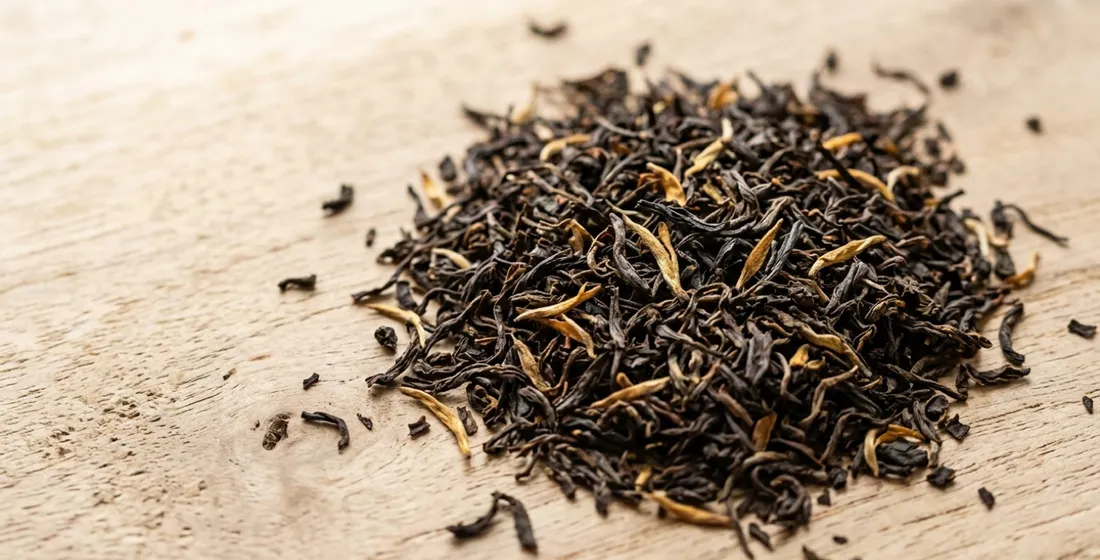
- FBOP (Flowery Broken Orange Pekoe) carries visible tip and brews a rounder, more aromatic cup. BOP (Broken Orange Pekoe) brews fast, strong, and full. The “F” is tip content, not a quality upgrade.
- Silk Foods Ceylon (SFC) supplies bulk Ceylon black tea across the full grade range, plus retail-ready private-label tea bags, from a Matale facility under FSSC 22000 V6, with a 100 kg first-order MOQ per grade.
- For private-label and retail buyers choosing a Ceylon grade for a blend or a tea-bag SKU, this post is the spec. For buyers who only need “black tea, cheapest landed,” grade won’t be the deciding factor.
Most retail buyers sourcing “Ceylon black tea” name a region and a price, then let the supplier pick the grade. That is where a private-label programme quietly loses control of its cup. BOP and FBOP are not quality tiers. They are leaf-size grades, and the grade decides how fast the tea brews, how strong the liquor runs, how much dust ends up in a tea bag, and how a blend holds batch to batch. Write the grade onto the spec sheet and the cup becomes repeatable. Leave it to the packer and it drifts. This piece is for the procurement and private-label buyers who want the grade written down, not assumed.
How Ceylon black tea grades are classified
Ceylon black tea is graded by leaf size and particle structure, not by a taste score. The orthodox grade ladder runs from whole-leaf grades (OP, Pekoe) through broken grades (BOP, FBOP), then fannings (BOPF, PF), then dust (Dust, Dust1). ISO 3720:2011, the international black tea specification, sets the compositional floor every grade must clear (International Organization for Standardization, 2011).
Two manufacturing methods sit underneath those names. Orthodox processing rolls the leaf to keep its structure, and it is what Ceylon built its reputation on. CTC (crush, tear, curl) shreds the leaf into uniform granules for fast, strong tea-bag liquor. The grade codes below describe the orthodox sorting that happens after manufacture, when the made tea is sieved into size fractions. A bigger particle brews slower and lighter. A smaller particle brews faster and stronger. That single physical fact explains the whole ladder.
| Category | Example Ceylon grades | Particle | Brew behaviour |
|---|---|---|---|
| Whole leaf | OP, OP1, OPA, Pekoe | Largest, twisted full leaf | Slow, light, delicate liquor |
| Broken | BOP, BOP1, FBOP, FBOPF | Broken leaf particles | Faster, stronger, full-bodied |
| Fannings | BOPF, PF (Pekoe Fannings) | Small particles | Fast, strong, the tea-bag workhorse |
| Dust | Dust, Dust1 | Finest particles | Fastest, darkest, mass tea bags |
Source: SRV facility grade range and Sri Lanka Tea Board grade nomenclature.
What is the difference between BOP and FBOP tea?
BOP (Broken Orange Pekoe) is a broken-leaf grade that brews quickly into a strong, full-bodied liquor. FBOP (Flowery Broken Orange Pekoe) is the same broken size with visible tip, the unopened leaf bud, sorted in. The tip, the “F” for Flowery, gives a rounder, more aromatic, slightly sweeter cup. Neither grade outranks the other. They suit different blends.
Think of BOP as the backbone grade. It is the strength and colour in a breakfast-style blend, and it stands up well to milk. FBOP is the aroma grade. The golden tip carries more delicate top notes, so it reads as smoother and more complex in the cup, which is why self-drinkers and single-origin retail packs lean on it. These are auction and trade names, consistent across Ceylon producers, rather than terms codified inside ISO 3720. A buyer who only writes “black tea” on the RFQ is leaving that backbone-versus-aroma decision to whoever packs the order.
Matching the grade to your private-label format
Grade selection is really format selection. A loose-leaf retail pack sells partly on how the leaf looks, so it rewards a clean broken grade with visible tip. A standard tea bag sells on a fast, strong, consistent cup, so it rewards a fannings or dust grade. Picking the grade for the format, rather than buying one grade and forcing it into every SKU, is what keeps a multi-product private-label range coherent.
| Grade | Particle and tip | Brew | Best-fit private-label format | Trade-off |
|---|---|---|---|---|
| BOP | Broken, little or no tip | Fast, strong, full | Strong loose-leaf retail, milk-tea blends, foodservice | Less aromatic nuance than FBOP |
| FBOP | Broken with visible tip | Rounder, aromatic | Premium loose-leaf, specialty tea bags, single-origin retail | Higher price per kg than BOP |
| BOPF | Small fannings | Very fast, strong | Standard tea bags, blended retail bags | Coarser cup, less leaf appeal |
| Dust1 | Finest | Fastest, darkest | Mass-market tea bags, vending, instant base | Little visual leaf identity |
Source: SRV facility grade range and Sri Lanka Tea Board grade nomenclature.
A buyer running a three-SKU launch, for example a premium loose-leaf, an everyday tea bag, and a foodservice catering pack, is usually looking at three different grades, not one. FBOP for the premium pack, BOPF for the everyday bag, BOP for catering. Same origin, same certification stack, three specs.
How elevation changes the grade and the price
Ceylon tea is grown across three elevations: low-grown (below 600 m), mid-grown (600 to 1,200 m), and high-grown (above 1,200 m) (Tea Exporters Association of Sri Lanka). Elevation shapes the cup before grade does. High-grown gives a brighter, more delicate liquor. Low-grown gives a darker, stronger, malty cup that many tea-bag blends are built around. The same grade code can taste materially different across elevations.
This is the gap most private-label specs miss. In the first quarter of 2026, the SRV trade desk saw the same pattern three times: a buyer who had specified only “Ceylon BOP” plus a region, then could not understand why two shipments tasted different. The grade was identical on both. The elevation was not. Once the spec named both the grade and the elevation band, the cup held from one shipment to the next.
Price follows the same two levers. The Colombo Tea Auction is the primary price-discovery mechanism for Ceylon tea, run weekly through licensed brokers, and buyers track its averages as the benchmark for bulk procurement. In 2024 it averaged USD 4.08 per kg across all teas, its second-highest annual dollar average on record (Daily FT, 2025). A FOB Colombo quote sits close to that auction reality. When a landed DDP price from a re-exporter looks lower, the grade or the elevation has usually been traded down somewhere upstream. The honest comparison is grade-for-grade and elevation-for-elevation, at the same FOB basis.
What ISO 3720 and the Lion Logo mean for a private-label buyer
ISO 3720:2011 is the international specification for black tea. It defines the compositional limits, water extract, total ash, water-soluble ash, and crude fibre, that indicate the tea was made properly under good manufacturing practice (International Organization for Standardization, 2011). It does not define the leaf-size grades. It sets the quality floor, and a buyer should require ISO 3720 compliance on the spec regardless of which grade is ordered.
The Sri Lanka Tea Board’s Lion Logo sits on top of that floor. It certifies tea that is 100% pure Ceylon and packed in Sri Lanka, with ISO 3720 compliance as the minimum bar, and the certification runs for three years (Sri Lanka Tea Board, 2023). For a retail buyer, it is a consumer-facing mark of origin authenticity. The catch is the packing condition. Tea blended or bagged outside Sri Lanka forfeits Lion Logo eligibility, so a private-label range that wants the mark has to be packed at origin. Ceylon tea also carries the Ozone Friendly Pure Ceylon Tea mark, in place since 2011 for tea produced without ozone-depleting substances (Sri Lanka Export Development Board).
Certification snapshot: Silk Foods Ceylon, Matale BRCGS and FSSC 22000 V6 (the tea line is covered under FSSC 22000 V6) USDA Organic and EU Organic (on relevant SKUs) ISO 3720 compliance on black tea, with a COA available on request 100% pure Ceylon, packed in Sri Lanka, which keeps Lion Logo eligibility open for retail packs Sri Lanka EDB-registered exporter
Specifying a Ceylon tea grade on your RFQ
A defensible Ceylon tea RFQ names the grade, the elevation, the standard, and the format, then asks for a sample against that spec before any purchase order. The single most common sourcing error is writing “good quality Ceylon black tea” and expecting consistency. Grade and elevation are the two fields that make a cup repeatable, and they cost nothing to specify.
Buyer’s checklist: specifying Ceylon black tea
- Grade named explicitly (for example FBOP, not “premium black tea”)
- Elevation band stated (high-grown, mid-grown, or low-grown), with region if it matters to the cup
- ISO 3720 compliance required on the spec
- Moisture and total ash limits stated per ISO 3720
- Microbial, heavy-metals, and pesticide-residue panel aligned to the destination market
- 100% pure Ceylon and Lion Logo eligibility confirmed if the retail pack is packed in Sri Lanka
- Format defined: bulk by grade, finished tea bags, or retail loose-leaf packs
- Sample dispatched and approved against the spec before the first purchase order
Buyers running this list usually fall into two camps: brand owners specifying bulk leaf against an existing blender, and retailers building a private-label tea range from origin. Silk Route Ventures (SRV) serves both. The grade discipline above applies identically whether the order is bulk leaf by grade or a finished, retail-ready tea-bag SKU under the buyer’s own label, and the same format thinking runs through the Ceylon spices sourcing guide and the cloves format selection primer.
Frequently asked questions
What is the difference between BOP and FBOP Ceylon tea?
BOP (Broken Orange Pekoe) is a broken-leaf grade that brews fast, strong, and full-bodied. FBOP (Flowery Broken Orange Pekoe) is the same broken size with visible tip added, giving a rounder, more aromatic, slightly sweeter cup. The “F” marks tip content, not a quality rank. Both clear the ISO 3720:2011 black tea floor (International Organization for Standardization, 2011).
Is a higher tea grade always better quality?
No. Grade describes leaf size and particle structure, not quality. A whole-leaf grade is not better than a broken grade; it simply brews slower and lighter. Quality is set by the leaf, the elevation, and ISO 3720 compliance, then graded by size after manufacture. The right grade is the one that fits the format and the cup the buyer wants.
Which Ceylon grade is best for tea bags?
For standard tea bags, fannings (BOPF) and dust (Dust1) grades win, because their small particles brew fast and strong inside a bag. FBOP suits premium pyramid or whole-leaf-style bags where leaf appearance and aroma matter. The choice is a trade-off between brew speed and visual leaf identity, decided by the price tier of the SKU.
Does SRV offer private-label tea bags or bulk Ceylon tea by grade?
Yes. Silk Foods Ceylon supplies bulk Ceylon black tea across the full grade range (whole-leaf, BOP, FBOP, fannings, dust) and produces retail-ready private-label tea bags in pyramid, string-and-tag, and filter-paper formats, under FSSC 22000 V6. First-order MOQ is 100 kg per grade for bulk; samples are free for evaluation (you cover the courier). Contact SRV for a private-label tea briefing.
What does the Lion Logo on Ceylon tea mean?
The Lion Logo is the Sri Lanka Tea Board’s certification mark for tea that is 100% pure Ceylon and packed in Sri Lanka, with ISO 3720 compliance as the minimum standard and a three-year certification term (Sri Lanka Tea Board, 2023). For a retail buyer it signals verified origin and origin packing, so a private-label range that wants the mark must be packed in Sri Lanka.
How Silk Route Ventures can help
Silk Route Ventures (SRV) supplies Ceylon black tea by grade and builds retail-ready private-label tea programmes from origin. Bulk leaf ships against the buyer’s spec across the full grade range, from whole-leaf OP and Pekoe through BOP, FBOP, fannings, and dust, from the Matale facility, which holds BRCGS and FSSC 22000 V6, with USDA Organic and EU Organic on relevant SKUs. First-order MOQ is 100 kg per grade, and because the tea is packed in Sri Lanka, Lion Logo eligibility stays open for retail packs. For retailers consolidating a tea range or launching a private-label tea-bag SKU under their own label, SRV runs finished private-label packing in pyramid, string-and-tag, and filter-paper formats from the same site. Contact us to send an inquiry or request a sample. Full specs and MOQs are on our Sri Lankan spices supplier.
Sources
- Daily FT, “Tea exports top $1.5 b in 2025 despite price pressures” (reporting Sri Lanka Tea Board data), (2026). Retrieved 2026-06-28. https://www.ft.lk/front-page/Tea-exports-top-1-5-b-in-2025-despite-price-pressures/44-787299
- Daily FT, “Tea industry performance in 2024 and outlook for 2025” (Colombo Tea Auction average), (2025). Retrieved 2026-06-28. https://www.ft.lk/agriculture/Tea-industry-performance-in-2024-and-outlook-for-2025/31-771654
- International Organization for Standardization, “ISO 3720:2011 Black tea, Definition and basic requirements,” (2011). Retrieved 2026-06-28. https://www.iso.org/standard/51541.html
- Sri Lanka Tea Board, “Use of ‘Lion Logo’ Certification Mark for ‘Ceylon Tea’,” (2023). Retrieved 2026-06-28. https://srilankateaboard.lk/wp-content/uploads/2023/05/USE-OF-LION-LOGO-CERTIFICATION_20234.pdf
- Sri Lanka Export Development Board, “Ceylon Tea Quality Standards and Quality Assurance,” (2024). Retrieved 2026-06-28. https://www.srilankabusiness.com/tea/about-tea/quality-assurance.html
Further reading
- Tea Exporters Association of Sri Lanka, “Growing Regions” (elevation categories) → https://teasrilanka.org/growing-regions
- Tea Exporters Association of Sri Lanka, “Colombo Tea Auction” (weekly market reports) → https://teasrilanka.org/tea-auction
Written by the Silk Route Ventures Trade Team. Silk Route Ventures (E-Silk Route Ventures (Pvt) Ltd, T/A Silk Route Ventures) is a Sri Lankan B2B supply-chain operator for the Food, Beverage, Wellness, and Nutraceuticals sectors. The Silk Foods Ceylon manufacturing arm holds BRCGS and FSSC 22000 V6 certifications. Questions or to request a sample: Contact us or email info@esilkroute.com.lk.